


Gilt Scrollwork Mirror
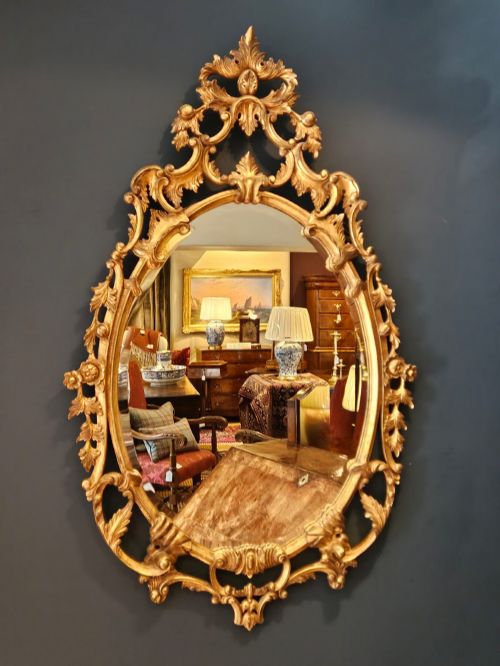
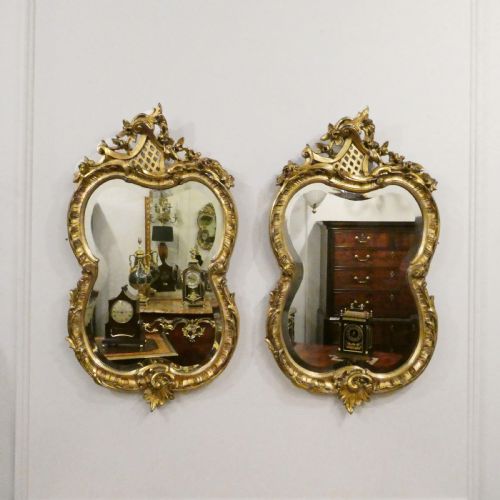
These gilt scrollwork mirror pieces combine ornate wooden frames with reflective glass, bringing historical elegance and light into a room.
Gilt Scrollwork Mirror
A gilt scrollwork mirror is a decorative wall hanging defined by its reflective glass and ornamented wooden or gesso frame, often finished in gold leaf. When searching for a gilt scrollwork mirror, buyers encounter wall-mounted examples spanning the eighteenth century through to the early twentieth century.
The selection includes pieces from several notable design traditions, featuring French Rococo, Italian Baroque, and Georgian styles. Surviving examples range from large, imposing Italian carvings to smaller walnut fretwork pieces and Victorian variations.
Most entries on this page date from the nineteenth and eighteenth centuries, alongside a few early twentieth-century interpretations. These items function primarily as decorative wall mirrors for reception halls, drawing rooms, and boudoirs.
How they were made
The construction of these pieces relies on carved wood, walnut, or mahogany serving as the structural foundation for the frame. Artisans frequently applied gesso over the timber base to build up intricate scrollwork and relief ornamentation.
Finishing involved the meticulous application of gold leaf or gilding to create a brilliant metallic sheen across the carved surface. Mirror glass was then fitted into the rebate, secured behind the decorative wooden frame.
Among the stately mahogany and gilded scrollwork, an unexpected collection of fairground boards makes a cheerful appearance.
What varies in quality
Quality in these mirrors rests upon the depth and definition of the hand-carved woodwork within the scrollwork. Finer pieces demonstrate crisp, confident lines and intricate relief work rather than flat or heavily simplified moulding.
The handling of the gilding and the preservation of the original gold leaf surface significantly influence the character of the piece. Superior examples maintain harmonious ageing across the gilt gesso and timber components.
The Gilt Scrollwork Mirror Glossary
- Giltwood
- Wood that has been coated with gold leaf or a gold-coloured finish. This material provides the brilliant metallic appearance characteristic of these decorative frames.
- Gesso
- A plaster-like mixture applied to wood frames to create a smooth surface for carving and gilding. It allows craftsmen to model elaborate relief details.
- Rococo
- An ornate artistic style marked by asymmetrical scrollwork, C-curves, and naturalistic motifs. Many mirrors on this page draw directly from this decorative vocabulary.
- Fretwork
- Ornamental pattern work created by piercing or cutting designs through flat timber. It appears frequently on eighteenth-century walnut and mahogany wall mirrors.
- Baroque
- A theatrical and elaborate design style popular in Italy and France. It emphasises grandeur, heavy carving, and dynamic movement.
Gilt Scrollwork Mirror: Frequently Asked Questions
How do I hang a heavy gilt mirror?
These carved wooden frames require secure fixings anchored directly into structural wall studs or solid masonry. Professional mirror hangers utilise heavy-duty brackets suited to the substantial weight of antique giltwood.
Ensuring the hanging wire or D-rings match the mass of the frame prevents structural strain. Regular checks of the wall fixings maintain safety over time.
How do I clean an antique mirror glass?
Cleaning antique mirror glass involves using a soft cloth and a gentle, ammonia-free cleaning solution. Spraying the cloth rather than the glass directly prevents liquid from seeping behind the plate.
Moisture running into the wooden frame or silvered backing can cause degradation. Careful wiping preserves both the reflective surface and the surrounding gilding.
How do I date a carved gilt mirror?
Dating relies on examining the construction timber, the composition of the gesso, and the style of the carving. Eighteenth-century pieces often display hand-cut joinery and walnut or mahogany foundations.
Later Victorian and early twentieth-century revivals frequently utilise different backing methods and machine-assisted preparation. Comparing the decorative motifs to known design periods confirms the era.
Where should I place a gilt scrollwork mirror?
Placing these mirrors opposite a window maximises natural light distribution within a room. They function effectively above mantelpieces, console tables, or in entrance halls as focal points.
Positioning them away from direct, harsh sunlight protects the delicate gilt finish from fading. Appropriate placement enhances both the artwork and the surrounding interior space.