



Gilt Room Divider
A gilt room divider divides a space with gilded panels that catch the light, offering privacy and decorative impact.
Gilt Room Divider
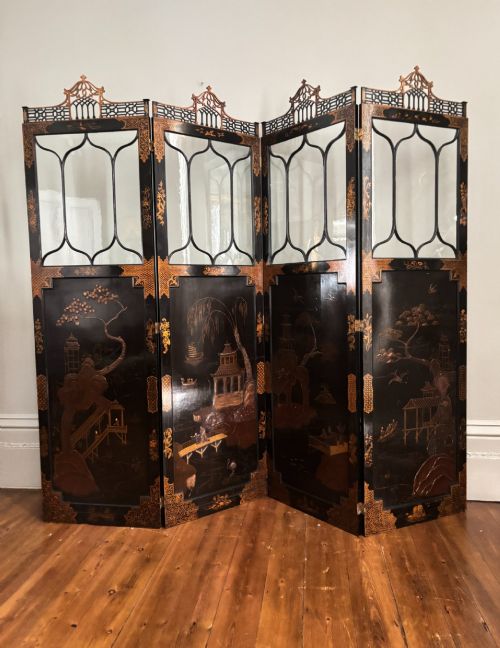
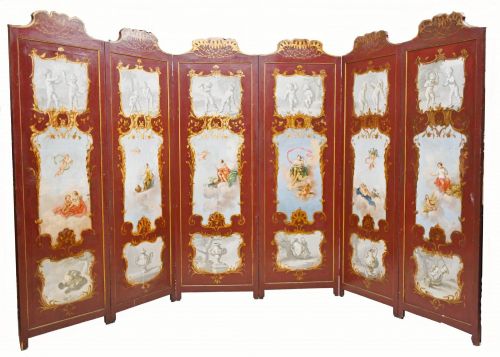
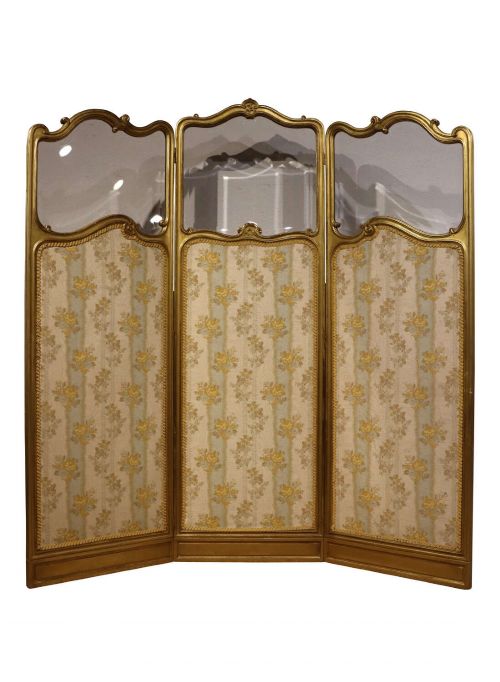
A gilt room divider provides a method of partitioning a space using hinged folding panels finished with gold leaf or gilding. When a buyer searches for a gilt room divider, they encounter antique screens designed to shape interiors and introduce ornamental warmth. The forms range from folding screens and dressing screens to fire screens.
The examples on this page span several periods, including the eighteenth century, the Regency era, the Victorian period, and the late nineteenth century. Styles vary from French Rococo Revival and Chinoiserie to Japanese Export and Spanish designs. Most pieces rely on multi-fold construction using three, four, six, or eight panels.
How they were made
Maker construction combines wooden frames with hinges to support multiple folding panels. Artisans applied finishes such as lacquer, oil paint, and leather directly to the core structure.
Giltwood, gold leaf, and brass hardware provide the reflective and structural details. Certain pieces incorporate bevelled glass and silk panels alongside hand-painted decoration.
Gilt Room Divider Retail Price Guide 2026
Typical asking prices for gilt room divider among the pieces listed under this phrase on Sellingantiques today, from the lower quarter to the upper quarter. They describe what is for sale here now, not the wider market.
Listings feature materials including wood, brass, leather, lacquer, giltwood, glass, oil paint, and gold leaf.
What varies in quality
The refinement of the hand-painted decoration and the depth of the gilding set the finest examples apart. Superior items exhibit intricate detailing on leather, lacquer, or wood surfaces executed by skilled hands.
The structural integrity of the folding hinges and the quality of inset elements, such as bevelled glass, determine the overall execution. Greater harmony in the decorative scheme marks the higher end of the range.
Paul Sormani
The Gilt Room Divider Glossary
- Giltwood
- Wood that has been treated with gold leaf or a gold-coloured finish. This technique creates a luminous surface that reflects interior light.
- Chinoiserie
- European decorative style reflecting Chinese artistic influences. It frequently appears on screens featuring painted landscapes and figures.
- Coromandel
- Chinese carved lacquerware characterised by dark grounds incised with colourful designs. Screens in this material show rich textural contrast.
- Cordoban leather
- Embossed and painted leather produced originally in Spain. It offers a heavy, durable surface suited to decorative screens.
Gilt Room Divider: Frequently Asked Questions
What is a gilt room divider?
A gilt room divider is a hinged folding screen finished with gold leaf or gilding designed to separate areas within a room.
These pieces combine functional partitioning with ornamental surface work, using materials like painted leather, lacquer, and wood.
How do I date a folding screen?
Dating relies on stylistic clues, construction methods, and materials such as Regency lacquer or Victorian Rococo Revival ornamentation.
Evidence from the frame joinery and the medium of the painted panels also points towards specific historical periods.
Where were antique screens placed?
Antique screens stood in drawing rooms, dressing rooms, and parlours to block drafts or create private enclosures.
They functioned as moveable walls that altered the proportions and atmosphere of large interiors.
How do I maintain painted leather panels?
Painted leather panels require stable humidity levels and protection from direct sunlight to preserve the pigment and gold leaf.
Dusting with a dry, soft cloth prevents particle buildup without introducing moisture to the aged surface.