
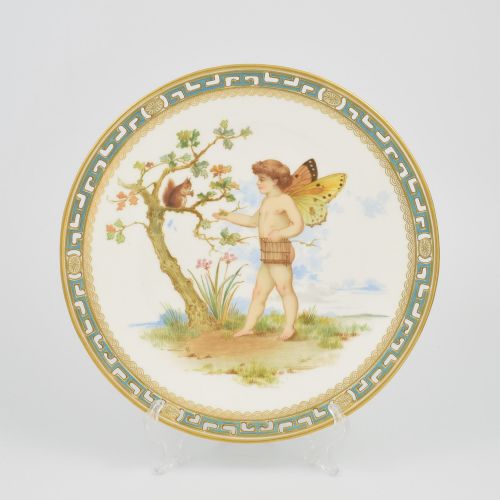
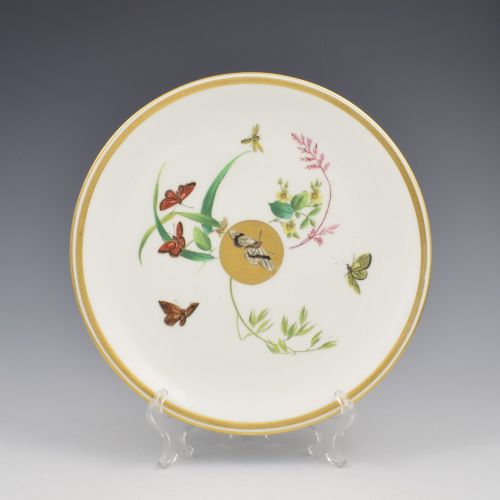
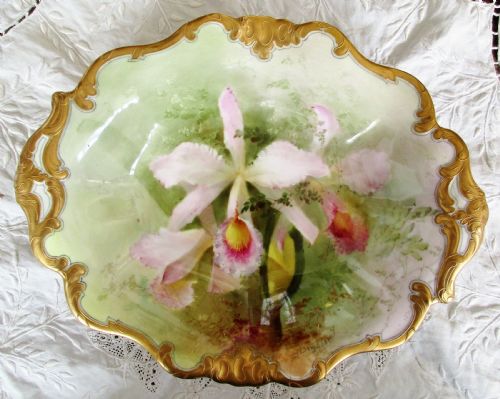
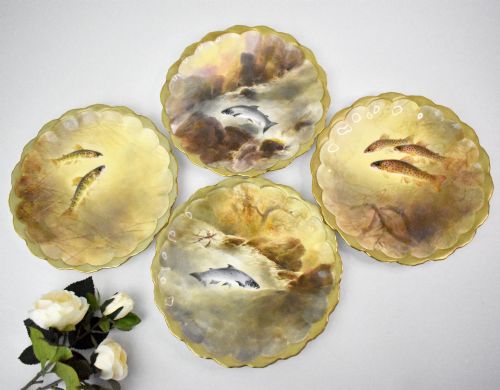


Gilt Rimmed Display Plate
These gilt rimmed display plate examples bring together fine porcelain and metallic edge work made for display.
Gilt Rimmed Display Plate
A gilt rimmed display plate is primarily found in cabinet plates, wall chargers, and decorative dishes designed for visual presentation rather than everyday dining.
The pieces on this page span the Victorian era through the mid twentieth century, originating from English potteries, continental factories, and Japanese workshops.
Forms range from reticulated plates and pierced porcelain to large chargers and standard cabinet plates featuring hand painted motifs.
Materials and construction
Potters utilised hard paste porcelain, bone china, and standard porcelain bodies as the foundation for these decorative items.
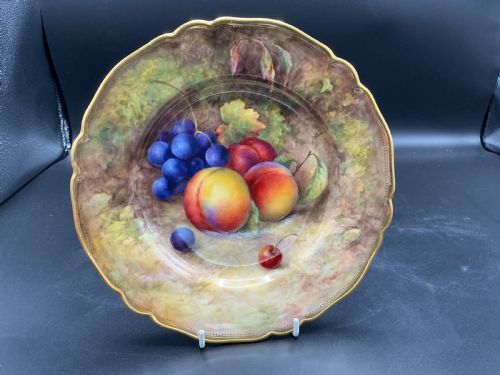
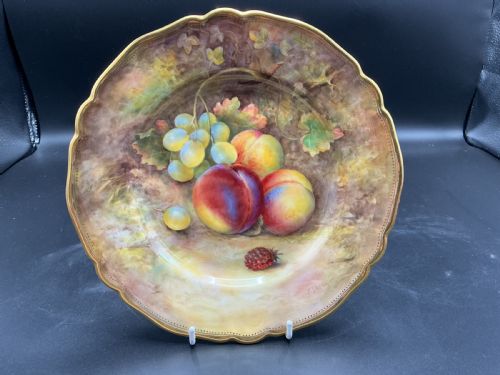
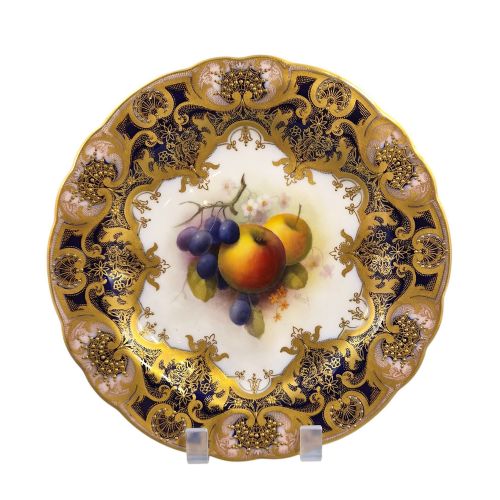
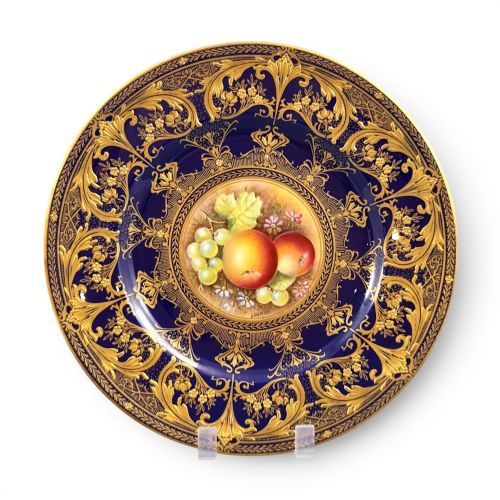
Makers applied gold leaf, gilding, and enamel work to the edges and surfaces, often combining these metallic accents with hand painted fruit, floral studies, or figurative scenes.
Listings feature porcelain bodies decorated with gold leaf and enamel across the Victorian and Edwardian periods.
Elements of quality
Quality rests upon the skill of the painting and the precision of the gilding, distinguishing standard factory output from pieces painted by named artists.
The crispness of moulded details, such as reticulation or rope edges, separates fine cabinet ceramics from simpler decorative dishes.
Royal Worcester·Minton·Royal Doulton·Meissen·Coalport·Fukagawa
The Gilt Rimmed Display Plate Glossary
- Cabinet plate
- A decorative ceramic plate intended for display in a cabinet rather than use at the table. These often feature elaborate painted scenes and gilded borders.
- Reticulated plate
- A ceramic piece featuring an openwork or pierced lattice design along the rim. This technique requires considerable skill during the drying and firing stages.
- Charger
- A large ornamental plate used as a base setting or hung upon a wall. They provide a broader canvas for painted decoration and gilt work.
- Hard paste porcelain
- A dense, durable ceramic composed of kaolin and petuntse fired at high temperatures. It forms the body of many continental and oriental display pieces.
Gilt Rimmed Display Plate: Frequently Asked Questions
How were cabinet plates displayed?
Cabinet plates were typically exhibited inside glazed wooden furniture pieces or mounted directly onto walls using wire hangers.
This kept the delicate enamel and gilt surfaces safe from everyday handling while allowing the painted artistry to be admired.
What is the difference between a charger and a plate?
Chargers are significantly larger in diameter than standard dining or dessert plates.
Because of their size, they function primarily as wall art or centrepiece displays rather than serving vessels.
How do I identify the period of a ceramic piece?
Makers often stamped or painted factory ciphers, pattern numbers, and artist signatures onto the reverse of the porcelain.
Comparing these backstamps against established manufacturer date codes reveals the era of production.
Can these decorative dishes be used for food?
Most pieces intended for display feature delicate overglaze enamel and gold leaf that can wear away with frequent washing.
They are best preserved as decorative objects rather than utilised for dining.