
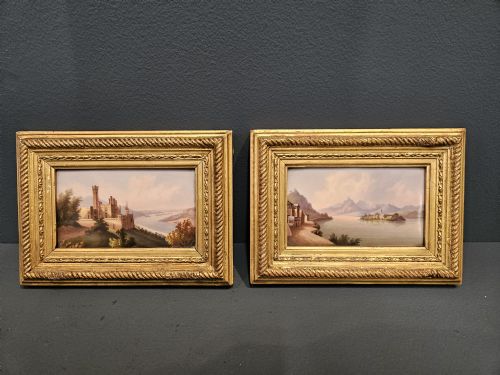
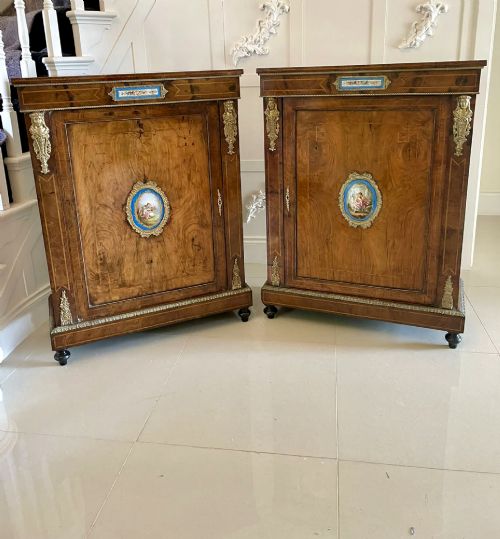
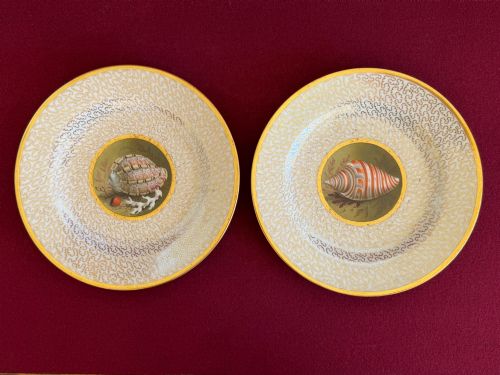
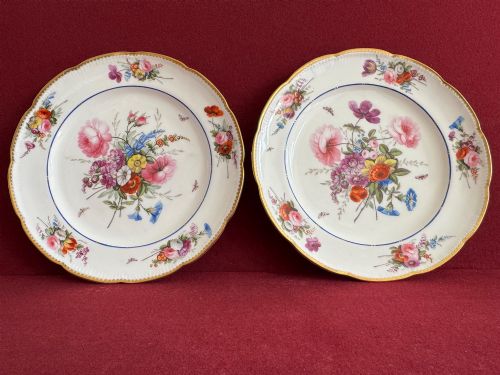
Gilt Porcelain Pair
A gilt porcelain pair brings matched symmetry to a room, uniting painted ceramic surfaces with the rich warmth of gold leaf or ormolu mounts.

Gilt Porcelain Pair
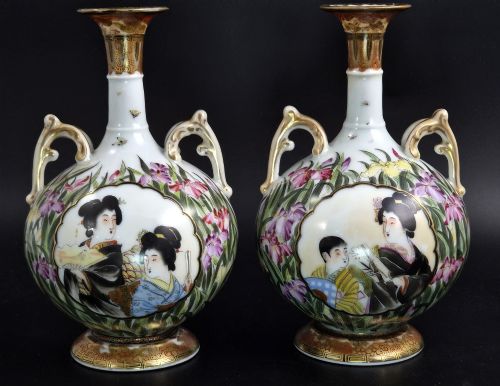
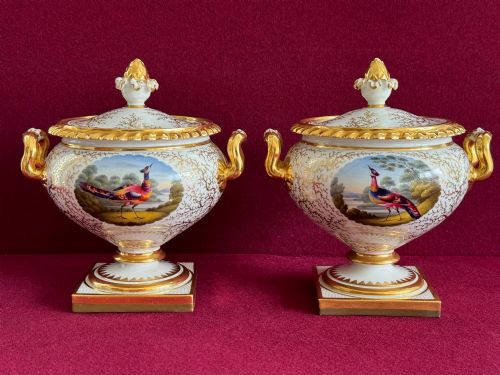
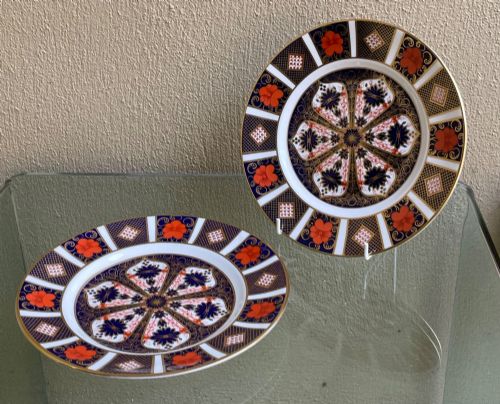
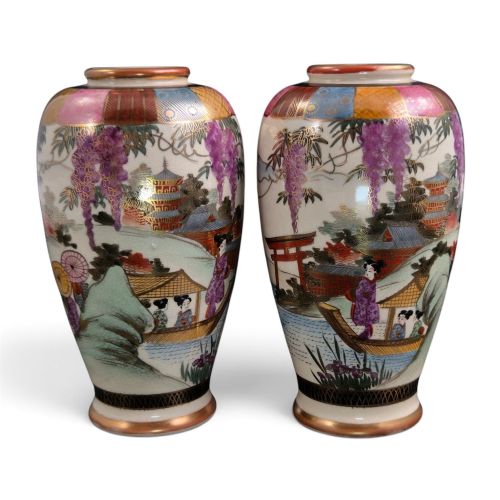
A gilt porcelain pair comprises two matched decorative or functional ceramic objects accented with gold, appearing in forms such as vases, urns, cabinet plates, and table lamps. These matched sets originate from diverse traditions, spanning European factories like Sèvres, Derby, and Worcester alongside Japanese Satsuma and Imari workshops.
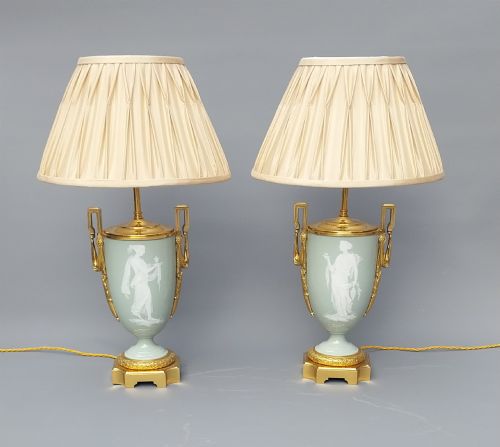
Buyers encountering this selection will frequently find 19th-century French vessels mounted in gilt bronze alongside English Regency and Victorian tableware and Japanese export ceramics. These pieces served primarily as mantel ornaments, garniture sets, or functional lighting, designed to provide visual balance on either side of a fireplace or centrepiece.
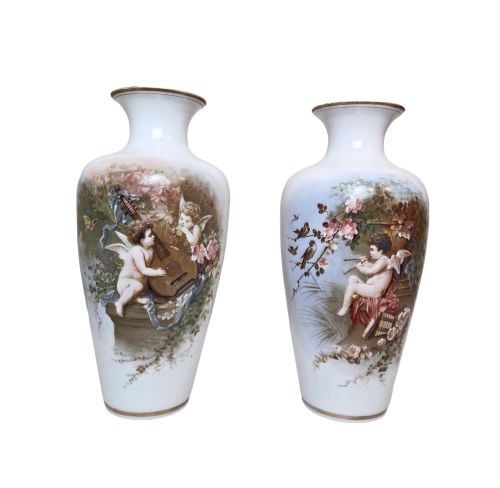
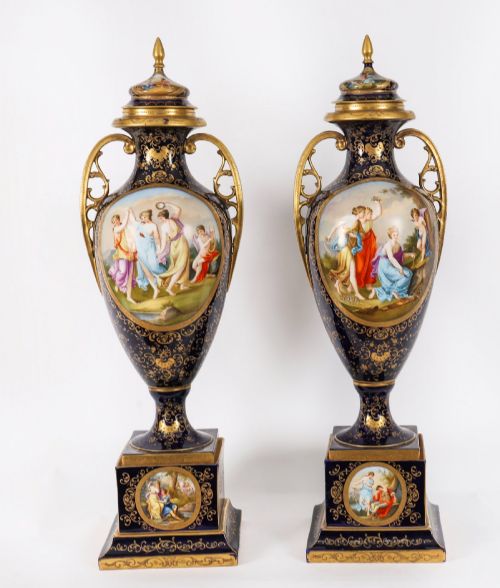
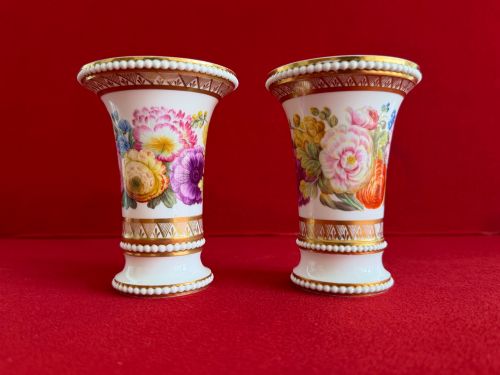
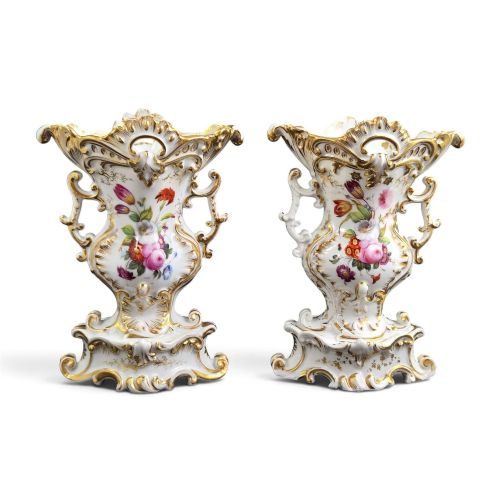
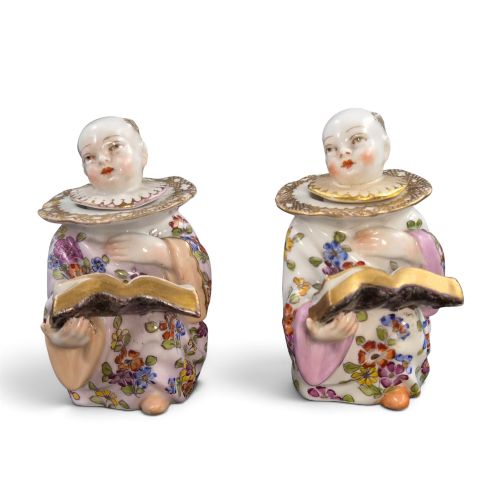
The aesthetic vocabulary stretches from restrained Georgian porcelain to ornate Rococo Revival and Chinoiserie designs, incorporating hand-painted landscapes, floral motifs, and panels of deep blue or yellow ground. Each paired object shares identical moulding, glazing, and gilding schemes intended to be displayed together as a unified composition.
Materials and production methods
The foundation of these objects is hard-paste or soft-paste porcelain, shaped either by throwing on a potter's wheel or by pressing clay into intricate plaster moulds. Artisans applied coloured enamels and underglaze pigments by hand before firing the ceramics in kilns to fix the vibrant hues of cobalt blue, turquoise, and blush ivory.
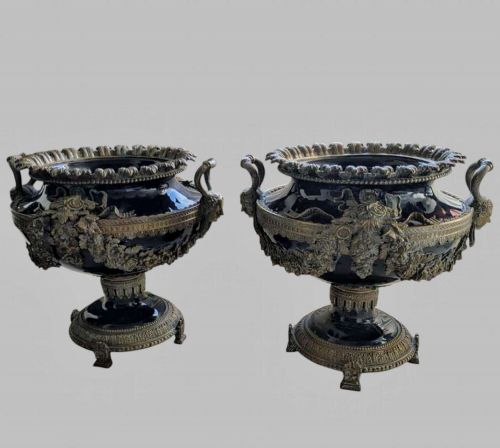
Gilding was executed using gold leaf, liquid gold, or gold powder amalgamated with honey and applied with a brush, then burnished with an agate stone to achieve a brilliant metallic sheen. European makers frequently combined this ceramic body with cast ormolu and gilt bronze mounts, securing the porcelain vessels within elaborate handles, bases, and rims.
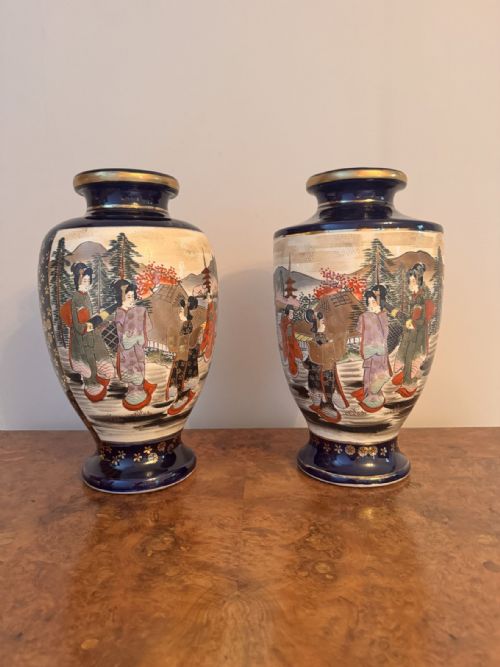
Listings feature porcelain from diverse origins, incorporating English earthenware alongside Japanese Satsuma and French Sevres style ceramics.
Distinctions in craftsmanship
Quality in a gilt porcelain pair is determined by the precision of the hand-painting and the crispness of the porcelain moulding, where finely rendered botanical studies or detailed figural scenes distinguish superior output from simpler factory work. The execution of the gilding also plays a vital role, with hand-chased ormolu mounts and burnished gold leaf indicating a higher standard of manufacture than flat, unburnished paint.
The degree of symmetry and preservation across both items dictates the overall desirability of the set, since matching pairs must retain uniform glaze colours and corresponding wear patterns. Well-preserved factory marks, original bronze mounts, and untouched painted surfaces elevate certain examples, whereas mismatched ageing or heavy professional restoration alters the integrity of the pair.
Royal Crown Derby·Edmé Samson·Spode·Royal Worcester·Minton·Coalport
The Gilt Porcelain Pair Glossary
- Ormolu
- A technique of applying finely ground high-carat gold to a bronze base, creating a rich metallic decoration for furniture and ceramic mounts. This material provides structural framing and ornate handles for many nineteenth-century French vessels.
- Gilding
- The application of gold leaf or powdered gold to the surface of porcelain or metal. Skilled artisans burnished this layer to create contrast against painted enamel grounds.
- Imari
- A traditional Japanese style of porcelain decoration characterised by a palette of underglaze blue, iron red, and supplementary gold. European factories frequently copied these distinctive patterns during the nineteenth century.
- Garniture
- A set of matched decorative vases or vessels designed to be displayed together on a mantelpiece or cabinet. These groupings typically consist of three or five pieces, though surviving pairs remain common.
- Campana
- A classical bell-shaped form of vase popular in Regency and Victorian ceramics. These vessels often feature flared rims and scroll handles suited for floral arrangements.
Gilt Porcelain Pair: Frequently Asked Questions
What is a garniture set?
A garniture set consists of a matched arrangement of three or more decorative vases or urns designed for symmetrical display on a mantelpiece or sideboard. These decorative groupings became immensely popular during the nineteenth century in both European and Asian export markets.
Pairs represent the most common survival of these larger compositional arrangements today. They provide balanced visual weight when placed at either end of a decorative surface.
How were these pieces used historically?
Historically, these items functioned as decorative ornaments meant to display wealth, artistic taste, and status in formal drawing rooms and parlours. Many were purely ornamental garniture pieces, while others served practical roles as candlesticks, inkwells, or tableware.
Over subsequent generations, numerous examples underwent conversion into table lamps to adapt antique porcelain for modern domestic lighting. Despite these alterations, the original hand-painted surfaces and gilt mounts remain intact.
How do I care for gilt porcelain?
Care requires gentle dusting with a soft, dry cloth to protect fragile enamels and delicate gold leaf applications from abrasion. Moisture and chemical cleaning agents should be avoided, as they can degrade hand-painted details and historic gilt surfaces over time.
When handling mounted pieces, support the ceramic body and the metal mounts simultaneously rather than lifting by handles or protruding decorative elements. Stable placement away from direct sunlight preserves the vibrancy of enamel colours.
How do I tell periods apart?
Differentiating periods relies on examining the factory marks, stylistic influences, and manufacturing techniques visible on the ceramic body. Georgian and Regency pieces typically display neoclassical restraint or early transfer-printing, whereas Victorian and Edwardian items embrace vibrant polychrome enamels and ornate Revival styles.
Underglaze factory stamps, hand-written pattern numbers, and the composition of bronze mounts further clarify the timeline of production. Comparing the weight of the porcelain and the style of the gilding helps confirm the era of manufacture.