


Gilt Porcelain Mantel Vases
Gilt porcelain mantel vases bring colour, form and decorative weight to a room, drawing the eye naturally to the fireplace.
Gilt Porcelain Mantel Vases
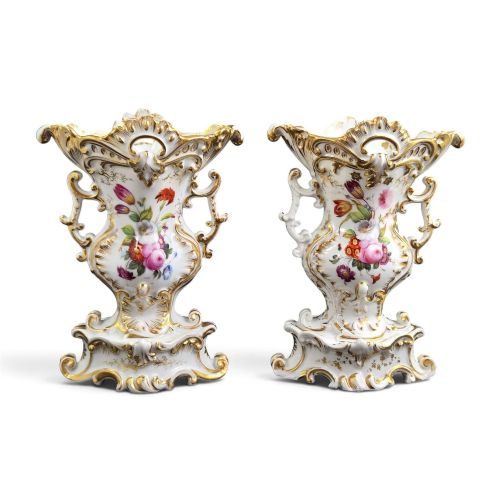
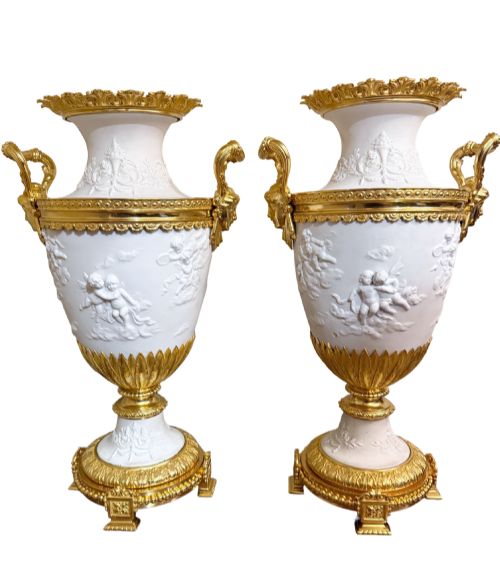
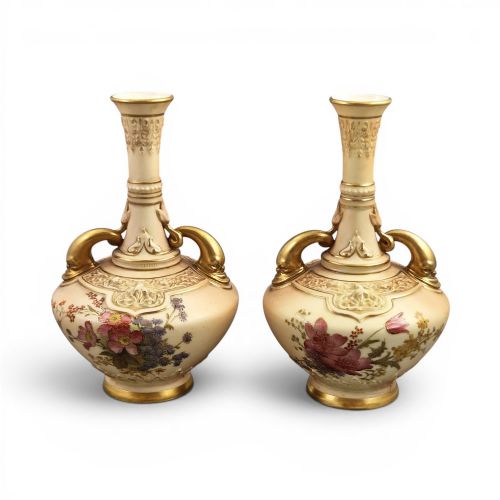
Gilt porcelain mantel vases encompass pairs and garnitures designed to sit atop a fireplace, often accompanied by matching side urns or clock sets. These pieces range from 19th Century French examples in the Sèvres style to English porcelain from factories like Royal Worcester and various continental workshops.
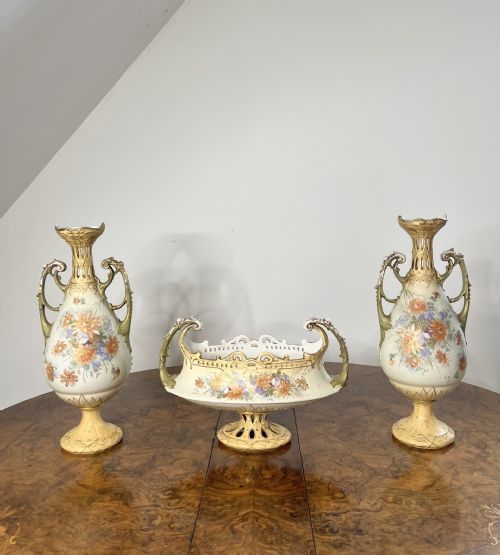
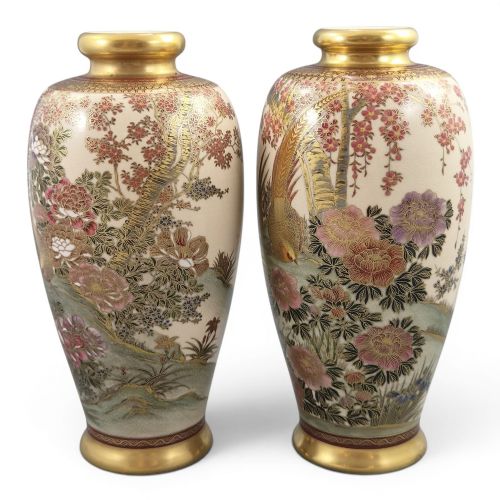
Buyers will encounter items spanning the Victorian era, Regency period and Edwardian years, featuring hand-painted scenes, floral motifs and classical forms. The selection leans heavily towards ornamental pairs and multi-piece garnitures intended to balance a mantelpiece.
How they were made
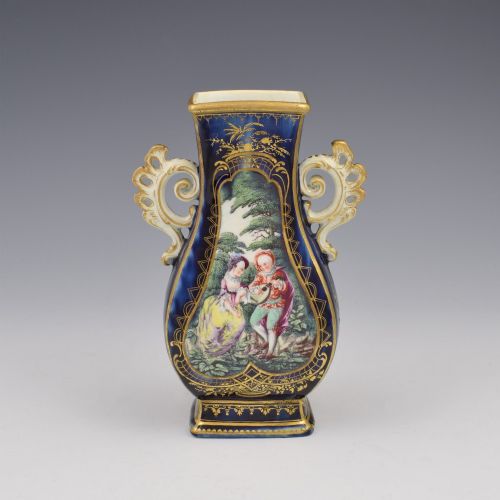
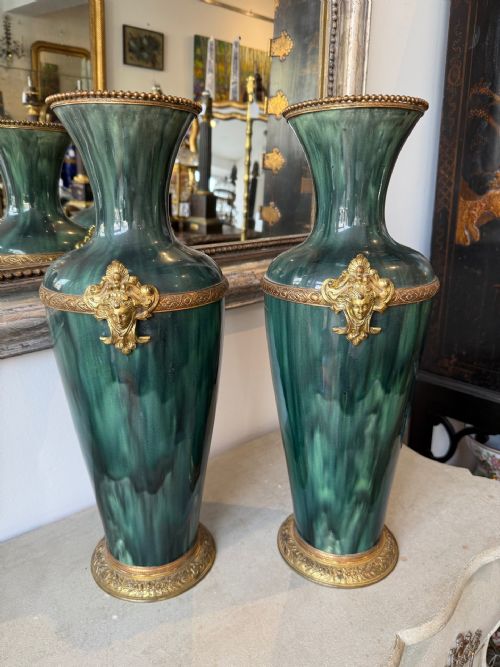
Makers shaped clay and porcelain before applying detailed hand-painted designs, enamel work and rich gold leaf or gilding. Many pieces incorporate cast ormolu and gilt bronze mounts, securing the porcelain bodies into elaborate architectural frames.
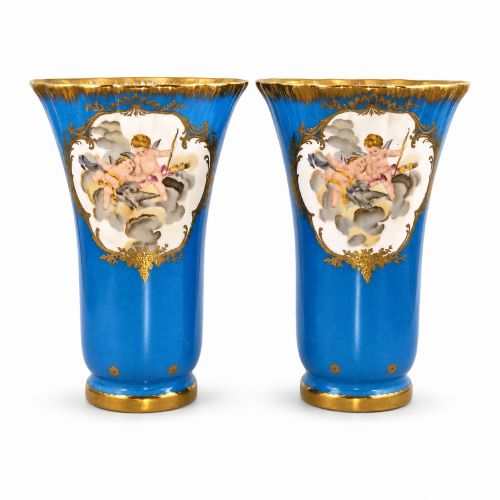
Firing techniques allowed for deep cobalt blues, blush ivory grounds and crisp white porcelain to hold raised enamel details and gilded borders securely across the surface.
Listings feature porcelain, enamel, ormolu and gilt bronze across Victorian, Regency and Edwardian periods.
What varies in quality
Quality rests upon the crispness of the hand-painted details, the weight and precision of the gilt bronze or ormolu mounts, and the purity of the porcelain body. Finer examples display delicate brushwork in figurative or floral scenes rather than repetitive transfer printing.
The integration between the ceramic vessel and its metal mounts dictates the overall success of the piece, separating standard factory productions from exhibition-standard works.
Jacob Petit·Royal Vienna·Royal Worcester·Chelsea Porcelain·Manpei Kobe·Hododa Satsuma·Wolfsohn Dresden·Mason Ironstone·Thomas Steel·James Stinton
The Gilt Porcelain Mantel Vases Glossary
- Garniture
- A set of three or more matching vases or urns designed to be displayed together on a mantelpiece or sideboard. They typically feature a larger central vessel flanked by two smaller matching pieces.
- Ormolu
- Gilding technique utilising finely ground high-carat gold applied to a bronze base. This creates a rich metallic finish often seen mounting the edges and bases of 19th-century French porcelain.
- Bleu Céleste
- A bright turquoise blue ground colour developed at the Sèvres porcelain factory in France during the 18th century. It frequently provides a vivid backdrop for gilded scrollwork and painted panels.
- Spill vase
- A tall, slender cylindrical vessel designed to hold taper candles or wooden spills used for lighting fires and pipes. These sit neatly on mantelpieces for everyday domestic utility.
Gilt Porcelain Mantel Vases: Frequently Asked Questions
How do I clean gilt porcelain?
Dust gently with a soft, dry brush to avoid disturbing the delicate gilding and hand-painted enamel details. Water and chemical cleaners can lift fragile gold leaf from the porcelain surface.
Keep these vases away from direct sunlight and moisture to preserve the integrity of the painted scenes and metallic mounts over time.
What is a clock garniture?
A clock garniture pairs a central mantel clock with two matching side vases or urns, creating a balanced decorative scheme. These sets were popular in 19th-century formal drawing rooms.
The matching vessels echo the materials, gilding and artistic style of the clock housing to unify the mantelpiece display.
How do I date a porcelain vase?
Examine the base for factory marks, monograms, and impressed numbers that correspond to known production periods. Stylistic cues such as Rococo revival scrolls or Edwardian blush ivory palettes also narrow down the era.
Hand-painted signatures from specific artists provide further clues to the exact decade of manufacture.
Where should I place mantel vases?
These vessels suit prominent display positions on mantelpieces, sideboards and console tables where their height and colour can anchor a room. Pairs look best flanking a central mirror, painting or clock.
Ensure the surface is stable and away from heavy foot traffic to protect fragile handles and protruding gilt bronze mounts.