


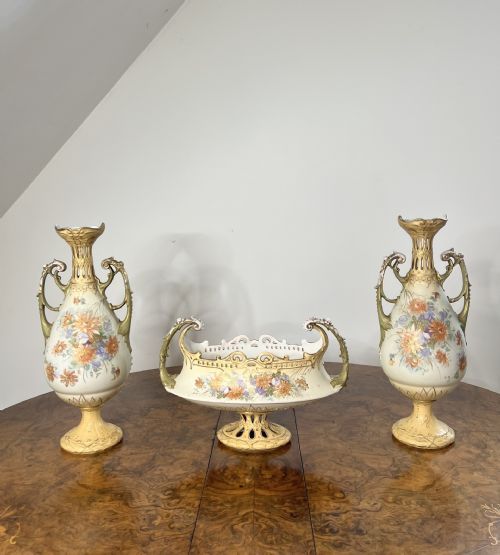


Gilt Porcelain Mantel Set
A gilt porcelain mantel set brings together matching clockwork and ornamental urns to anchor a grand interior with polished metal and painted ceramic.
Gilt Porcelain Mantel Set
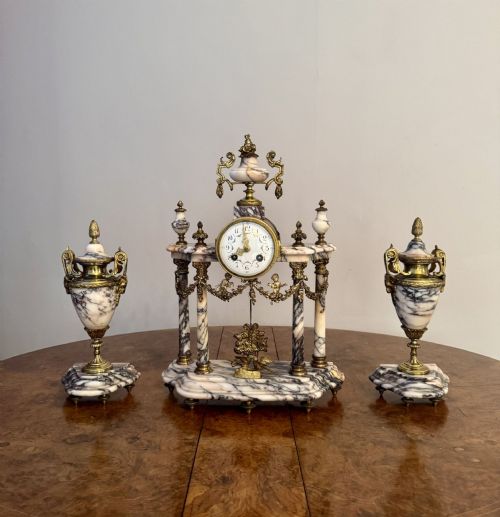
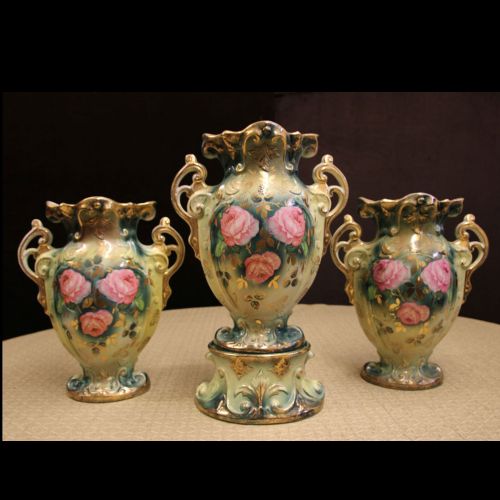
A gilt porcelain mantel set comprises a central mantel clock accompanied by matching side vases or urns, forming a cohesive three-piece display for a fireplace or grand sideboard.
Most examples encountered here originate from the nineteenth century, spanning periods from Regency and Georgian eras through to late Victorian and Belle Epoque revivals.
The dominant forms are French clock garnitures and porcelain vases featuring hand-painted scenes, mounted in ormolu, gilt bronze, or gilded metal.
How they were made
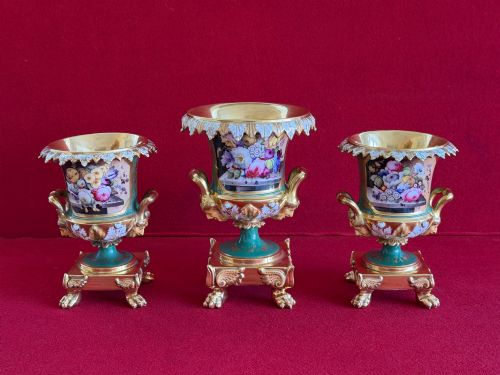
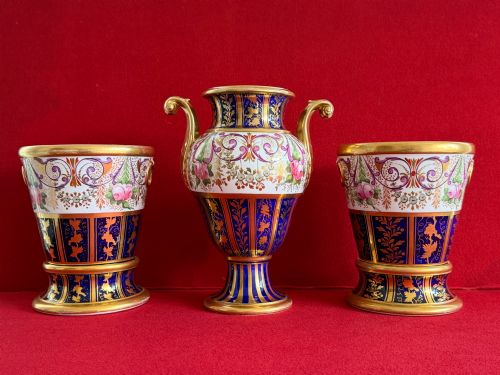
The ceramic components rely on hard-paste porcelain body forms, shaped as urns, vases, lyres, or clock cases, then finished with hand-painted enamel decoration and cobalt glazes like bleu de roi.
Metal mounts utilise ormolu, gilt bronze, brass, and gold leaf, cast and chased to frame the porcelain bodies in elaborate Rococo, Louis XVI, and Empire revival styles.
Many sets incorporate glass domes to protect the delicate gilt surfaces and intricate clock movements from dust.
Gilt Porcelain Mantel Set Retail Price Guide 2026
Typical asking prices for gilt porcelain mantel set among the pieces listed under this phrase on Sellingantiques today, from the lower quarter to the upper quarter. They describe what is for sale here now, not the wider market.
Several clocks take the shape of a musical lyre, letting time tick away inside an ancient stringed instrument.
What varies in quality
The refinement of the hand-painted scenes and the crispness of the gilt bronze chasing set the highest tier apart from simpler mass-produced sets.
The integration between the ceramic body and the metal mounts reveals the maker's skill, with superior pieces showing custom-fitted ormolu rather than generic brass mounts.
Completeness dictates value, as matched three-piece garnitures that retain their original glass domes and matching side urns represent the peak of the form.
Spode·Minton·Royal Vienna·Flight Barr and Barr·Vincenti of Paris
The Gilt Porcelain Mantel Set Glossary
- Garniture
- A set of matching ornamental vessels, typically comprising three pieces such as a central clock and two flanking vases. These were designed to sit symmetrically on a mantelpiece.
- Ormolu
- Gilded bronze used for decorative mounts on furniture and ceramics. The technique involves applying a mercury and gold amalgam to bronze before firing.
- Bleu de roi
- A deep, rich cobalt blue ceramic glaze developed at the Sevres pottery factory. It provides a striking background for gilt and painted decoration.
- Lyre clock
- A mantel clock shaped in the form of a classical musical lyre. The dial is typically suspended within the open frame of the instrument.
- Spode
- A prominent English pottery and porcelain manufacturer known for refined ceramic bodies and elaborate enamelling. Their early nineteenth-century output established high standards for garniture design.
Gilt Porcelain Mantel Set: Frequently Asked Questions
What is a gilt porcelain mantel set?
A gilt porcelain mantel set is a coordinated grouping of ornamental objects designed for display on a fireplace mantel. It typically pairs a mechanical clock with two matching vases or urns.
The ensemble uses gilded metal mounts alongside painted ceramic bodies to create a unified decorative scheme for a principal room.
How do I style a clock garniture?
Place the central clock squarely in the middle of the mantelpiece with the matching side vases positioned symmetrically on either side. This traditional arrangement creates balanced visual weight.
Ensure the pieces have adequate clearance from heat sources and foot traffic to protect the delicate gilt surfaces and glass domes.
How do I identify a nineteenth-century French set?
Nineteenth-century French sets often feature distinct revival styles such as Rococo, Louis XVI, or Empire, utilising ormolu mounts and hand-painted porcelain panels. Look for regional characteristics like bleu de roi glazes and quality bronze casting.
Makers' marks or movement stamps from Parisian workshops like Vincenti provide further confirmation of origin.
Why do some sets include glass domes?
Glass domes were utilised to protect delicate ormolu gilding, painted enamel scenes, and exposed clock mechanisms from household dust and atmospheric moisture.
Surviving with an original glass dome and matching base significantly enhances the historical integrity of a garniture set.