
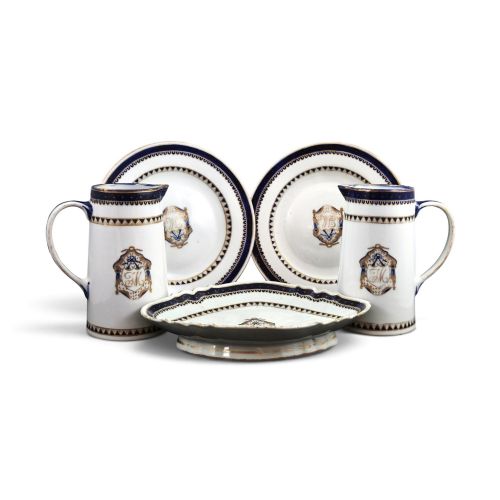


Gilt Porcelain Cream Pitcher
These gilt porcelain cream pitcher examples bring gilded refinement to the table, combining functional pouring vessels with gleaming metallic decoration.
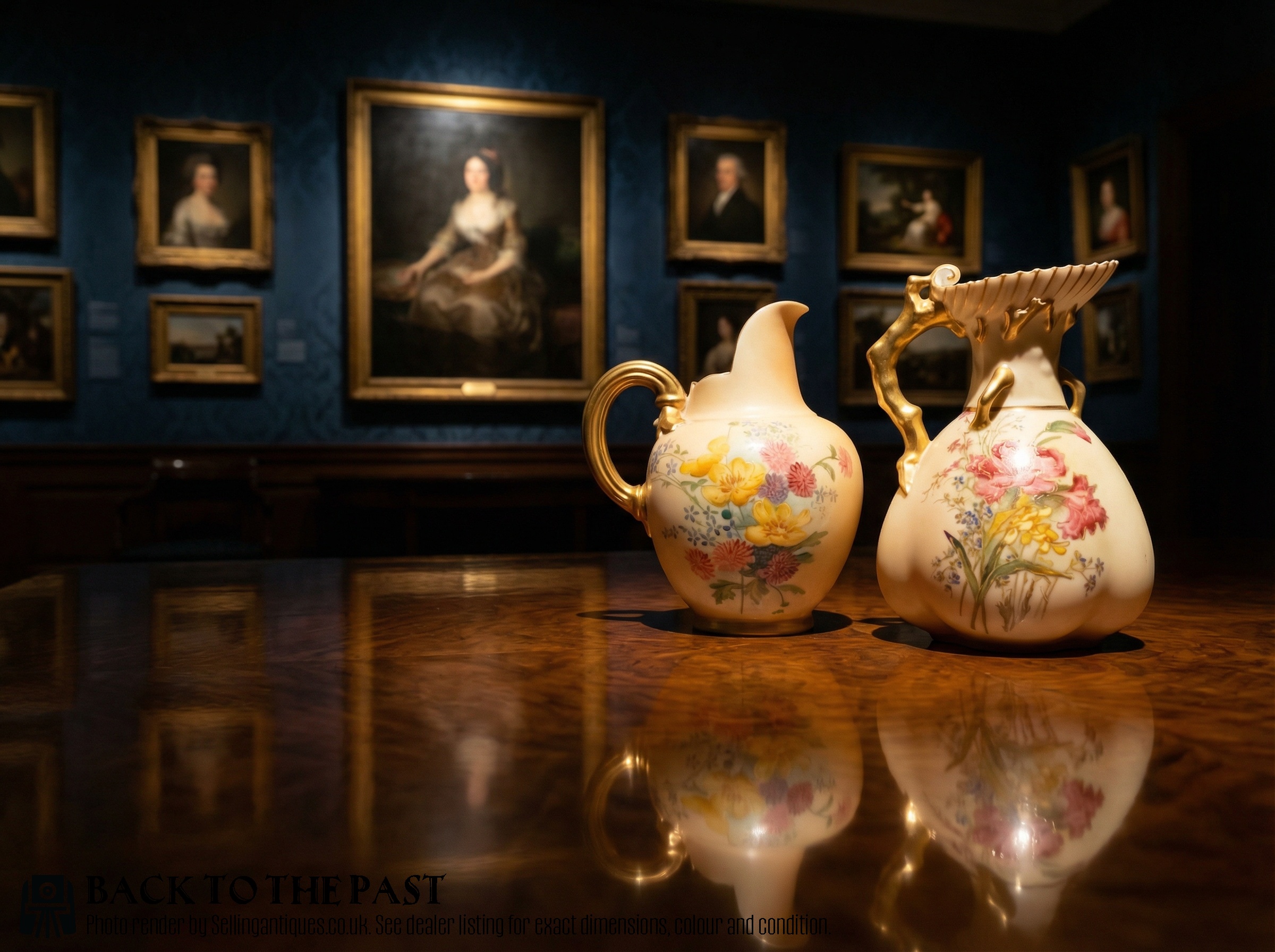
Gilt Porcelain Cream Pitcher
A gilt porcelain cream pitcher forms part of tea services or acts as an individual tableware accessory designed for serving cream or milk. These small vessels span several centuries of production, appearing in forms from sparrow beak jugs to classical ewers.
The pieces on this page emerge from periods including the eighteenth century, the Victorian era, and the mid-twentieth century. Origins range from traditional English potteries to Chinese Export workshops and French porcelain houses.
Makers such as Royal Worcester dominate the selection, often presenting hand-painted fruit decoration or blush ivory glazes alongside gold highlights. Buyers encounter various utilitarian and decorative forms, including matching cream and sugar sets.
How they were made
Potters shaped these vessels using hard-paste porcelain, soft-paste porcelain, or earthenware bodies before applying intricate surface decoration. Artisans then added enamel colours and gold leaf or gilt details to highlight handles, rims, and pictorial panels.
Firing techniques varied by period, with eighteenth-century works utilising early porcelain recipes and later Victorian pieces employing advanced kiln methods. Skilled painters executed detailed fruit scenes, monograms, and botanical motifs by hand prior to final gilding.
Sparrow beak jugs earned their charming ornithological moniker from the tiny, pinched spouts that resemble a small bird's beak.
What varies in quality
The refinement of the painted decoration distinguishes finer pieces from standard production wares. Hand-painted fruit scenes by known artists demonstrate superior brushwork compared to simpler transfer-printed patterns or plain gilded borders.
The crispness of the porcelain moulding and the weight of the gold application indicate the maker's original ambition. Well-preserved gilding without rubbing elevates an item, whereas heavy wear on the metallic accents diminishes visual impact.
Royal Worcester·Doulton Burslem·Crown Derby
The Gilt Porcelain Cream Pitcher Glossary
- Gilt
- Covered with a thin layer of gold or gold leaf to provide a metallic sheen. This decoration frequently adorns the rims, handles, and spouts of porcelain tableware.
- Soft-paste porcelain
- An artificial porcelain composition fired at lower temperatures than true hard-paste porcelain. It possesses a slightly warmer tone and was common in early English factories.
- Hard-paste porcelain
- A true ceramic material composed of kaolin and petuntse, fired at high temperatures to create a dense, vitrified body. It resists scratching and displays a bright white surface.
- Blush ivory
- A matte cream-coloured ceramic ground developed by Royal Worcester in the late nineteenth century. It mimics the warmth of ivory and provides a soft background for floral painting.
- Ewer
- A large jug with a wide spout and an ornate handle, historically used for pouring water but often adapted for decorative ceramic display.
Gilt Porcelain Cream Pitcher: Frequently Asked Questions
What is a gilt porcelain cream pitcher used for?
These vessels were designed to serve cream or milk during formal tea and breakfast services. Today, collectors utilise them as decorative table accents or integrate them into existing antique porcelain displays.
Their compact size makes them versatile for shelf display or cabinet storage alongside matching sugar bowls and teacups.
How do I identify eighteenth century pieces?
Early pieces often feature soft-paste porcelain bodies with hand-pencilled or brushed underglaze blue and enamel designs. Forms like the sparrow beak jug display distinct eighteenth-century proportions and handle construction.
Examining the base for unglazed foot rims and early factory marks helps confirm the period of manufacture.
Are these pitchers suitable for daily use?
While structurally sound, antique gilt porcelain requires careful handling due to age and delicate surface decoration. Hand washing is essential to preserve the fragile enamel paints and gold leaf highlights.
Frequent use can cause the delicate gilding on handles and rims to wear away over time.
What does blush ivory mean?
Blush ivory refers to a specialised matte ceramic finish pioneered by Royal Worcester in the Victorian period. It provides a soft, warm background that resembles natural ivory.
Painters often applied floral or gilt decoration directly over this tinted ground.