
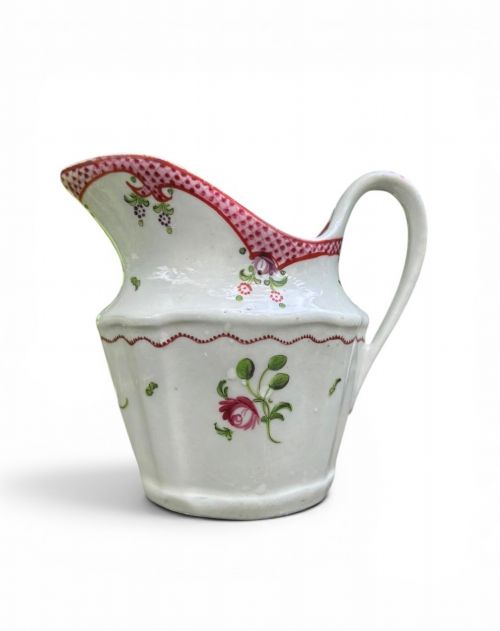


Floral Porcelain Cream Jug
These floral porcelain cream jug pieces bring hand-painted botanicals and eighteenth-century forms straight to the table.
Floral Porcelain Cream Jug
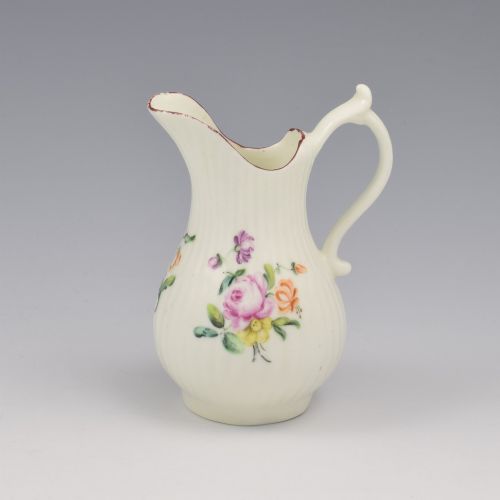
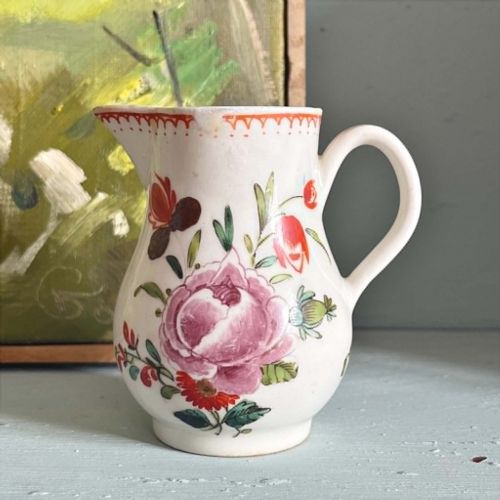
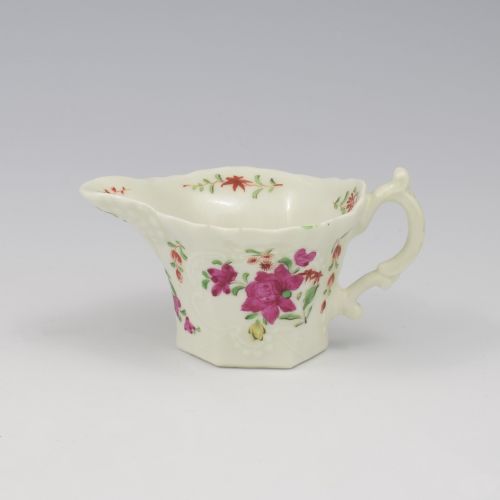
A floral porcelain cream jug is a small vessel designed for serving milk or cream at the table, shaped as a spouted pitcher, low chelsea ewer, or sparrowbeak creamer. These items span periods from the mid-eighteenth century up to the late Victorian era, appearing in styles from Rococo revival to Chinese export porcelain.
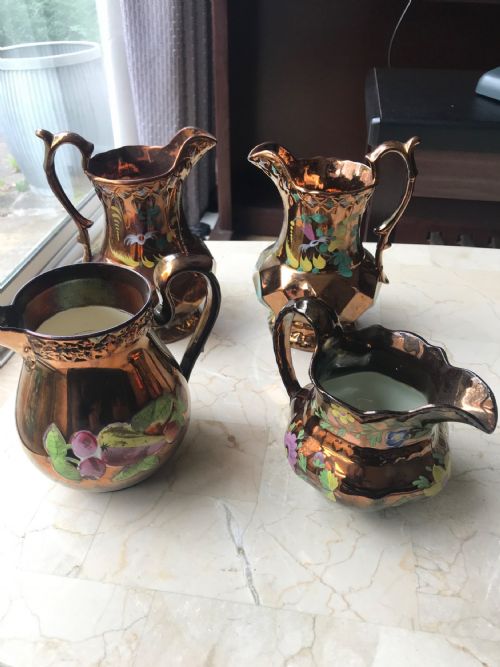
The most common examples on this page are eighteenth-century soft-paste porcelain jugs painted with polychrome floral enamels, alongside later Victorian earthenware and porcelain pieces with hand-decorated fruit and flowers. Forms vary from fluted baluster bodies to hexagonal sauce boats and moulded dolphin ewers.
Materials and manufacture
Potters shaped these vessels using soft-paste porcelain, hard-paste porcelain, or earthenware, often building forms with moulded handles, sparrowbeak lips, or lobed bodies. Copper lustre glaze and gold leaf gilding frequently accent the rims and handles.
Decoration relies on hand-painted enamel colours fired onto the glaze, depicting botanical sprays and floral sprigs. Transfer printing and hand-brushing complete the surface work across both early factory pieces and later Victorian items.
Early potters shaped jugs to resemble birds and dolphins, turning morning cream into a small sculptural zoo.
Distinctions in quality
Quality rests on the crispness of the porcelain body and the skill behind the hand-painted enamels. Finer examples display delicate brushwork with precise botanical detail, while lesser pieces rely on simpler decoration and heavier moulding.
The sophistication of the form also sets items apart, moving from straightforward jugs to complex moulded ewers with gilding and detailed handles. Early period provenance and intact painted surfaces elevate the status of a piece within the range.
Derby Porcelain·Bow porcelain·Worcester Porcelain·New Hall porcelain·Walker and Hall·Doulton Burslem·Meissen·Royal Worcester·John Rose Coalport·Rockingham
The Floral Porcelain Cream Jug Glossary
- Sparrowbeak
- A small cream jug featuring a distinctive pinched lip resembling a bird's beak. This form is particularly common on eighteenth-century porcelain pieces.
- Soft-paste porcelain
- A ceramic body composed of clay and glass frit, fired at lower temperatures than hard-paste porcelain. It produces a warm, slightly translucent glaze texture.
- Ewer
- A large jug with a wide spout and looped handle, originally for water but used here as a decorative serving vessel. Victorian examples often incorporate bulbous bodies and elaborate handles.
- Polychrome
- Decoration employing multiple distinct enamel colours on the ceramic surface. These pigments are hand-painted before a final kiln firing.
- Baluster
- A vase-like architectural shape with a rounded lower body tapering to a narrow neck. This profile appears frequently on eighteenth-century milk jugs.
Floral Porcelain Cream Jug: Frequently Asked Questions
How do I date an antique cream jug?
Dating relies on body material, glaze characteristics, and factory marks underneath the base. Soft-paste porcelain and hand-painted enamels typically point to the eighteenth century, while factory backstamps often indicate Victorian production.
Shape and handle style also provide clues, as rococo curves and moulded spouts evolved significantly from the seventeen-fifties through to nineteen-ten.
Can I use these jugs for serving cream?
These historical vessels are delicate and intended primarily for display or gentle collection use. Fine ceramic bodies and antique enamels require careful handling rather than daily service.
Hand-washing in lukewarm water without harsh detergents helps preserve the original gilding and painted floral surfaces.
What is a sparrowbeak jug?
A sparrowbeak jug is an eighteenth-century creamer featuring a short, pointed spout that resembles a bird's beak. This compact shape was standard for early porcelain tea services.
Potters paired these spouts with loop handles and pear-shaped bodies painted with enamel flowers.
How do I tell soft-paste from hard-paste porcelain?
Soft-paste porcelain has a softer, warmer glaze that absorbs light differently than the hard-paste body. Under magnification, the surface often reveals tiny bubbles in the glaze layer.
Early eighteenth-century factories like Bow and Worcester used soft-paste formulations before standard hard-paste recipes became widespread.