
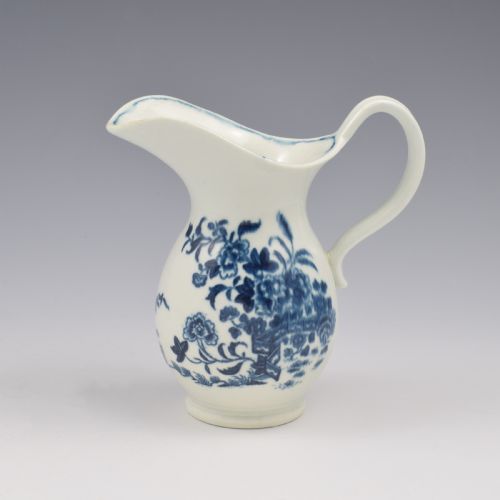


Antique Worcester Ewer
An antique worcester ewer brings hand-painted floral artistry and graceful porcelain curves straight from the Victorian and Georgian eras into a modern room.
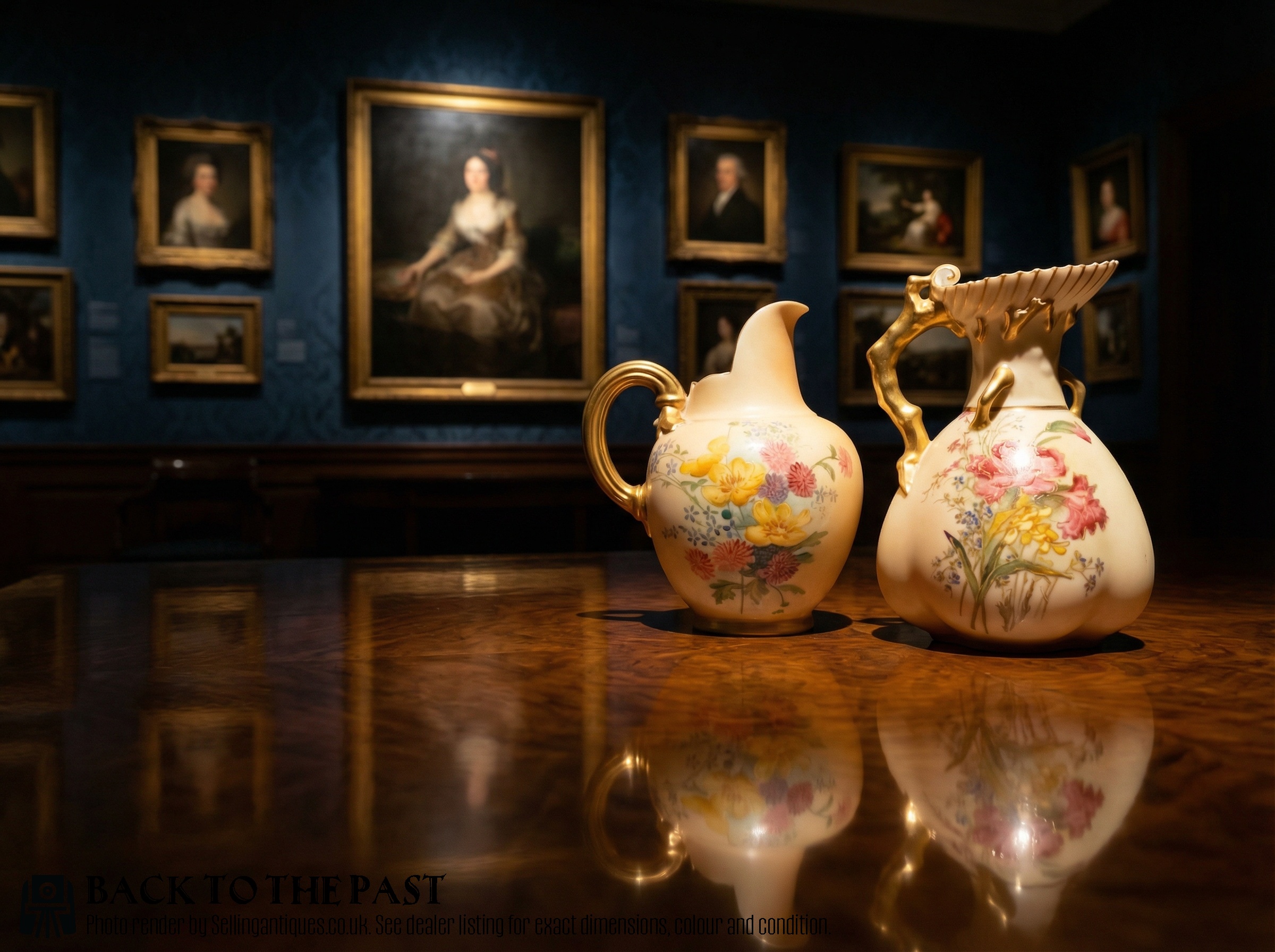
Antique Worcester Ewer
When you look for an antique worcester ewer, you find ceramic pouring vessels created by Worcester factories across the eighteenth, nineteenth, and early twentieth centuries. These pieces range from delicate eighteenth-century soft-paste porcelain milk jugs and water ewers to large Victorian and Edwardian decorative display items.
The most common examples on this page date from the Victorian and Edwardian periods, particularly featuring the popular blush ivory ground. You will also encounter rarer Georgian items, including First Period Dr Wall pieces and dolphin cream boats with lamprey handles.
How they were made
Makers shaped these vessels from porcelain, utilising both standard and soft-paste ceramic bodies formed into elaborate shapes like cleft jugs and pedestal ewers. Artisans then applied detailed enamel painting by hand, often depicting botanical studies or landscape scenes.
Gilding and gold leaf or gold gilt highlights were added to handles, rims, and moulded details, sealing the decoration beneath a smooth glaze during firing.
Some eighteenth-century cream boats take the form of leaping dolphins with twisted lamprey handles.
What varies in quality
The distinction between ordinary production and top-tier pieces rests on the precision of the hand-painting and the presence of named artist signatures. Works bearing the brush of known decorators command greater attention than standard factory output.
Moulding complexity and the richness of the gilding also define the hierarchy, with reticulated bodywork and heavy gold leaf application marking out the superior examples.
Royal Worcester·Grainger Worcester·Chivers·Stinton·Harper·Owen·Davis·Empress
The Antique Worcester Ewer Glossary
- Soft-Paste Porcelain
- An early ceramic composition fired at lower temperatures than hard paste, producing a warm body common in eighteenth-century Worcester pieces. It absorbs glaze differently and feels softer to the touch.
- Blush Ivory
- A matte cream-coloured ceramic ground introduced by Royal Worcester in the late nineteenth century. It serves as a subtle background for hand-painted floral decoration.
- Reticulated
- Openwork ceramic patterning pierced through the clay body before firing, creating an intricate lace-like effect on the vessel wall.
- Gilding
- The application of gold leaf or gold paint to ceramic surfaces for decorative accent. It elevates the visual weight of handles and rims.
- Dr Wall Period
- The First Period of Worcester porcelain production, lasting from 1751 to 1783 under the direction of Dr John Wall. Collectors prize these early soft-paste items for their body and blue-and-white or enamel painting.
Antique Worcester Ewer: Frequently Asked Questions
How do I identify a Dr Wall ewer?
Dr Wall ewers belong to the First Period of Worcester production from the eighteenth century. They utilise soft-paste porcelain and frequently display crescent or square fret marks underneath.
Handling these pieces reveals the characteristic warmth and weight of early English ceramic manufacturing.
Where should I display my ewer?
Ewers look best on sturdy sideboards, mantelpieces, or dedicated display cabinets where their painted surfaces catch the light. Because they were originally ornamental rather than functional, keep them away from busy household traffic.
Pairing a single ewer with matching pedestal vases creates a balanced traditional arrangement.
Are painted ewers signed by artists?
Many fine Victorian and Edwardian pieces feature artist signatures near the base or among the floral decoration. Painters like Stinton and Harper signed works that showcased landscape or botanical scenes.
Signed pieces represent the highest tier of factory output from the late nineteenth and early twentieth centuries.