


Blush Ivory Pitcher
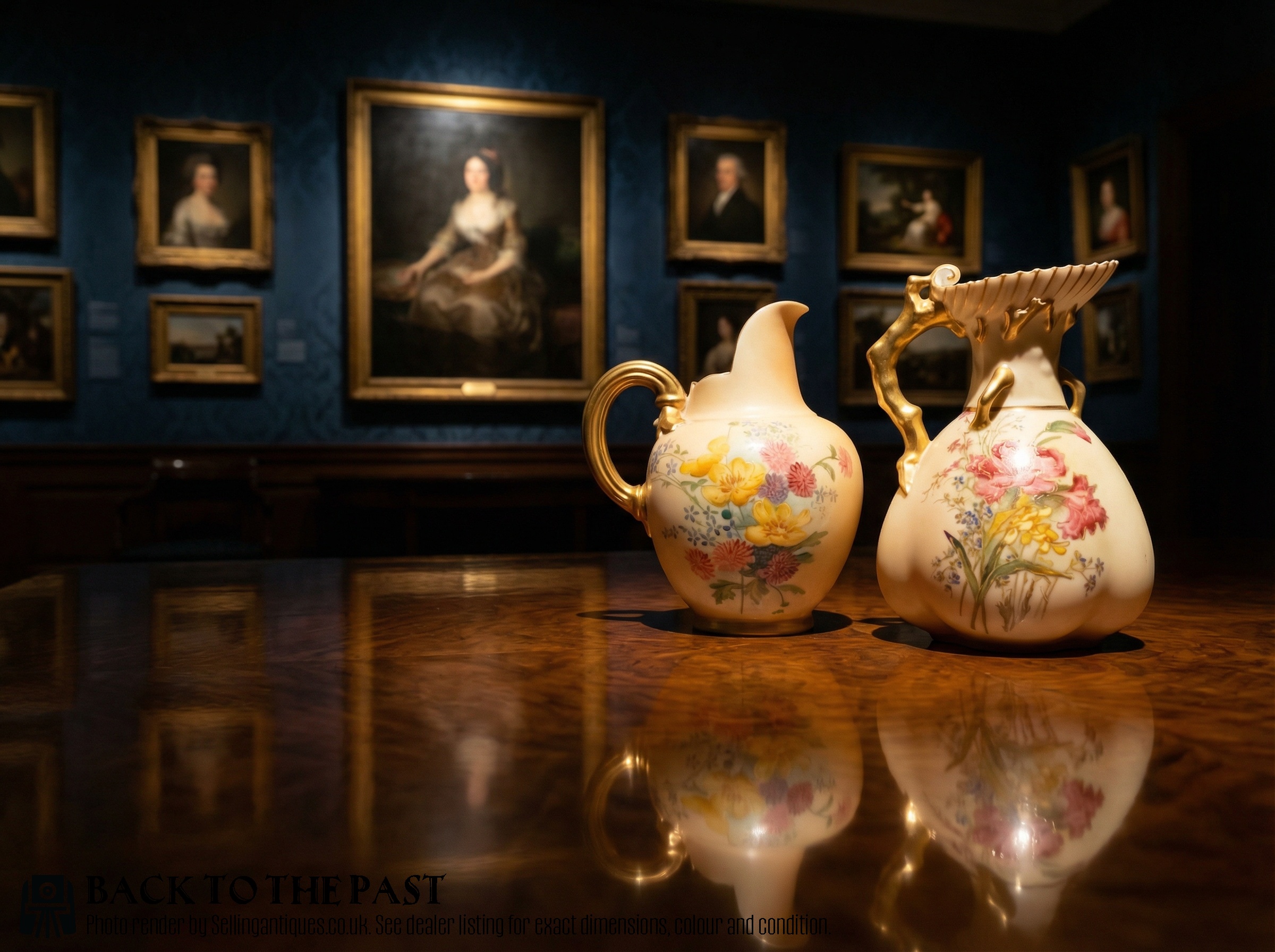
A blush ivory pitcher brings delicate floral tones and graceful ceramic forms to a room, offering a subtle nod to late Victorian and Edwardian taste.
Blush Ivory Pitcher
A blush ivory pitcher presents a distinct palette of soft cream and warm ivory grounds, frequently enriched with painted floral motifs and gilded accents. Collectors searching for a blush ivory pitcher will encounter ewers, standard jugs, and pedestal vessels primarily originating from the late Victorian and Edwardian eras. These ceramic pieces range from modest domestic jugs to large, ornate display ewers designed for aesthetic impact.
The dominant maker represented in these forms is Royal Worcester, alongside examples from Doulton Burslem. Production dates span from the 1880s through the 1920s, capturing the transition from Aesthetic Movement sensibilities to early twentieth-century decorative arts. Most examples on offer take the form of ewers, vases, or jug and basin sets.
Forms vary from cleft jugs and wine ewers to grand pedestal ewers and coffee pots. The aesthetic unites soft-toned ceramic bodies with raised gold leaf, enamel highlights, and gilded handles. Buyers seek these items to introduce understated nineteenth-century elegance into period and eclectic interiors alike.
Materials and construction
These pieces utilise fine porcelain and earthenware bodies that receive a specialised soft-toned ivory glaze. Potters shaped the clay into complex ewer and jug forms, often incorporating handle designs that mimic organic growth or classical metalwork. The characteristic blush effect relies on controlled application of enamel colours over the pale ceramic ground.
Surface decoration frequently combines hand-painted floral sprays with rich gilding, gold leaf, and gold gilt highlights. Artisans applied these metallic elements by hand, firing the pieces multiple times to set the enamel and bond the precious metals to the ceramic surface. The resulting finish balances matte ivory areas with luminous gilded details.
Some Victorian jugs feature pinched rims designed to keep stubborn floral stems from slouching while pouring.
Assessing quality and execution
Quality rests upon the crispness of the moulded form and the delicacy of the hand-painted decoration. Superior examples display finely rendered floral details and secure, well-applied gilding that enhances rather than overpowers the ivory ground. The weight of the ceramic and the balance of the handle also signal superior workshop standards.
Thicker, simpler domestic jugs sit at the accessible end of the scale, whereas grand pedestal ewers with complex cleft profiles and extensive gold leaf represent the height of the range. The intricacy of the painted roses and the precision of the gilt work dictate the standing of each piece within its period.
Royal Worcester·Doulton Burslem
The Blush Ivory Pitcher Glossary
- Blush ivory
- A soft-toned ceramic finish featuring cream and ivory glazes, popularised by late nineteenth-century potteries. It provides a muted background for floral enamel painting.
- Ewer
- A large jug with a wide spout and a curved handle, traditionally used for holding water or wine. In decorative ceramics, it serves primarily as an ornamental centrepiece.
- Gilding
- The application of gold leaf, gold gilt, or powdered gold onto the surface of ceramic objects. This technique highlights rims, handles, and painted motifs.
- Cleft jug
- A pitcher featuring an indented or pinched rim that alters the circular mouth into a distinct shape. This form requires skilled manipulation of the clay before firing.
- Earthenware
- A porous ceramic body fired at lower temperatures than porcelain. It forms the structural base for many nineteenth-century decorative pitchers.
Blush Ivory Pitcher: Frequently Asked Questions
What is a blush ivory pitcher?
A blush ivory pitcher is a nineteenth- or early twentieth-century ceramic vessel featuring a soft cream-coloured glaze, hand-painted floral decoration, and gilded details. These pieces were produced primarily as decorative items rather than for heavy daily use.
Parks of the appeal lie in their association with the Aesthetic Movement and the refined ceramic techniques of period potteries such as Royal Worcester.
How do I date a ceramic ewer?
Dating relies on maker marks stamped or painted on the underside, stylistic cues, and the specific combination of enamel colours and gilding. Victorian and Edwardian examples often exhibit distinct registration numbers or factory ciphers.
Comparing the form and floral motifs to documented production periods helps narrow down the decade of manufacture.
Were these pitchers used for serving?
While some forms like coffee pots and water jugs served functional purposes, many ewers and pedestal vessels were created purely for display. The delicate nature of the enamel and gold leaf meant they were often showcased on mantelpieces or within cabinets.
Jug and basin sets, however, were designed for bedroom washing use before plumbing became standard.
How should I display my ewer?
Display these pieces on stable surfaces away from direct sunlight to protect the hand-painted enamel colours. Placing them where light can catch the gilded handles and gold leaf highlights will accentuate their decorative qualities.
Pairing a blush ivory pitcher with complementary period ceramics creates a cohesive period display.