

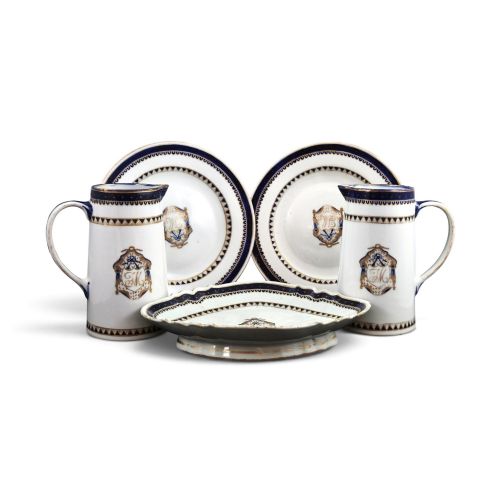


Gilt Porcelain Cream Jug
These gilt porcelain cream jug examples combine fine ceramic bodies with rich metallic detailing to grace any traditional table setting.
Gilt Porcelain Cream Jug
A gilt porcelain cream jug brings functional elegance to the table, taking forms such as sparrow beak jugs, ewers, and small pitchers designed for serving cream or milk. These pieces emerge from periods ranging through the eighteenth century, the Victorian era, and into the twentieth century, reflecting diverse aesthetic shifts.
The selections available here showcase prominent factories like Royal Worcester alongside Chinese Export and Crown Derby manufactures. Buyers encounter traditional English porcelain bodies and earthenware pieces adorned with gilt highlights, painted fruit motifs, and monogrammed details.
Many items derive from the Victorian era and early twentieth century, spanning Georgian influences to Victorian Aesthetic Movement designs. Each vessel demonstrates the persistent demand for refined tableware that balances practical utility with decorative finish.
Materials and construction
Makers shaped these vessels using porcelain, soft-paste porcelain, and earthenware bodies before applying surface decoration. Artisans then enriched the ceramic forms using gold leaf, gold gilt, and gold gilding techniques to accentuate handles, rims, and body contours.
Hand-painted enamel details frequently accompany the gilding, as seen in pieces featuring botanical or fruit subjects. Potters also utilised specialised moulding to create textured surfaces like rope edges and Persian-influenced profiles before final firing and decoration.
Gilt Porcelain Cream Jug Retail Price Guide 2026
Typical asking prices for gilt porcelain cream jug among the pieces listed under this phrase on Sellingantiques today, from the lower quarter to the upper quarter. They describe what is for sale here now, not the wider market.
Listings feature porcelain, earthenware, and soft-paste porcelain decorated with gold leaf, gold gilt, and enamel.
Assessing quality and craftsmanship
The fineness of the ceramic body and the precision of the hand-painted decoration distinguish superior examples. Superior pieces display crisp brushwork in floral or fruit motifs alongside evenly applied gold leaf that remains bright and well-defined across high-wear areas like handles and spouts.
The integration of form and ornament dictates overall merit, where sculptural elements such as rope edges or embossed moulding align harmoniously with the gilding. Signature work by recognised artists adds further distinction to individual vessels within the wider range.
Royal Worcester·Crown Derby·Doulton Burslem
The Gilt Porcelain Cream Jug Glossary
- Soft-paste porcelain
- A type of ceramic body composed of clay and glass frit, fired at lower temperatures than true porcelain. It produces a warm texture popular in eighteenth-century English manufactories.
- Gilding
- The application of gold leaf or gold powder to the surface of ceramics. This decorative technique highlights handles, rims, and painted panels.
- Ewer
- A large jug or pitcher with a wide spout and handled shape, often decorative. These vessels evolved from washing pitchers into ornamental display pieces.
- Enamel
- Opaque vitreous material fused to the ceramic body through firing. It provides vibrant, durable colour for painted scenes and borders.
Gilt Porcelain Cream Jug: Frequently Asked Questions
What periods do these cream jugs span?
The pieces range from eighteenth-century Chinese Export and Worcester examples through Victorian productions to twentieth-century Royal Worcester items. This timeline demonstrates evolving ceramic fashions across multiple centuries.
Buyers find traditional English designs alongside pieces influenced by Asian aesthetics and Edwardian styles.
How were these jugs originally used?
These vessels served a practical role at the dining table for pouring cream or milk during tea and coffee service. Many forms also functioned as decorative ewers or pitchers.
Over time, finer examples transitioned from daily utility items into prized display pieces within domestic settings.
How do I identify different ceramic materials?
Ceramic bodies vary from translucent porcelain and soft-paste variants to opaque earthenware and pottery. Examining the weight, light transmission, and glaze texture helps distinguish these materials.
Factory marks and stylistic clues further aid in identifying the specific composition of each piece.
How should I display gilt porcelain?
Display these items away from direct sunlight and high-moisture environments to protect the painted enamel and gold gilding. Stable shelving prevents accidental knocks to delicate handles and spouts.
Grouping pieces by maker or period highlights their individual decorative qualities.