


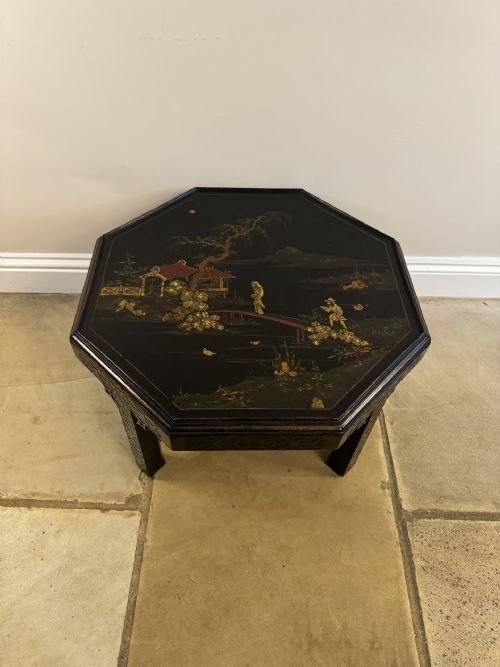
Gilt Painted Coffee Table
A gilt painted coffee table brings surface pattern and reflective light into a room, combining decorative painting with low-level utility.
Gilt Painted Coffee Table
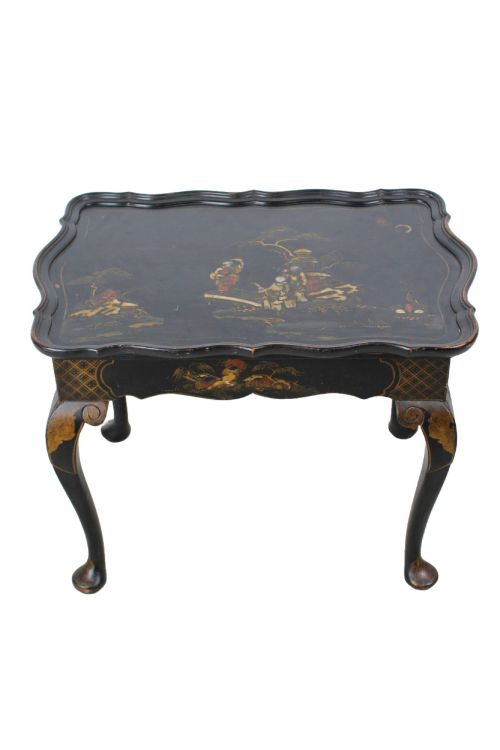
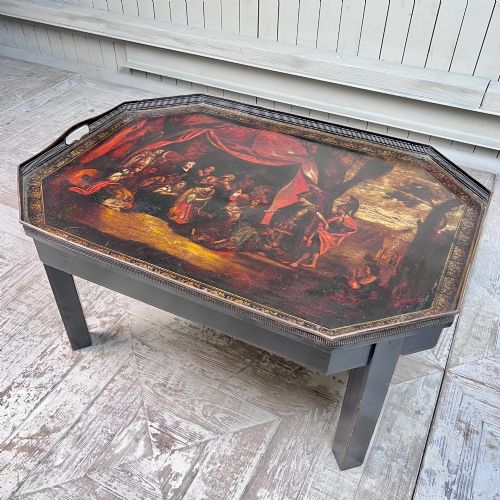
When you search for a gilt painted coffee table, you encounter a mix of low tables adapted from earlier serving trays and pieces built specifically as low tables. The selection ranges from Edwardian Chinoiserie examples to 19th century toleware and papier-mâché trays mounted on later stands.
You are most likely to meet pieces originating from the 19th century and the Edwardian period, alongside later 1920s and 1930s interpretations. Forms vary from circular and octagonal occasional tables to nests of four stacking tables and larger rectangular tray tops.
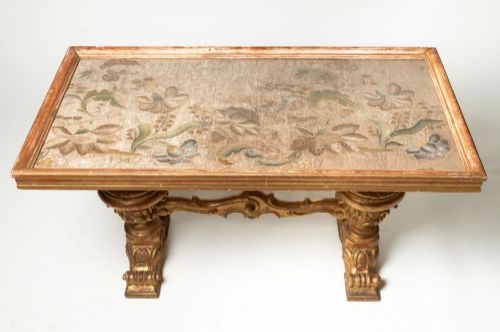
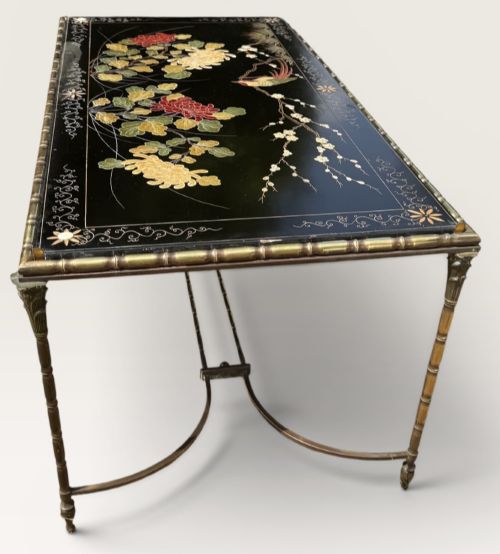
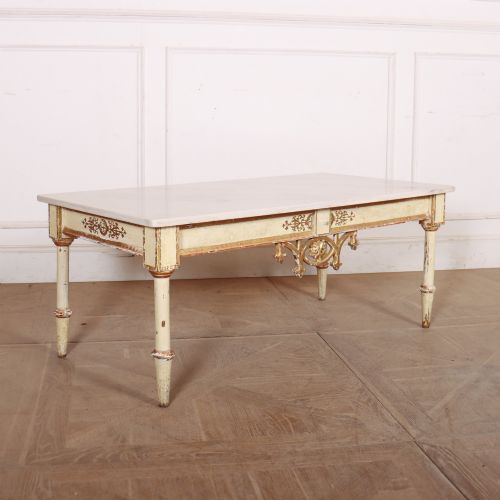
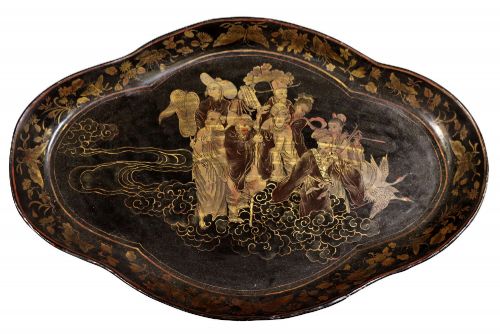
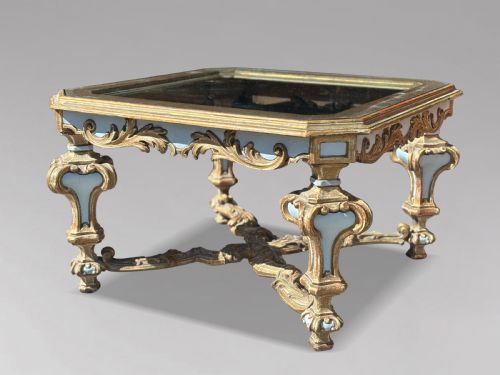
The aesthetic vocabulary draws heavily on Chinoiserie lacquer, Venetian painted styles, and Italian Baroque or Neoclassical revivals. These surfaces combine painted pictorial scenes or floral motifs with gilt highlights, gold leaf, or parcel gilt framing.
How they were made
The construction relies on wood, papier-mâché, or metal toleware as a base, prepared with gesso and paint before the application of lacquer or decorative pigments. Artisans then applied gold leaf or gilt paint to mouldings, edges, and pictorial motifs to catch the light.
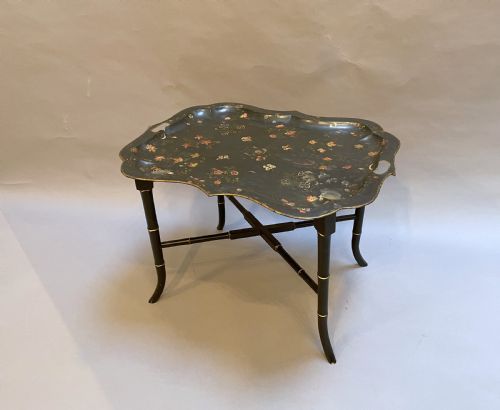
Many historical examples utilise serving trays placed onto custom stands, resulting in removable top surfaces supported by folding, iron, or fixed wooden bases. Marble tops also appear, integrated into Italian and French decorated frameworks alongside porcelain mounts.
Listings span the 19th century, Edwardian era, and the 1920s to 1930s, uniting lacquer, giltwood, papier-mâché, and marble in low table formats.
What varies in quality
The standard of the hand-painted decoration determines the visual success of the piece, distinguishing finely rendered Chinoiserie scenes and delicate gilt work from simpler, coarser brushwork. The crispness of the carving on giltwood elements and the integration of the tray to its stand also set finer items apart.
Material choice dictates durability and weight, with papier-mâché and heavy timber bases offering different structural characteristics than lighter occasional tables. The depth and integrity of the original surface patination indicate how well the gilt and paint layers have survived decades of use.
Maison Bagues·Jennens & Bettridge·E Daligny
The Gilt Painted Coffee Table Glossary
- Chinoiserie
- European decorative style reflecting Chinese artistic influences, frequently featuring figures, pagodas, and landscapes in lacquer and gilt. This style dominates the Edwardian and 19th century tables on this page.
- Toleware
- Enamelled or lacquered metalware, often painted and gilded, commonly formed into trays that were later converted into low tables. It provides a durable, reflective surface.
- Papier-mâché
- A composite material made from paper pulp or sheets mixed with glue and resin, pressed and dried into sturdy trays before being lacquered and painted. It offers a smooth ground for intricate gilt decoration.
- Parcel gilt
- Portions of an object highlighted with gold leaf or gilt paint while the remaining surface retains its primary paint or wood finish. It creates contrast against dark lacquer backgrounds.
- Giltwood
- Wood carved and coated with gold leaf or gilt preparation, seen on Italian Baroque and Neoclassical frames and stands. It provides structural support with a rich metallic sheen.
Gilt Painted Coffee Table: Frequently Asked Questions
Are the tray tops removable?
Many examples across the 19th century and Edwardian periods use genuine serving trays set directly onto independent stands. This construction allows the top to lift off separately from the base.
Other tables are built as single integrated units where the top is permanently fixed to the frame. Checking the underside reveals whether the tray sits loose or is secured with screws.
How do I clean a painted surface?
Painted and gilt surfaces require gentle dusting with a soft, dry cloth to prevent abrasion of the delicate top layer. Avoid using water, modern chemical sprays, or abrasive cleaners which can lift the lacquer or dissolve the gilt paint.
Wax polish should only be used if the timber or lacquer finish explicitly calls for it, and applied sparingly to avoid buildup on painted motifs.
What is papier-mâché?
Papier-mâché is a dense composite material formed from paper layers or pulp compressed with binders, creating a hard, stable board. It was widely used in the 19th century for serving trays because it resisted warping and provided an ideal smooth base for dark lacquer and gold leaf.
These trays were frequently mounted on later iron or wooden stands to serve as coffee tables.
How do I date a painted table?
Dating relies on examining the materials of the base, the style of the painted decoration, and the construction methods of the stand. Edwardian Chinoiserie pieces often show lighter timber frames and specific lacquer techniques characteristic of the early 20th century.
Nineteenth-century examples frequently feature heavy papier-mâché or toleware trays paired with later supporting stands.