




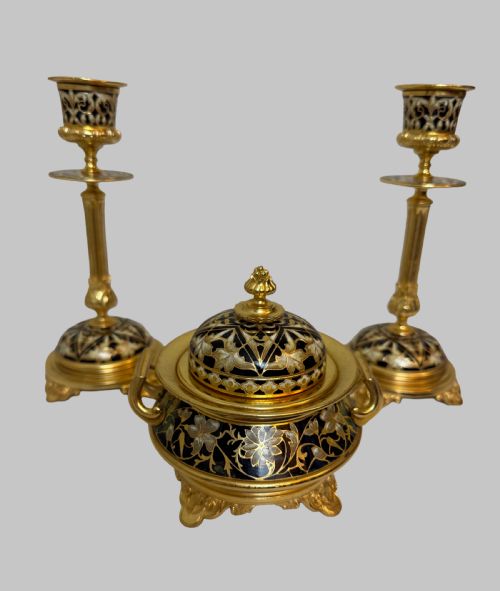


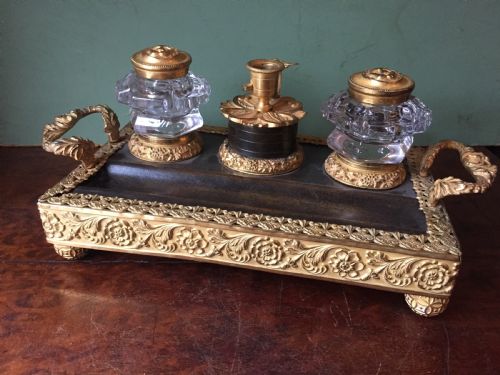


Gilt Ormolu Inkwell
A gilt ormolu inkwell brings the weight of the nineteenth-century writing desk into the room, cast in bright metal and stone.
Gilt Ormolu Inkwell
A gilt ormolu inkwell is a desk accessory designed to hold ink and a pen, appearing here in forms ranging from single vessels to substantial desk stands and sets complete with candlestands. These pieces mostly date from the nineteenth century, with French Empire, Neoclassical, Napoleon III, and Art Nouveau styles shaping their design.
The version you are most likely to meet on this page is a nineteenth-century French desk stand combining cast gilded bronze or ormolu with marble bases in Sienna, vert, or onyx. Many incorporate patinated bronze figures, glass inserts, or mahogany and coromandel-wood elements alongside the metalwork.
How they were made
The metal components rely on bronze casting and mercury gilding or modern electrogilding to achieve the bright ormolu surface, paired with patinated bronze for figural details such as lions, emus, cats, or portrait busts. Stonemasons cut and polished bases from blocks of marble, while glassmakers blew liners to hold the liquid ink safely inside the metal housings.
Cabinetmakers worked mahogany and coromandel-wood into stands for larger desk sets, securing the bronze mounts with pins and screws. Champlevé enamel and inlaid stones occasionally add colour to the metal frames, reflecting the high standards of nineteenth-century metalworkers.
Gilt Ormolu Inkwell Retail Price Guide 2026
Typical asking prices for gilt ormolu inkwell among the pieces listed under this phrase on Sellingantiques today, from the lower quarter to the upper quarter. They describe what is for sale here now, not the wider market.
Materials appearing across the inventory include Sienna marble, vert marble, onyx, coromandel-wood, and mahogany alongside gilt bronze.
What varies in quality
The distinction between ordinary and exceptional pieces rests on the crispness of the bronze chasing and the depth of the gilding. Top-tier examples show sharply defined fur on animals, clean architectural mouldings, and heavy mounts that fit their marble or wooden bases precisely.
Lighter castings with smoothed-out details or worn, patchy gilding sit lower in the range. The quality of the marble base also matters, with unblemished stones featuring rich natural veining outperforming plain or heavily repaired slabs.
Albert Marionnet·Moser
The Gilt Ormolu Inkwell Glossary
- Ormolu
- Gilt bronze produced by applying a mixture of gold and mercury to a bronze base and heating it, or through later electroplating methods. This technique creates a durable, bright gold-coloured surface.
- Encrier
- A French term for an inkstand or inkwell. These pieces often include compartments for pens and sealing wax alongside the central ink reservoir.
- Champlevé
- An enamelling technique where troughs are dug into the surface of the metal and filled with vitreous enamel powder before firing. It adds colourful decorative patterns to bronze frames and desk sets.
- Sienna marble
- A yellow-brown decorative limestone quarried in Italy, featuring dark purple or grey veining. It provides a heavy, colourful base for nineteenth-century ormolu mounts.
- Patinated bronze
- Bronze that has been chemically treated to produce a dark brown, green, or black surface colour. This finish contrasts sharply with the bright gold of surrounding ormolu mounts.
Gilt Ormolu Inkwell: Frequently Asked Questions
What is an ormolu inkwell?
An ormolu inkwell is a desk accessory made from gilded bronze, designed to hold ink for writing with a quill or dip pen during the eighteenth and nineteenth centuries.
These pieces often sit on marble or wooden bases and frequently form part of larger desk sets that include candlesticks or stamp boxes.
How do I clean an antique inkwell?
Antique metalwork requires gentle dusting with a soft, dry brush to prevent the accumulation of dirt in the chased recesses. Avoid chemical polishes, which can strip away the original mercury gilding or ormolu surface.
Glass ink inserts can be removed and washed in warm water, provided they are dried completely before being placed back into the metal housing.
Are these inkwells French?
Many nineteenth-century desk accessories originate from France, reflecting the dominant styles of the Empire, Napoleon III, and Art Nouveau periods. French makers produced numerous variations featuring cast animals, portrait busts, and classical architectural motifs.
British and other European workshops also produced desk stands, though French examples dominate this group.
What materials are used?
The primary materials are gilt bronze and ormolu, often combined with patinated bronze for figural elements such as cats, lions, and birds. Bases are typically cut from Sienna, vert, or onyx marble, while some desk stands incorporate mahogany or coromandel-wood.
Glass liners sit inside the metal wells to hold the ink, and champlevé enamel occasionally decorates the bronze frames.