


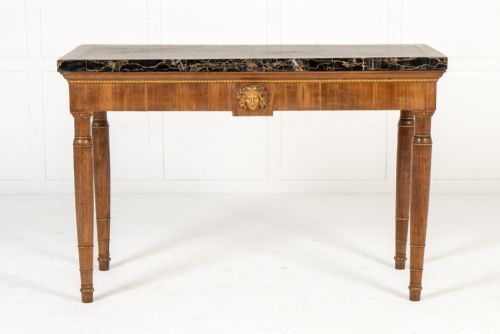


Gilt Mounted Walnut Table
A gilt mounted walnut table brings French revival elegance into a room through rich timber and cast metal detailing.
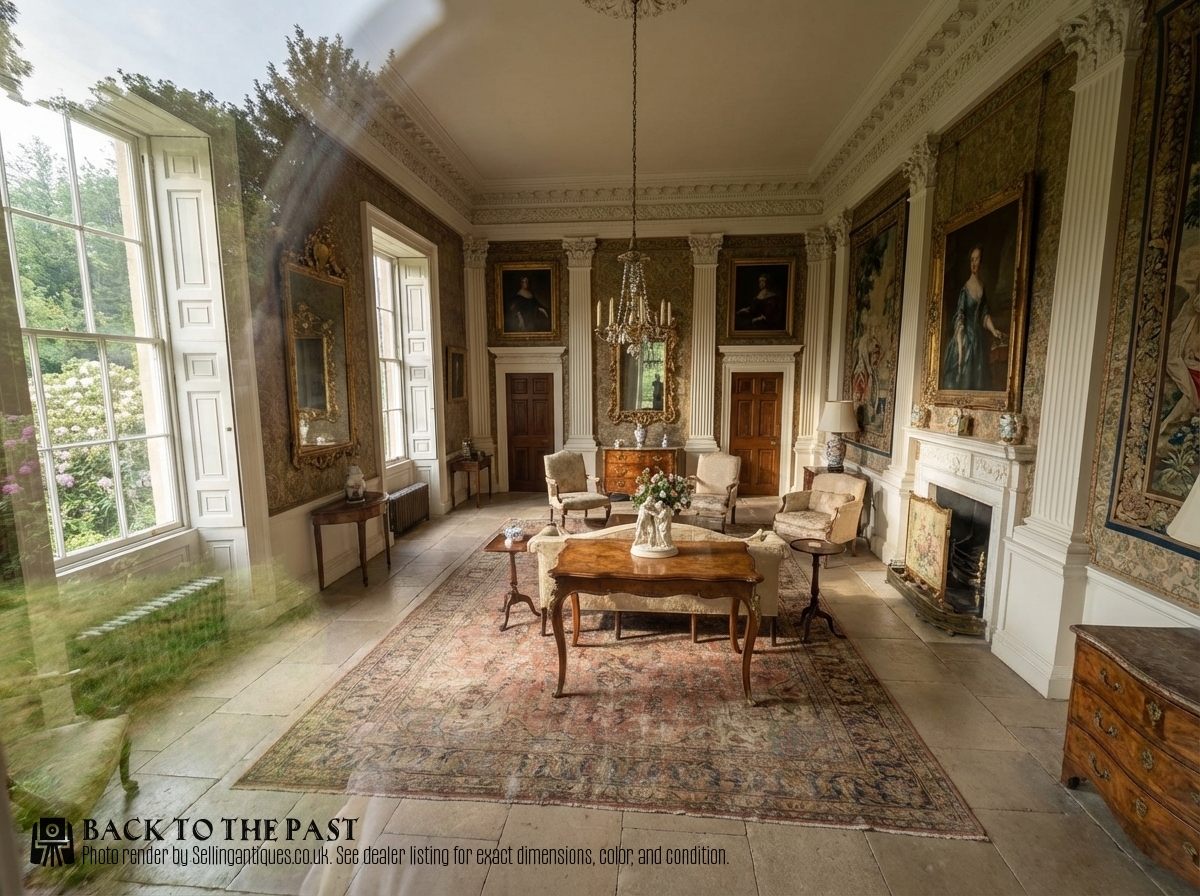
Gilt Mounted Walnut Table
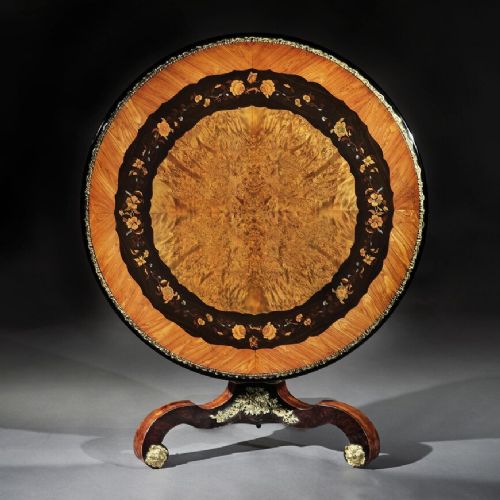
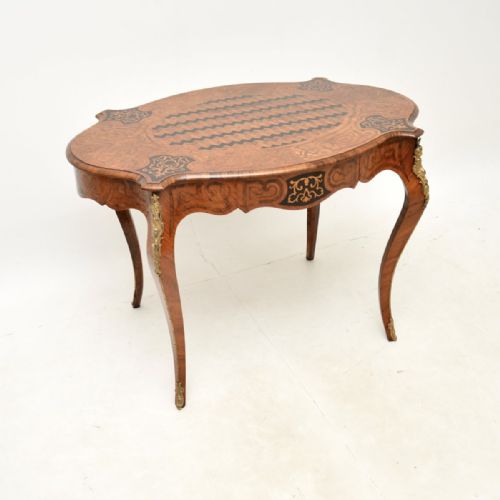
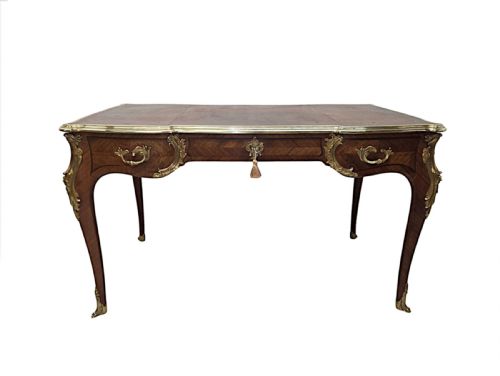
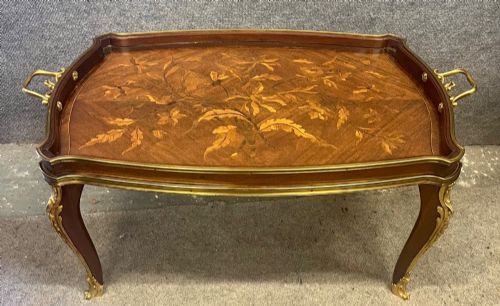
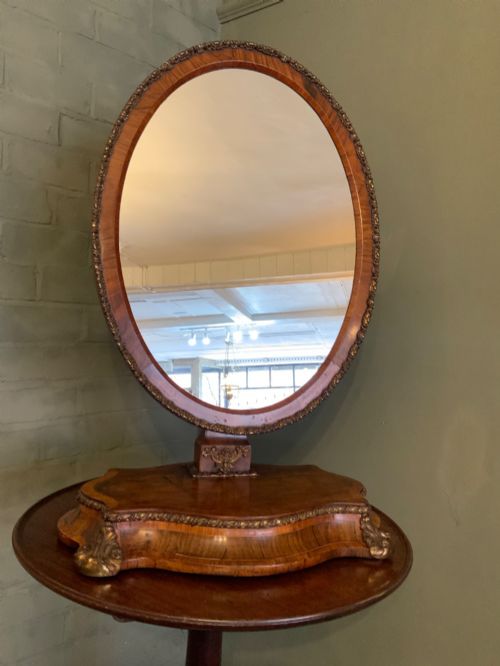
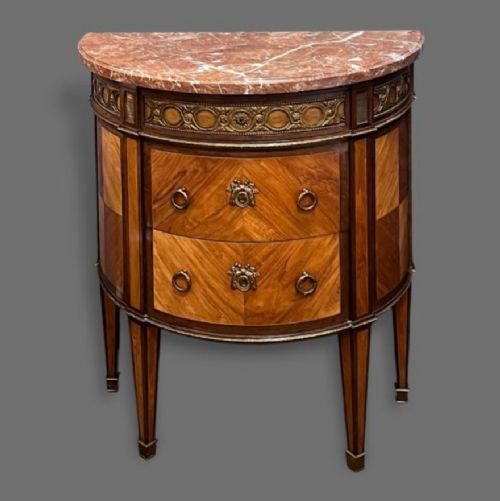
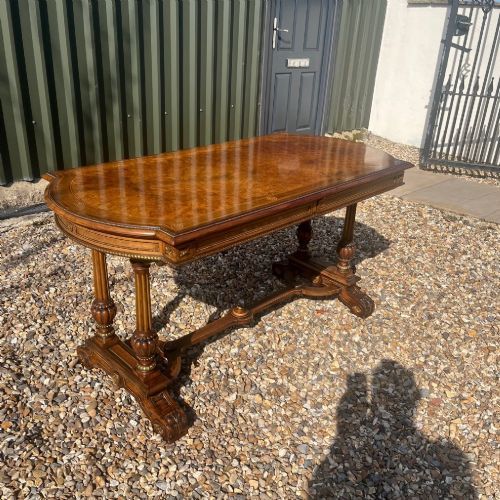
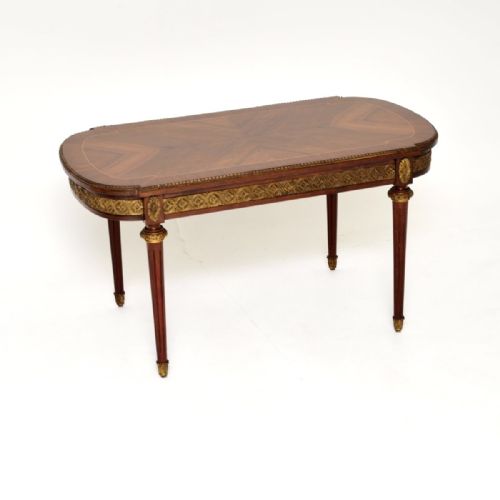
A gilt mounted walnut table is primarily represented here by nineteenth century centre tables, writing desks, and occasional side tables reflecting French and Victorian revival tastes. Buyers searching this phrase encounter substantial Victorian library pieces alongside delicate French bureau plats and coffee tables.
The forms span from modest occasional stands to large dining tables, often featuring marquetry or parquetry surfaces. Many examples draw on Louis XV and Louis XVI styles, incorporating serpentine outlines and shaped aprons.
Materials and Construction
Cabinet makers utilised solid walnut and burr walnut veneers over secondary timbers, often embellishing the surfaces with intricate marquetry and parquetry in contrasting woods. Ormolu and gilt bronze mounts were cast and chased to highlight the structural contours and corners of each piece.
Brass, kingwood, and ebonised wood frequently appear alongside glass and marble elements to complement the primary walnut construction. Metal mounts are secured with threaded pins or screws behind the timber panels.
Listings feature items dated across the nineteenth century alongside later twentieth century revival pieces.
Assessing Quality
Quality rests heavily on the depth of the walnut figure and the crispness of the ormolu casting. Superior pieces display finely hand-chased bronze mounts with sharp detail, whereas lesser examples use simpler, cast-only fittings with softer definition.
The precision of the marquetry inlay and the stability of the walnut timber determine the grade of the piece. Well-executed tables show seamless joins in the veneer and balanced proportions across the legs and apron.
Edward Holmes Baldock·Gillows·Lenzkirch
The Gilt Mounted Walnut Table Glossary
- Ormolu
- Gilt bronze or brass mounts applied to furniture. This technique involves coating a base metal in gold amalgam.
- Burr Walnut
- Walnut timber taken from a growth or knot on the tree. It yields highly figured veneer patterns used on tabletops and desk lids.
- Marquetry
- Decorative patterns formed by fitting together thin veneers of various coloured woods. Craftsmen use this technique to create floral or geometric table tops.
- Bureau Plat
- A freestanding writing desk with a flat top and drawers along the frieze. These are typically finished on all sides for placement in the centre of a room.
- Gueridon
- A small occasional table supported by one or more central columns or legs. The form originated in seventeenth century France.
Gilt Mounted Walnut Table: Frequently Asked Questions
What rooms suit a gilt mounted walnut table?
These tables work well as central statement pieces in sitting rooms or studies where their timber grain and metal mounts can catch the light. They function effectively as functional desks or decorative display surfaces.
Smaller occasional tables fit easily beside seating areas or against hallways walls, adding warmth and historical character to modern or traditional interiors alike.
How do I care for walnut veneer and ormolu?
Keep walnut furniture away from direct sunlight and steady heat sources to prevent the timber from drying and the veneer from lifting. Dust regularly with a dry cloth and avoid harsh chemical polishes.
Ormolu mounts require gentle cleaning with a soft brush to remove dust from the crevices. Avoid abrasive cleaners that can strip the gilt finish from the metal.
How do I tell Victorian pieces from French revival?
Victorian walnut tables often display heavier proportions and robust timber framing designed for domestic utility. They frequently incorporate substantial pedestals and conservative marquetry.
French revival examples tend to feature lighter cabriole legs, pronounced serpentine aprons, and more ornate ormolu mounts reflecting Louis XV or Louis XVI aesthetics.