


Gilt Mounted Chiffonier
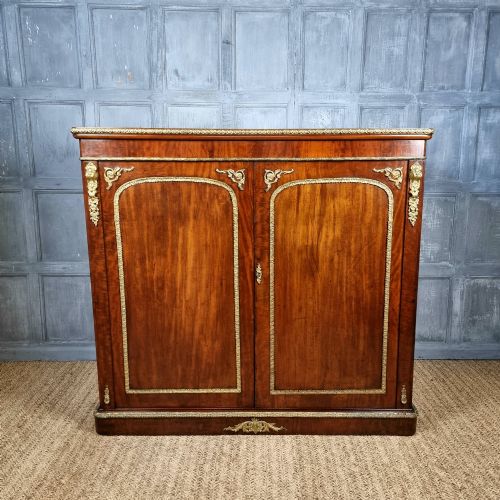
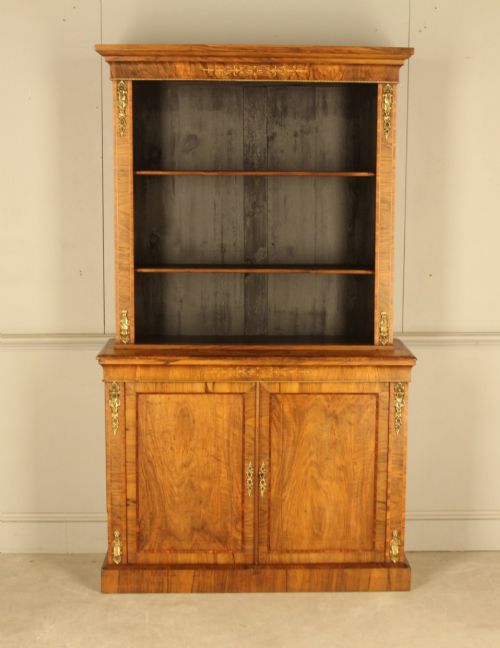
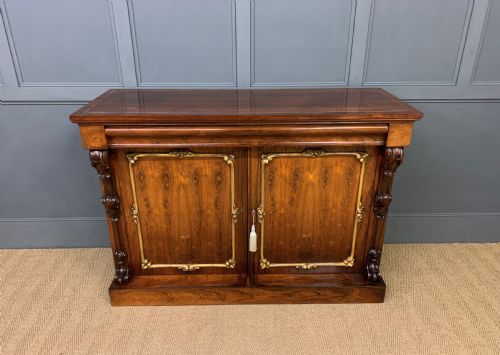
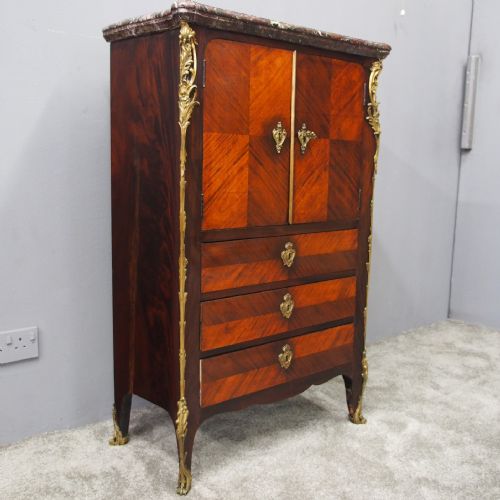
These gilt mounted chiffonier pieces combine rich timbers and gleaming metal mounts to anchor a room.
Gilt Mounted Chiffonier
A gilt mounted chiffonier provides enclosed lower storage topped by shelves or a low superstructure, emerging in the nineteenth century as a principal piece for the refined interior. These cabinets range from compact Regency rosewood examples to larger Victorian walnut and mahogany variations.
Makers shaped these side cabinets to serve as display and storage surfaces in principal reception rooms. The form bridges the gap between a low sideboard and a display cabinet, using enclosed doors to conceal books or household goods.
The versions most commonly met on this page span the Regency, William IV, and Victorian periods, often constructed in rich dark timbers. They sit low against the wall, occasionally incorporating mirrored backs or marble tops.
Materials and construction
Cabinet makers built these pieces using dense hardwoods including rosewood, walnut, coromandel, and mahogany, frequently applying veneers over sturdy carcass timbers. Fine brass and ormolu mounts were cast and chased then fixed to the exterior to highlight architectural lines and door frames.
Surfaces received careful French polishing to bring out the deep grain patterns of the wood, while marble tops and glass panels were integrated into the more elaborate designs. Metal mounts were secured with precision, reflecting the high standards of nineteenth-century workshop production.
Listings feature nineteenth-century pieces employing rosewood, walnut, and ebonised wood alongside cast ormolu and brass mounts.
Judging quality
The distinction between ordinary and superior pieces rests upon the crispness of the cast metal mounts and the selection of timber veneers. Master workshops employed heavier, finely chased ormolu and selected beautifully figured rosewood or coromandel with continuous grain alignment across the doors.
Construction methods also dictate grade, where secondary timbers like oak or mahogany were chosen for drawer linings and internal shelving. A high-grade piece displays meticulous dovetailing, substantial weight in the brass fittings, and harmonious proportions between the timber body and the metal ornamentation.
Gillows·Lamb of Manchester·Leonard Boudin
The Gilt Mounted Chiffonier Glossary
- Chiffonier
- A low cabinet with doors enclosing shelves, usually featuring a small shelf or mirror superstructure on top. It evolved during the nineteenth century as a versatile piece for the dining room or drawing room.
- Ormolu
- Gilded bronze used for decorative mounts and furniture trim. The technique involves applying a gold amalgam to cast bronze before heating to drive off the mercury.
- Rosewood
- A dense, heavily figured timber with dark brown and reddish grain lines. It was favoured by Regency and Victorian cabinet makers for high-status side cabinets.
- Ebonised
- Wood treated with a dark stain or finish to imitate ebony. This technique was popular during the Victorian Aesthetic Movement to create stark contrasts against gilt metal mounts.
- Gilt
- Covered with a thin layer of gold leaf or gilt paint. On these cabinets, it highlights brass mounts and carved wooden details.
Gilt Mounted Chiffonier: Frequently Asked Questions
What is a gilt mounted chiffonier used for?
These cabinets served primarily as side storage and display surfaces in nineteenth-century reception rooms. The enclosed lower section held books or dinner ware while the top surface displayed decorative objects.
The inclusion of a mirrored back or upper shelf on certain models allowed owners to display porcelain and small bronzes above the main storage body.
How do I date a Regency chiffonier?
Regency pieces typically display architectural lines, rosewood or mahogany veneers, and finely chased brass inlay or mounts. They date roughly from the early nineteenth century up to the reign of William IV.
Look for classical proportions and characteristic brass gallery rails or gilt-metal grilles set behind glass door panels.
Where should I place a side cabinet?
These cabinets suit dining rooms, hallways, or principal sitting rooms where their low profile allows them to sit beneath paintings or mirrors. Their finished backs and compact depths mean they occupy minimal floor space.
Keep them away from direct heat sources and strong sunlight to protect the polish and sensitive wood veneers from drying out.