
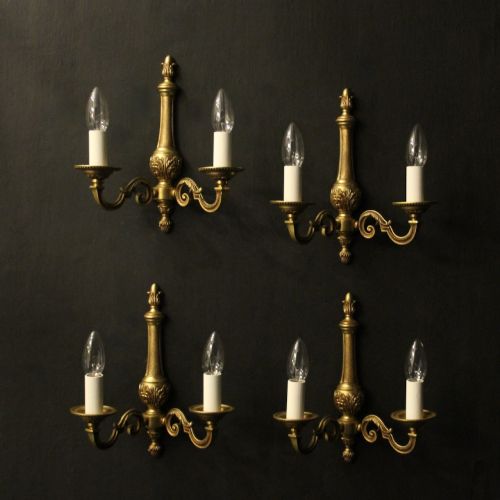
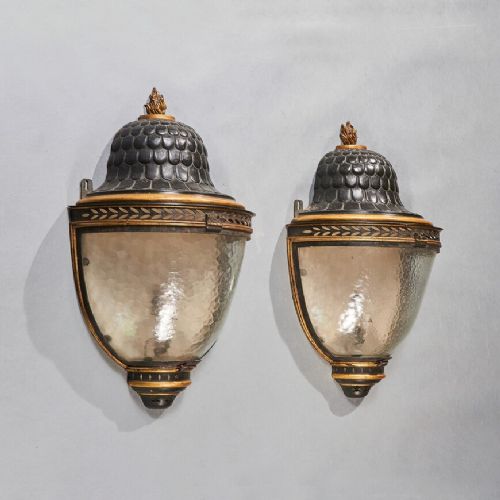
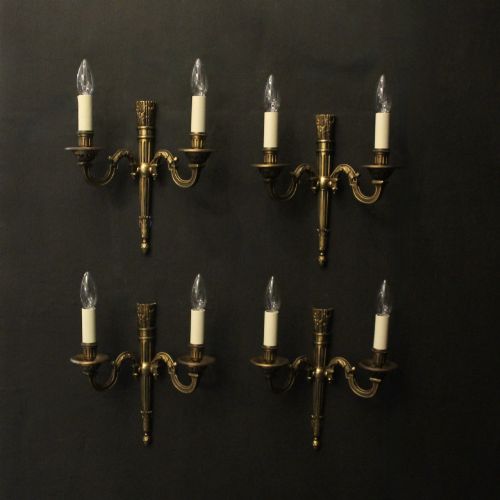
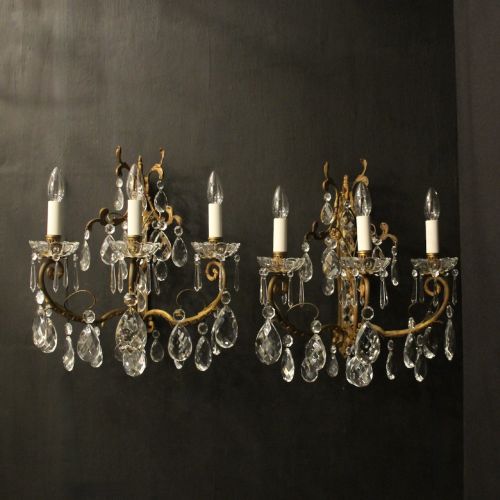
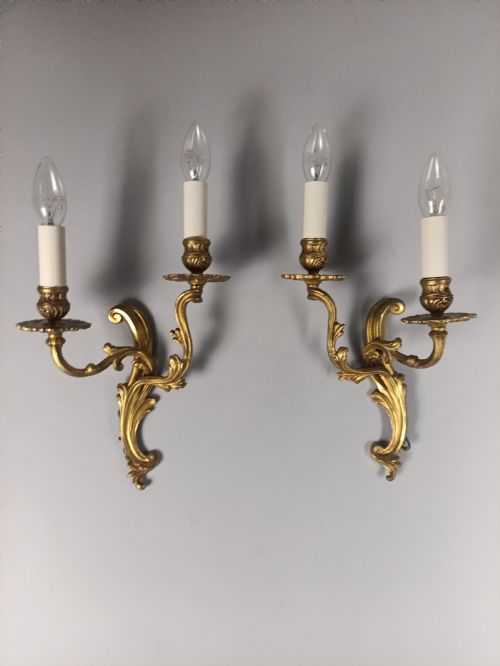
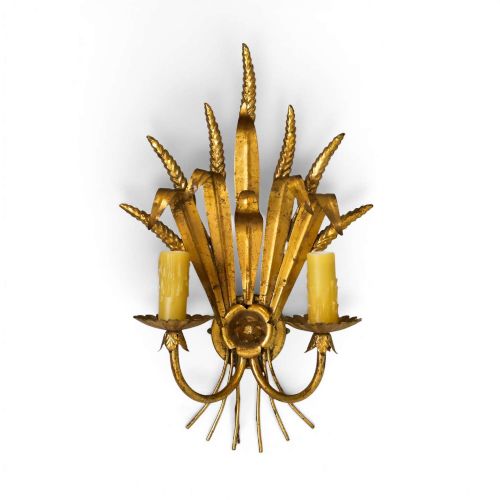


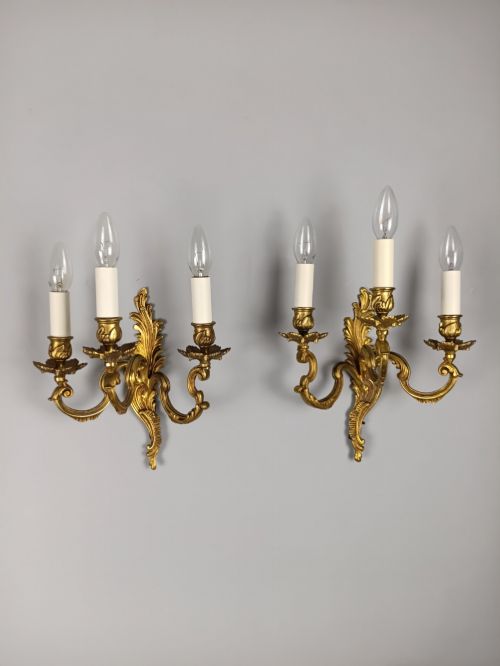
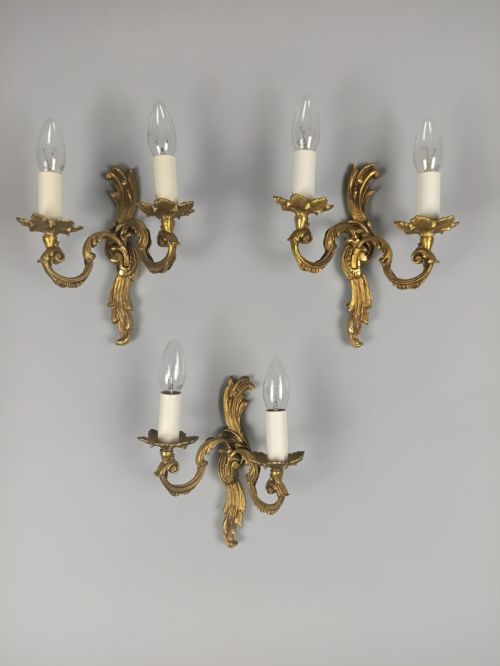
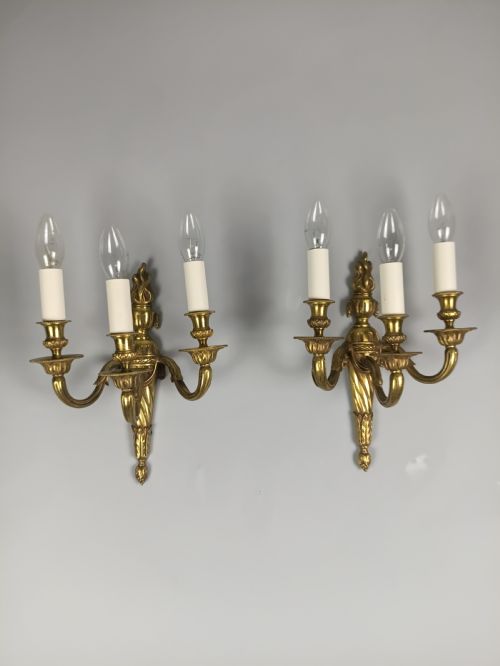
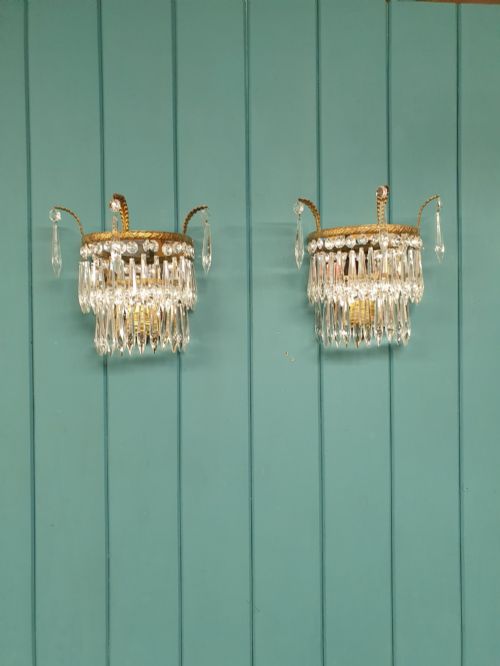
Gilt Metal Sconce Lights
These gilt metal sconce lights bring instant warmth and historic charm to any room through their gleaming metallic finishes and ornate period forms.
Gilt Metal Sconce Lights
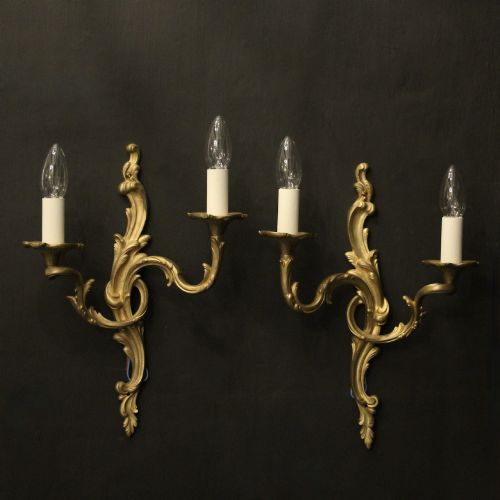
When you search for gilt metal sconce lights, you encounter wall-mounted fixtures designed to illuminate interiors while adding decorative presence. The selection spans centuries of design, with French and Italian workshops heavily represented alongside English pieces.
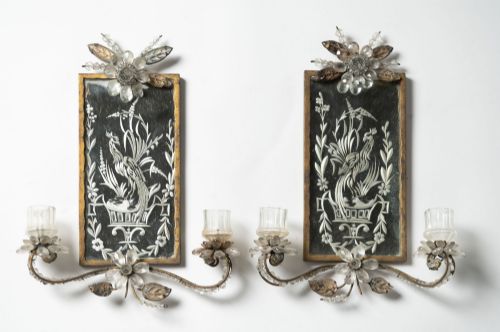
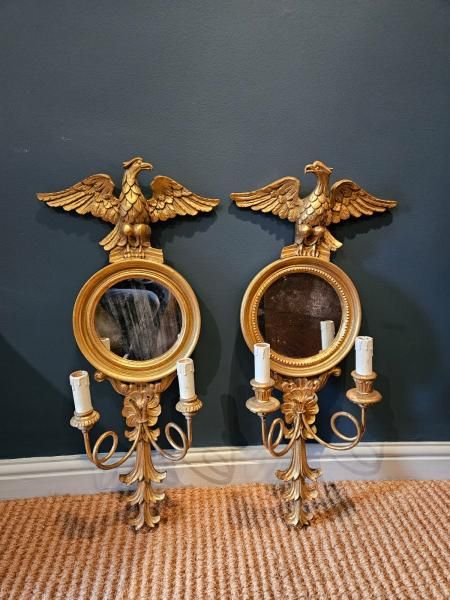
You are most likely to meet pairs and sets from the early twentieth century, particularly the nineteen-twenties and nineteen-thirties, alongside examples stretching back into the nineteenth and eighteenth centuries. These objects take the form of twin or triple arm wall lights, girandoles, and mirror-backed sconces.
The aesthetic vocabulary draws heavily from styles such as Rococo, Louis XVI, Regency, and French Neoclassical. Makers utilised cast bronze, brass, and toleware, often applying a brilliant gilt surface to catch the candlelight or electric bulb.
Materials and construction
The creation of these wall lights relies on durable metals like brass and bronze, which provide a sturdy armature for branching arms and sculptural details. Many pieces employ ormolu or surface gilding to impart a rich golden sheen across the metal elements.
Craftsmen cast these metals into intricate decorative motifs, including scrolling foliage, cherubs, and ram's head masks, sometimes combining the metalwork with cut glass, crystal, or painted toleware. The components are assembled to hold candles or, in later adaptations, electric fittings.
Materials documented across the inventory include gilded brass, bronze, ormolu, cut glass, crystal, and painted toleware.
Evaluating craftsmanship
The distinction between standard items and exceptional pieces rests upon the crispness of the metal casting and the depth of the chasing work. Superior examples exhibit fine detail in sculptural elements like leaves, figures, and animal motifs, whereas lesser pieces appear softer and more uniform.
Quality also reveals itself in the finish of the gilding and the harmony of the design proportions. Pieces produced by skilled ateliers display deliberate weight, balanced arms, and integrated mounting plates that sit flush against the wall.
Maison Baguès
The Gilt Metal Sconce Lights Glossary
- Ormolu
- Gilded bronze, where a layer of gold amalgam is applied to a bronze base. This technique was widely employed in French decorative arts to achieve a bright golden appearance.
- Girandole
- A branched wall light or sconce, frequently incorporating a mirror backplate. The reflective glass serves to amplify the illumination of the candles.
- Toleware
- Painted sheet metal objects, often utilised in floral or botanical motifs on wall lights and sconces. This material introduces colour alongside the metallic finish.
- Campana
- A bell-shaped vessel form often seen at the top or base of candle sockets. It derives its shape from classical antiquity.
- Rococo
- An ornate design style characterised by asymmetrical scrolling, shell motifs, and natural curves. It dominates many eighteenth-century and revival wall light designs.
Gilt Metal Sconce Lights: Frequently Asked Questions
How do I install antique wall sconces?
Most antique wall sconces require professional wiring if they have been converted for electricity. They mount directly to standard wall junction boxes using existing mounting plates.
Ensure the wall structure can support the weight of heavier bronze or brass fixtures, especially larger multi-arm pairs.
Are these sconces wired for electricity?
The selection includes both electric wall lights and un-electrified pieces intended for candles. Many twentieth-century examples arrive ready for modern electrical setups.
Older pieces often show evidence of past conversions, moving from candles to gas and finally to electricity over their lifespan.
How should I clean gilt metal?
Dust gilt metal gently with a soft, dry cloth to prevent accumulation in the intricate recesses of the casting. Avoid harsh chemical cleaners or abrasive polishes, which strip the delicate gilding.
Professional conservation cleaning is recommended if the surface requires deeper attention to remove tarnish safely.
How do I date a gilt sconce?
Dating relies on examining the casting techniques, fixing screws, and stylistic details such as Neoclassical motifs or Rococo asymmetry. The materials used, from early bronze to mid-century aluminium alloys, offer clear chronological clues.
Comparing the construction methods of the backplate and arm joints against documented historical examples confirms the period.