




Crystal Drop Wall Sconces
Crystal drop wall sconces catch the light and warm a room with genuine period character.
Crystal Drop Wall Sconces
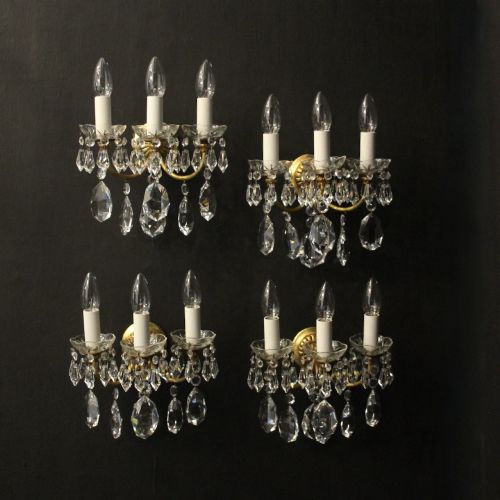
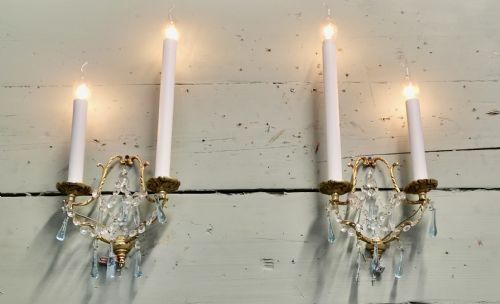
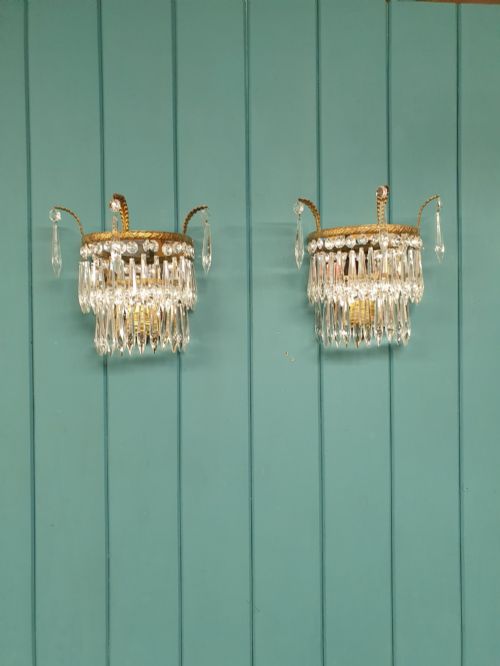
Crystal drop wall sconces are decorative lighting fixtures designed to mount directly onto vertical surfaces, combining metal backplates or frames with suspended glass pendants. When people search for crystal drop wall sconces, they are looking for wall-mounted illumination that introduces sparkle and historical charm to a hallway, drawing room, or dining space. These fixtures take various forms, including single-arm sconces, multi-branched girandoles, and tall wall-mounted chandeliers.
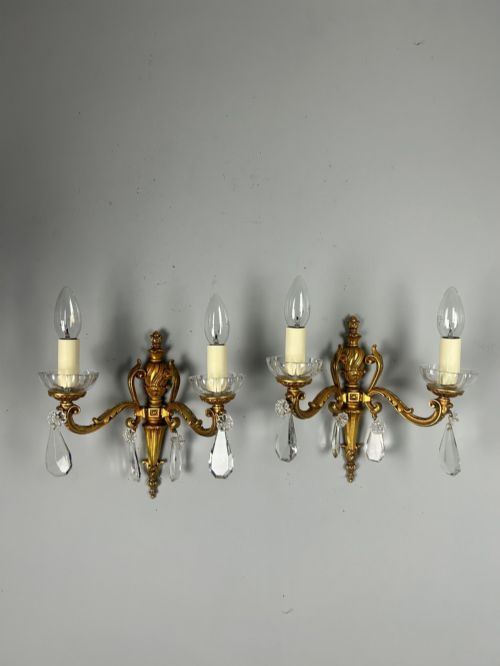
On this page, you are most likely to meet French and Florentine examples dating from the nineteenth and early twentieth centuries, spanning periods such as the Edwardian era, the 1920s, and the 1930s. The common thread among them is the use of hanging crystal or cut glass drops that refract candle or electric light across the room. Frames and arms appear in metals like brass, gilt bronze, ormolu, and gilded toleware, frequently styled in the French Rococo, Louis XV, or Neoclassical traditions.
How they were made
The construction of these sconces relies heavily on cast and fabricated metals paired with hand-finished glass elements. Workshops utilised brass, bronze, and gilt metal to form the structural backplates, drip pans, and branching arms that support the candles or lamp holders. Giltwood also appears in Florentine pieces, providing a carved wooden base for gold leaf application.
The characteristic crystal drops and pendants were cut by hand or moulded before being faceted to catch the light effectively. Artisans wired or pinned these glass components to the metal frames using small brass jump rings or wire loops, allowing the drops to sway and chime gently with the air currents in the room.
Common object forms in this category include twin-arm wall lights, girandoles, and tall wall-mounted chandeliers with crystal drops.
What varies in quality
Quality in these wall lights is determined by the crispness of the metal casting and the depth of the hand-chasing on materials like gilt bronze and ormolu. Superior examples display sharply defined acanthus leaves, rococo scrolls, and crisp floral motifs rather than soft, muddy casting details. The weight and rigidity of the backplate also indicate a higher standard of manufacture.
The quality of the glass or crystal drops themselves sets finer pieces apart. Pieces featuring deeply cut glass pendants that disperse light into prismatic colours demonstrate superior material quality compared to simple, pressed glass beads. Original gilding and well-preserved mercury gilt surfaces further distinguish the better examples in this range.
The Crystal Drop Wall Sconces Glossary
- Ormolu
- Gilded bronze, where a fine layer of gold amalgam is applied to a cast bronze base and heated to bond the precious metal. This technique produces a warm, durable finish seen on many nineteenth-century French fixtures.
- Girandole
- An ornamental branched wall sconce or candleholder, frequently incorporating a mirrored backplate to multiply the reflected light. These pieces often feature multiple arms and abundant crystal drops.
- Toleware
- Painted or lacquered sheet metal items, often decorated with floral motifs or gilded accents. In wall lights, toleware provides colourful, stylised floral and leaf backplates.
- Giltwood
- Wood, commonly carved gessoed timber, that has been covered with a thin layer of gold leaf. It is characteristic of Florentine wall lights and Italian decorative pieces.
- Candelabra
- A branched candleholder designed to hold multiple candles simultaneously. Antique versions frequently feature central standards and decorative drip pans.
Crystal Drop Wall Sconces: Frequently Asked Questions
How were crystal drop wall sconces used?
These fixtures were mounted beside mirrors, fireplaces, or doors to provide ambient illumination in reception rooms. The hanging glass pendants amplified the limited light of candles and early electric bulbs.
Over time, many of these sconces were adapted for electricity while retaining their original decorative arrangement of arms and crystal drops.
How do I install antique wall sconces?
Installation typically involves securing the metal backplate to a wall stud or appropriate wall anchor using strong screws. Because many period pieces were originally designed for candles or older wiring standards, a qualified electrician should check the internal components.
Ensure the weight of the bronze, brass, or giltwood frame is fully supported by the wall structure before hanging fragile crystal pendants.
How can I tell French styles apart?
French Rococo and Louis XV pieces feature asymmetrical scrolls, shell motifs, and naturalistic leaf forms in cast bronze or gilt brass. Neoclassical examples tend to be more symmetrical, incorporating classical urns, swags, and geometric lines.
Toleware sconces emphasise painted tin or metal foliage, offering a more colourful and rustic alternative to polished bronze.