
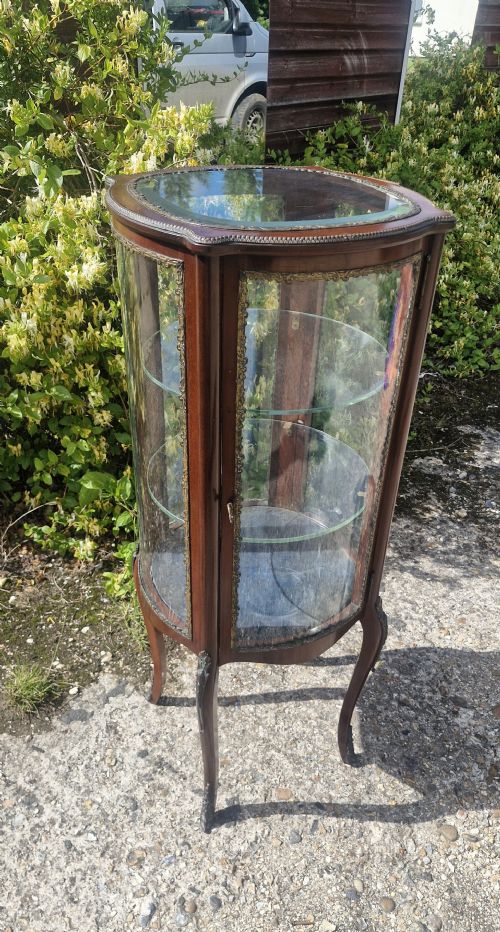
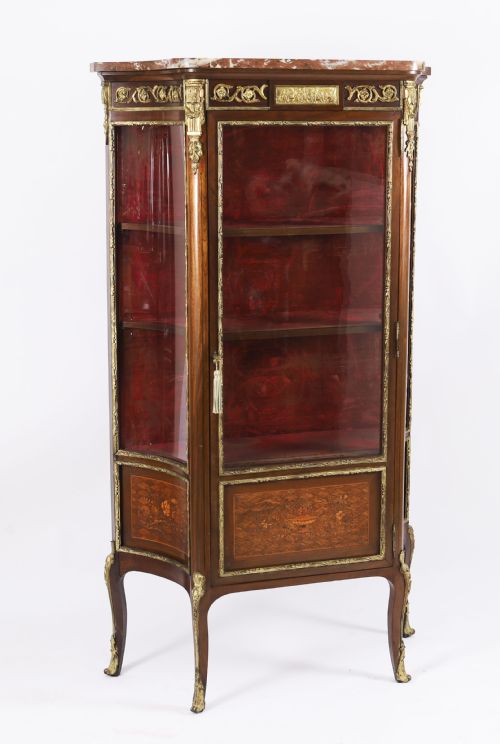


Gilt Mahogany Display Cabinet
A gilt mahogany display cabinet brings French revival elegance into a room, holding precious objects behind glass while gleaming with ormolu mounts.

Gilt Mahogany Display Cabinet
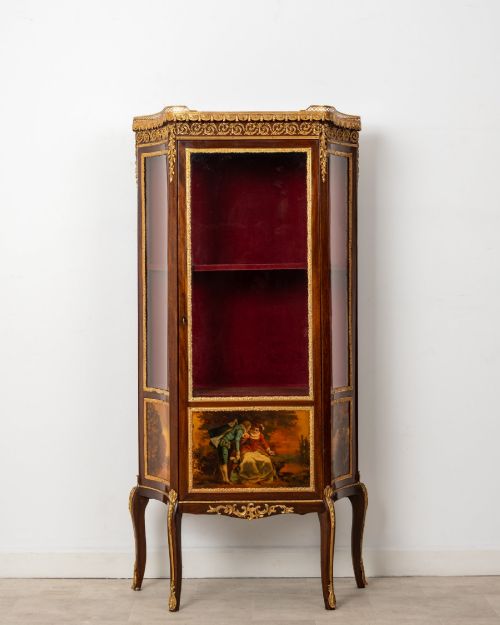
A gilt mahogany display cabinet is a refined piece designed to showcase porcelain, bijouterie or books behind glazed doors. When you search for this phrase, you meet items spanning the nineteenth century up to the Edwardian period and beyond.
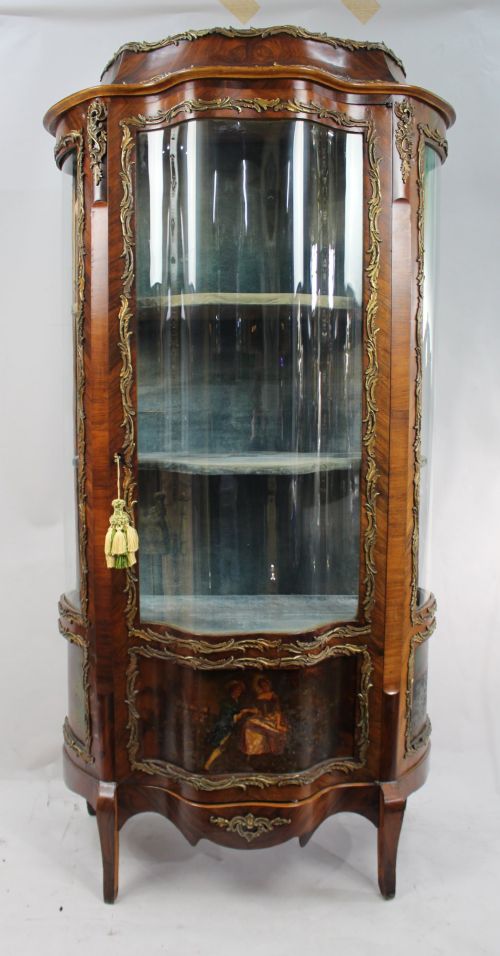
The most common form on this page is the French-influenced vitrine or display cabinet, often detailed with serpentine fronts or marble tops. These pieces draw heavily on Louis XV and Louis XVI revivals, pairing rich timber with polished metal mounts.
How they were made
Cabinet makers built these structures using solid and veneered mahogany, frequently accented with kingwood or ebonised details. The carcasses support glazed panels designed to protect the interior while offering an open view from the room.
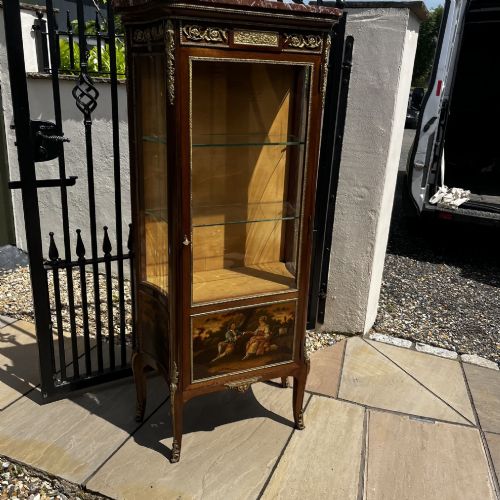
Gilt bronze, ormolu or gilt metal mounts provide the characteristic metallic highlights along the corners, friezes and feet. Painted Vernis Martin panels and velvet linings appear on specific examples to enhance the decorative interior.
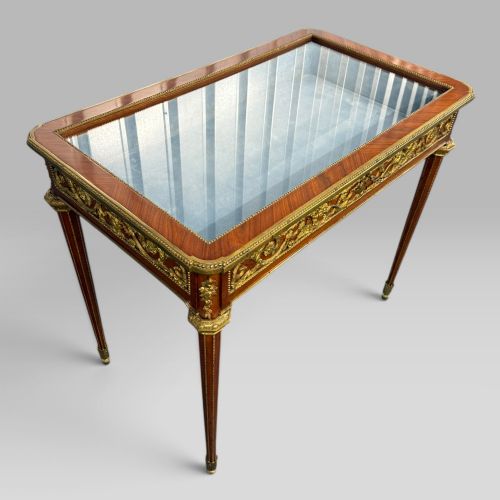
Cabinets span diverse forms including open bookcases, serpentine vitrines and bijouterie tables.
What varies in quality
The distinction between standard production and the top of the range lies in the crispness of the cast ormolu mounts and the depth of the mahogany grain. Maker attribution, such as work linked to François Linke, Paul Sormani or Maison Krieger, separates ordinary workshop output from master craftsmanship.
Hand-painted Vernis Martin decorations and complex serpentine cabinetry require superior skill compared to plain glazed panels. The integration of marble tops and parquetry further elevates the standing of an individual piece.
François Linke·Paul Sormani·Maison Krieger
The Gilt Mahogany Display Cabinet Glossary
- Ormolu
- Gilded bronze used for decorative mounts on furniture. It adds bright metallic contrast to dark mahogany surfaces.
- Vernis Martin
- A type of simulated Japanese lacquer developed in eighteenth-century France. It often decorates the lower panels of cabinets with painted scenes.
- Vitrine
- A glass-fronted cabinet or display case intended for showing small objects. The form dominates this category of antique furniture.
- Bijouterie
- A low display table or cabinet with a glazed top designed for jewellery and small valuables. These items often feature hinged lids.
- Parquetry
- Geometric wood inlay patterns forming decorative surfaces on furniture. It adds textural variety to mahogany carcasses.
Gilt Mahogany Display Cabinet: Frequently Asked Questions
What fits inside a display cabinet?
These cabinets suit porcelain figures, glassware and small collections of silver or medals. The interior shelves keep delicate items safe from dust.
Larger versions accommodate bound books alongside decorative objects, balancing utility with visual display.
Where should I place a vitrine?
A vitrine belongs in a drawing room or reception space where natural light can catch the ormolu mounts. Keep the timber away from direct heat sources to protect the mahogany veneer.
Freestanding models look best positioned against a solid wall where the glass doors remain fully accessible.
How do I identify Louis XVI style?
Louis XVI style furniture relies on straight tapered legs, fluted columns and classical symmetry. The mounts tend to feature architectural laurel leaves and urns rather than flowing rococo curves.
Cabinets from this revival period emphasise restraint and geometric balance over asymmetrical ornamentation.
What is a Vernis Martin panel?
A Vernis Martin panel is a decorative lacquer coating applied in translucent layers, often depicting pastoral or Chinoiserie scenes. Makers used this technique to mimic Asian lacquer work.
These painted panels usually sit on the lower section of a cabinet beneath the main glass door.