

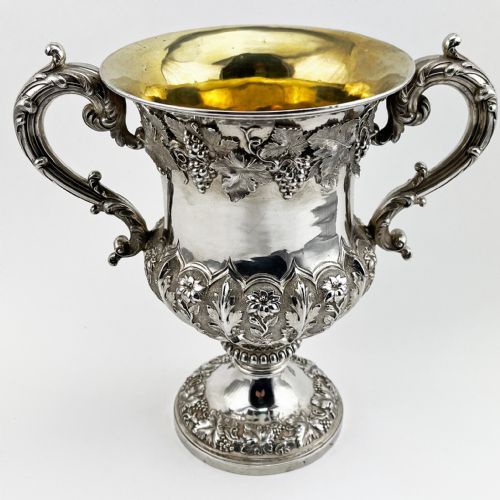


Gilt Handled Urn
A gilt handled urn brings classical balance and reflective metallic warmth to a room, uniting decorative ambition with functional form.
Gilt Handled Urn
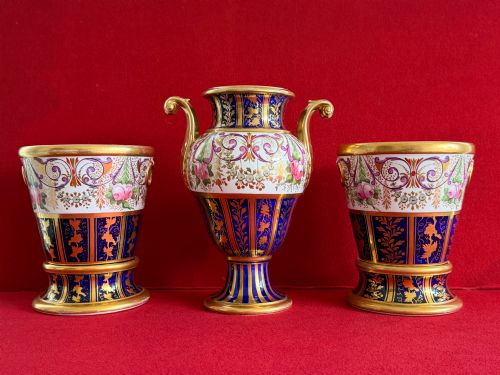
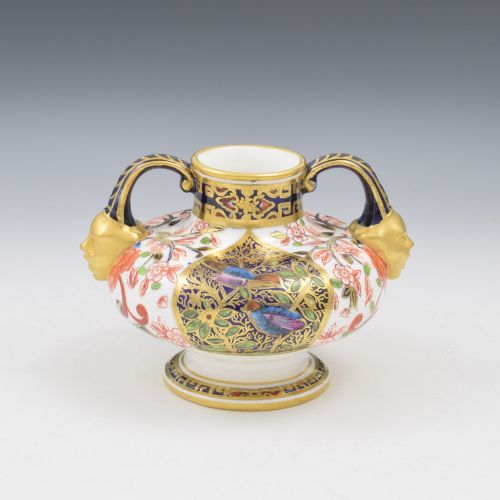
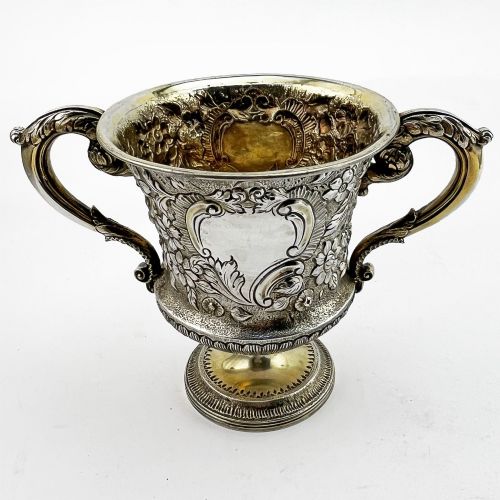
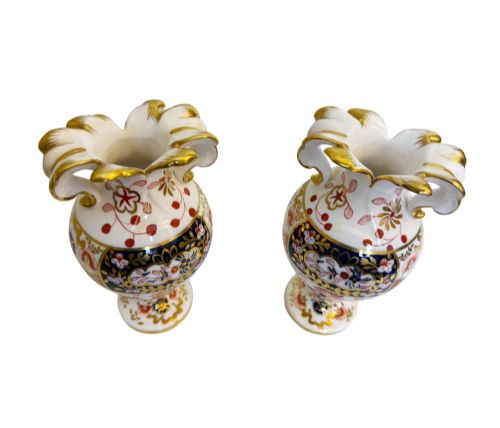
A gilt handled urn is a decorative vessel characterised by metallic-finished grips, spanning periods from the Regency era through to the Edwardian period and the early twentieth century. Buyers seeking this form encounter porcelain, ironstone, earthenware, and glass bodies shaped into campana cups, pilgrim flasks, and covered vases. Origin points range across English factories like Royal Worcester and Spode alongside French or Japanese workshops.
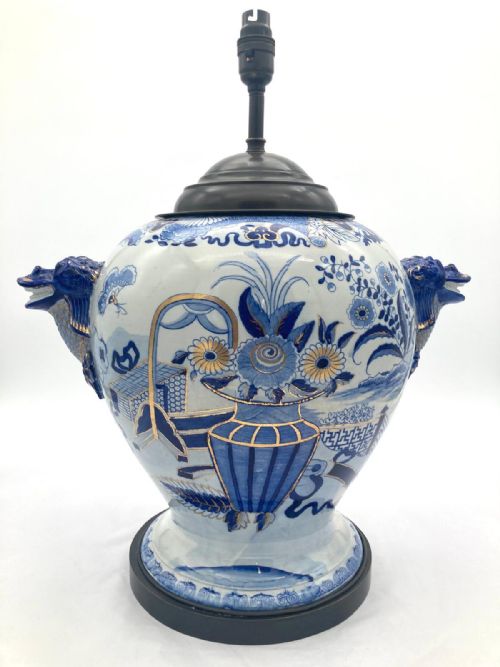
Most examples on this page date from the nineteenth century, emerging in Victorian and Edwardian iterations that adapt classical shapes for domestic display. These pieces often serve as decorative centrepieces or mantel ornaments, occasionally altered later into table lamps.
The handle forms vary from simple gilded scrolls to dolphin motifs, bamboo shapes, or pierced gilt work attached to bodies painted with florals, birds, and figures.
Materials and construction
Ceramic bodies of porcelain, ironstone, and earthenware form the core of these objects, shaped by casting or throwing before receiving hand-painted decoration or transfer printing. Enamel details and raised white enamel often layer over the ceramic surface to add tactile depth.
Gilding techniques apply gold leaf, gold paint, or ormolu mounts to the handles and rims, sometimes complemented by champleve enamel or bronze casting in French and English decorative pieces.
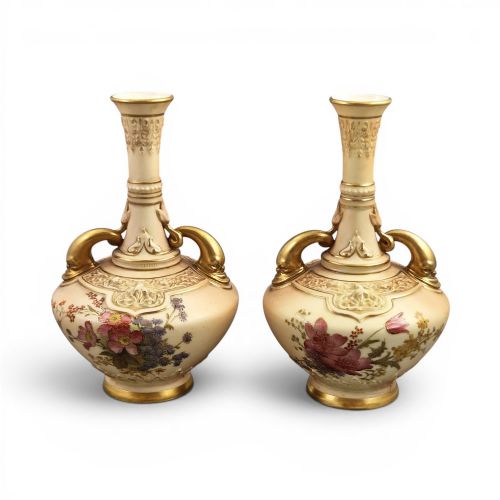
Dolphin-shaped handles made a surprising splash on Edwardian blush ivory vases.
Distinctions in quality
Quality rests upon the precision of the hand-painted artistry across the body, where named artists and documented factory patterns elevate an object beyond standard production. The execution of the gilding itself, from the crispness of applied ormolu to the wear and preservation of gold leaf on handles, marks the difference in grade.
The refinement of the ceramic body, the structural integration of the handles, and the clarity of transfer work or polychrome enamel define the upper tiers of surviving examples.
Spode·Royal Crown Derby·Chamberlain Worcester·Hicks and Meigh·Royal Worcester·Minton·Royal Doulton·Samson Paris·Kinkozan·Flight Barr and Barr·Coalport
The Gilt Handled Urn Glossary
- Campana
- A bell-shaped vessel with a flared rim and foot, commonly seen in nineteenth-century urns and trophy cups. This shape derives from ancient Roman bronze and marble prototypes.
- Ormolu
- Gilded bronze mounts and handles applied to decorative objects, particularly popular in French nineteenth-century pieces. The process involves coating bronze with a gold amalgam and firing.
- Champleve
- An enamelling technique where troughs are dug into metal surfaces and filled with vitreous paste before firing. This technique appears on decorative metal vases alongside gilt bronze.
- Imari
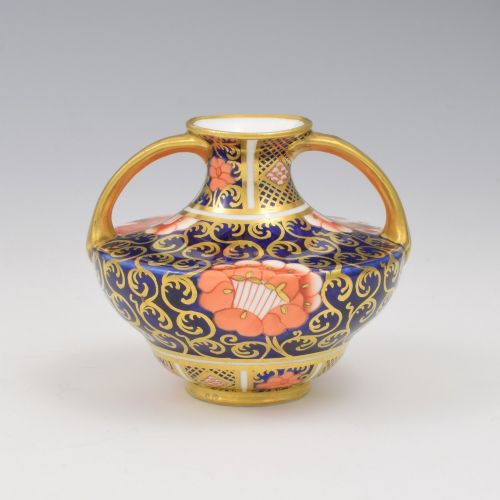
- A Japanese export style of porcelain featuring underglaze blue and iron red with added gold highlights, widely imitated by English factories such as Spode. The palette relies on high contrast and intricate panel designs.
- Ironstone
- A heavy, durable type of earthenware patented in the nineteenth century to rival true porcelain. Factories like Mason's and Hicks and Meigh utilised this material for large vases and jugs.
Gilt Handled Urn: Frequently Asked Questions
How were these urns used?
These vessels functioned primarily as decorative mantel ornaments, potpourri holders, or presentation trophies rather than practical containers for daily use. Some were later converted into table lamps during domestic updates.
Their substantial forms and painted surfaces suited the formal reception rooms of nineteenth-century interiors, where paired arrangements anchored mantelshelves and sideboards.
How do I date an antique urn?
Dating relies on factory base marks, registration numbers, and stylistic markers such as Victorian aesthetic transfer prints or Edwardian blush ivory palettes. Cross-referencing pattern numbers with known factory active years provides a reliable window.
Material composition and mounting techniques also assist, as nineteenth-century ormolu differs noticeably from later twentieth-century casting methods.
What is blush ivory?
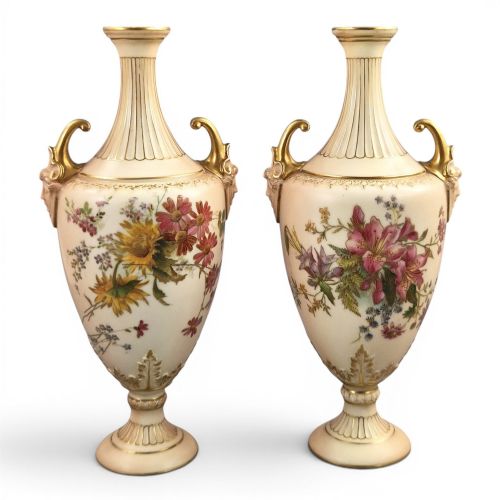
Blush ivory is a specialised ceramic finish developed by Royal Worcester featuring a soft, matte cream ground tinted with subtle pink and gold shading. It gained popularity during the late nineteenth and early Edwardian periods.
This technique often served as a backdrop for hand-painted floral motifs and gilded handles.