

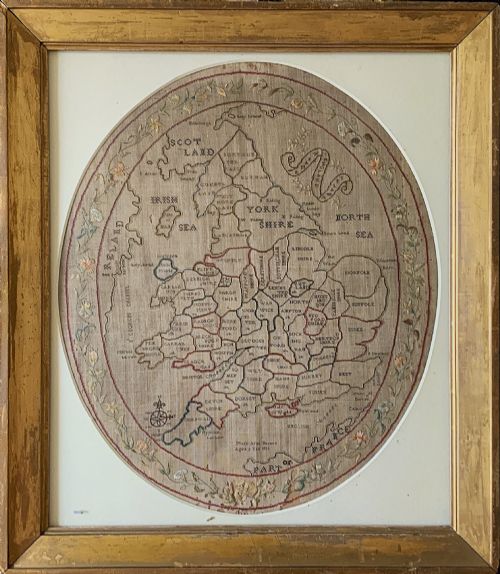


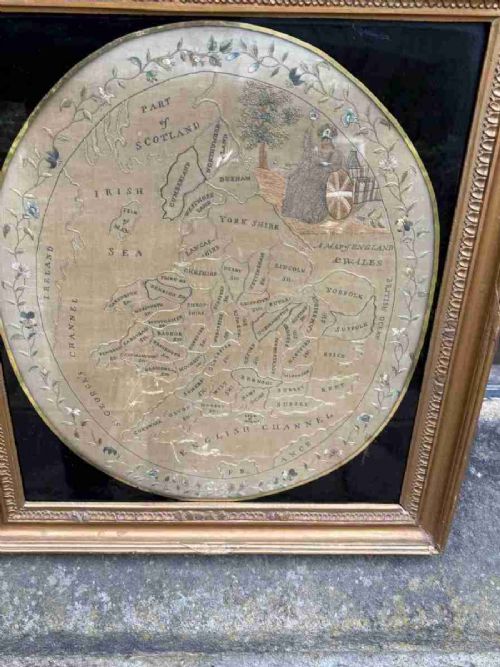

Gilt Framed Sampler
A gilt framed sampler brings domestic needlework into formal display, rewarding careful study of period stitches and juvenile skill.
Gilt Framed Sampler
A gilt framed sampler presents historical needlework and textile art inside a gilded border, drawing the eye directly to the intricate stitchery within. These works range from early schoolroom maps to figurative scenes and traditional alphabets.
The versions met most frequently on this page date from the Georgian, Regency, and Victorian periods. They combine domestic textile craft with period framing, preserving the work of makers such as Mary Banion and Mary Pinfold.
How they were made
The ground fabric consists primarily of linen, worked over with silk thread or standard thread by young makers and school pupils. Needlepoint, tapestry, and embroidery techniques form the pictorial and cartographic details.
Makers housed these fragile textiles behind glass within wood and giltwood frames, protecting the delicate threads from environmental wear. The framing materials range from traditional rosewood to ornate gilt mouldings.
Gilt Framed Sampler Retail Price Guide 2026
Typical asking prices for gilt framed sampler among the pieces listed under this phrase on Sellingantiques today, from the lower quarter to the upper quarter. They describe what is for sale here now, not the wider market.
Object types span needlework samplers, tapestry, lace samplers, and framed textile art.
What varies in quality
Quality rests upon the ambition of the design and the precision of the needlework, separating simple exercises from sophisticated map samplers and pictorial embroideries. The execution of lettering, cartography, and figurative subjects indicates the skill of the young maker.
The relationship between the textile and its original housing matters deeply, as period gilt wood and rosewood frames complement the needlework. Surviving signatures, dates, and documented origins elevate the historical significance of the piece.
The Gilt Framed Sampler Glossary
- Needlepoint
- A form of canvas work where yarn is stitched through a stiff open-mesh fabric to cover the ground entirely.
- Sampler
- A demonstration piece created to practice and display various embroidery stitches, alphabets, or pictorial motifs.
- Giltwood
- Timber treated with gold leaf or a gold-coloured finish to create a bright, reflective decorative border.
- Cartography
- The depiction of geographical maps, seen in schoolroom needlework illustrating England and Wales.
Gilt Framed Sampler: Frequently Asked Questions
What is a gilt framed sampler?
It is a piece of historic needlework enclosed in a gilded wooden frame. These textiles preserve the stitching and educational exercises of past centuries.
They function as decorative wall art while recording domestic history and schoolroom achievements.
How old are these samplers?
The examples on this page span the eighteenth and nineteenth centuries. They originate from periods including the Georgian, Regency, and Victorian eras.
Specific dates are sometimes stitched directly into the textile alongside the maker's name and age.
Where were they made?
Many were produced in schools and domestic settings as part of a young person's education. Institutional examples include works from places like the Oswestry National School.
They reflect the standard needlework curriculum taught to girls and young scholars of the period.
How do I care for a sampler?
Keep the textile away from direct sunlight to prevent the silk threads from fading. The glass and wood frame protects the delicate linen ground from dust and handling.
Maintain stable room humidity to preserve both the historic fabric and the giltwood frame.