


Gilt Framed Panel Mirror
These gilt framed panel mirrors combine reflective glass with decorative painted panels, oil paintings, and giltwood mouldings to anchor a room.
Gilt Framed Panel Mirror
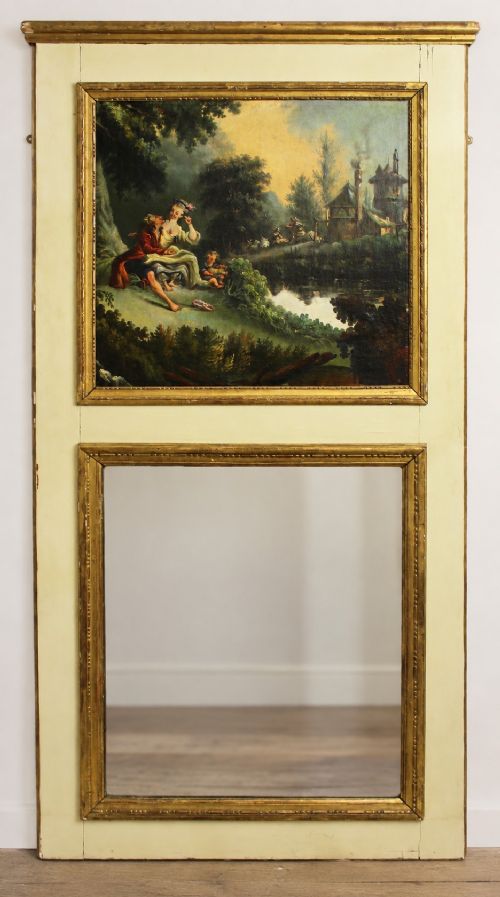
A gilt framed panel mirror combines a traditional looking glass with an upper inset panel, most frequently encountered as a French trumeau mirror featuring pastoral scenes or decorative relief. These pieces originate across the nineteenth and early twentieth centuries, drawing on Regency, Victorian, and Louis XVI styles.
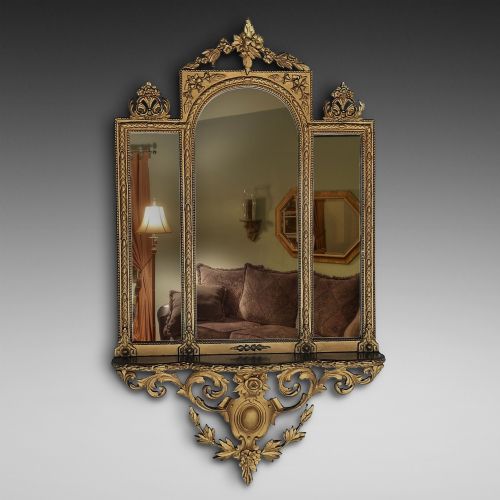
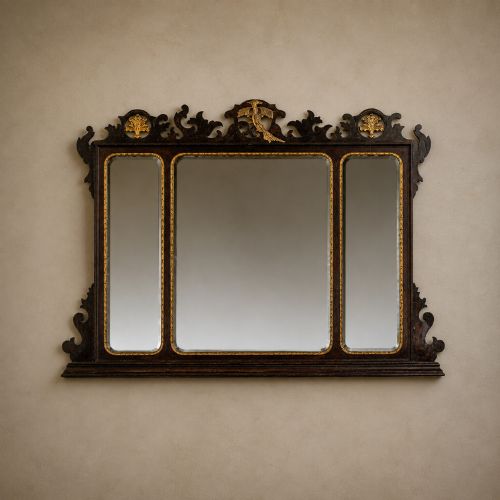
The format encompasses both tall pier mirrors designed for narrow wall spaces and expansive overmantel mirrors intended to sit above a fireplace. Many examples incorporate tripartite plates, eglomise decoration, or carved crestings such as the Ho-Ho bird.
Makers and workshops across Britain, France, and Italy produced these mirrors using regional aesthetic vocabularies, ranging from Egyptian Revival columns to Aesthetic Movement ebonised finishes.
Materials and construction methods
The frames rely on solid woods including mahogany, walnut, and painted timber, built up with gesso to receive layers of gold leaf or parcel gilt. Gilding techniques provide the metallic sheen characteristic of the period, while underlying wood structures support the considerable weight of the glass plates.
Inset panels frequently showcase oil paint on canvas, reverse-painted eglomise glass, or carved wooden reliefs depicting classical motifs like Bacchus and cherubs. Marquetry and silver-gilt work also appear in early twentieth-century examples, combining detailed woodworking with metallic finishes.
Listings feature walnut, mahogany, and painted wood frames finished with gold leaf, gesso, and oil paint.
Factors of quality and execution
The refinement of the hand-carved gesso ornamentation and the integrity of the original gilding dictate the visual impact of the frame. Crisp detail in floral motifs, classical columns, or figurative crestings distinguishes superior workshops from more utilitarian production.
The authenticity of the inset panel and the clarity of the mirror plate determine the piece's historical consistency. Original oil paintings and period glass retain the subtle irregularities and patination that denote age and skilled craftsmanship.
A.J Rowley
The Gilt Framed Panel Mirror Glossary
- Trumeau mirror
- A wall mirror incorporating an upper decorative panel containing a painting, carving, or reverse-painted glass. This French form originated in interior architecture where mirrors were built directly into wood-panelled walls.
- Gesso
- A plaster mixture applied to wood frames to create a smooth surface for gilding or painting. Artisans carve fine details into the dried gesso layer before applying gold leaf.
- Eglomise
- A decorative technique involving cold painting and gilding on the rear face of glass. This method produces a reflective, metallic design often seen in upper panels of Regency mirrors.
- Pier glass
- A tall, narrow mirror designed to hang on the pier of wall space between windows. These pieces often feature flanking columns or pilasters in styles ranging from Egyptian Revival to Regency.
- Overmantel mirror
- A wide mirror specifically proportioned to hang above a mantelpiece or fireplace. They frequently utilise tripartite glass plates and elaborate crestings.
Gilt Framed Panel Mirror: Frequently Asked Questions
Where should I hang a trumeau mirror?
These mirrors suit placement above a mantelpiece, sideboard, or console table where their proportions can anchor the surrounding furniture. Tall pier mirrors work effectively in narrow wall spaces between windows or doors to reflect light.
Ensure the wall fixings match the considerable weight of timber frames and glass plates. Positioning them opposite a window maximises light distribution in a room.
How do I identify a nineteenth-century French trumeau?
Look for characteristic pine or hardwood frames finished with gesso and gold leaf enclosing an upper oil painting or carved panel. French examples from this period often display Louis XVI style motifs or pastoral scenes.
Examine the construction of the backboards and fixings for signs of period hand-joinery. The presence of original canvas paintings or classical relief panels further supports nineteenth-century origins.
What is an eglomise panel?
Eglomise is a technique where artists paint and gild directly onto the reverse side of glass plates. This creates a lustrous, protected design often incorporated into the upper sections of Regency mirrors.
The method yields a distinctive reflective quality that differs from standard oil paintings on canvas or wood. It remains a hallmark of finer decorative mirrors from the early nineteenth century.
Can these mirrors be cleaned safely?
Dust the gilt frame gently with a soft, dry brush to prevent damage to the delicate gesso and gold leaf surface. Avoid commercial chemical cleaners or excessive moisture near the gilding.
Clean the glass plate with a minimal amount of glass cleaner applied to a cloth rather than sprayed directly onto the mirror. This protects both the antique mirror silvering and the surrounding frame materials.