
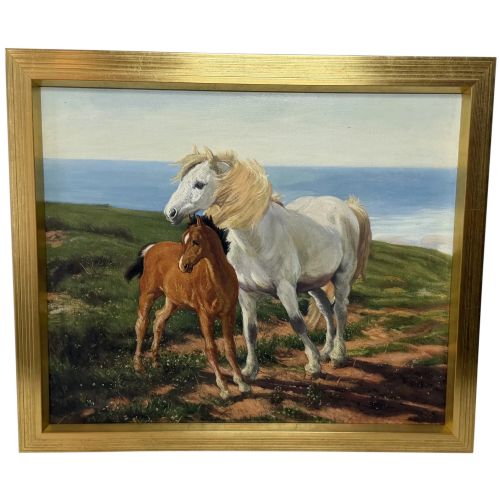
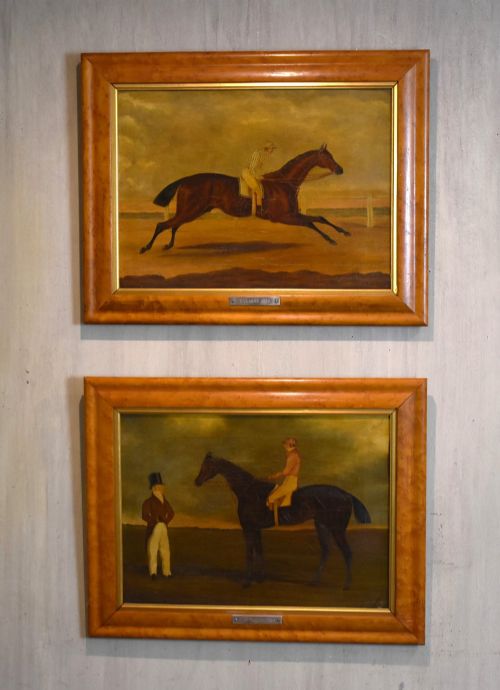


Gilt Framed Horse Pictures
Gilt framed horse pictures bring together equine portraiture and period craftsmanship, capturing centuries of sporting heritage in wood and gold leaf.
Gilt Framed Horse Pictures
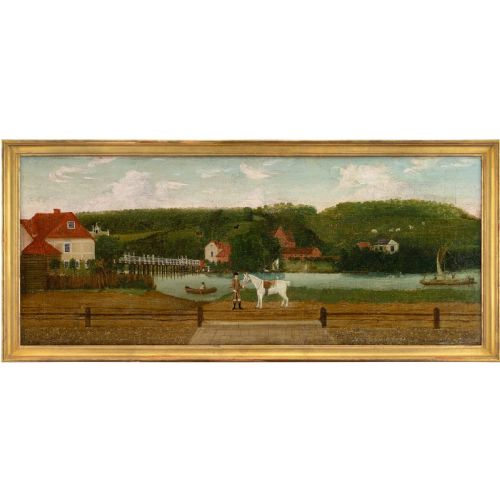
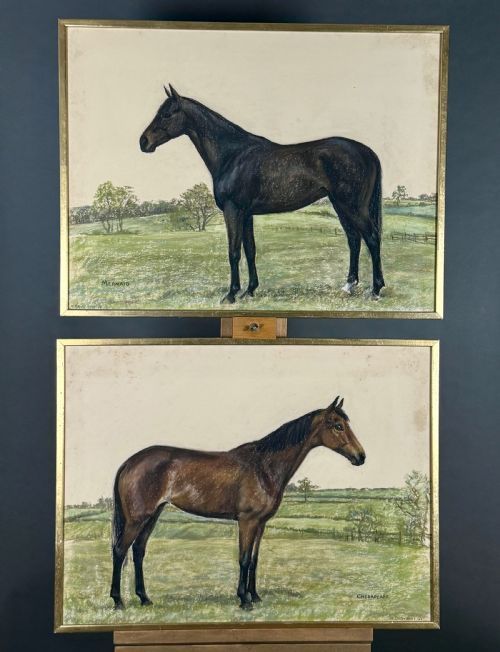
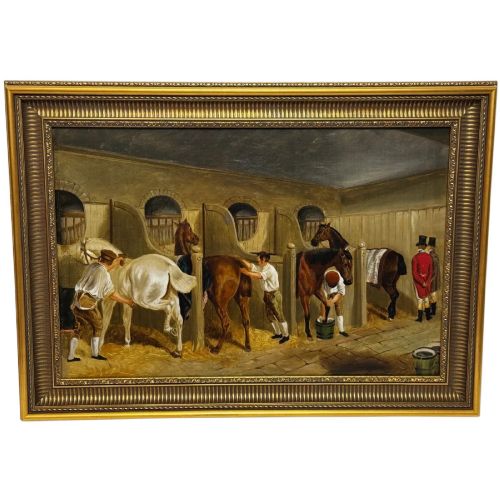
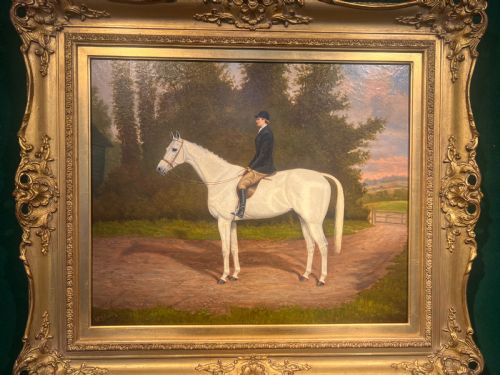
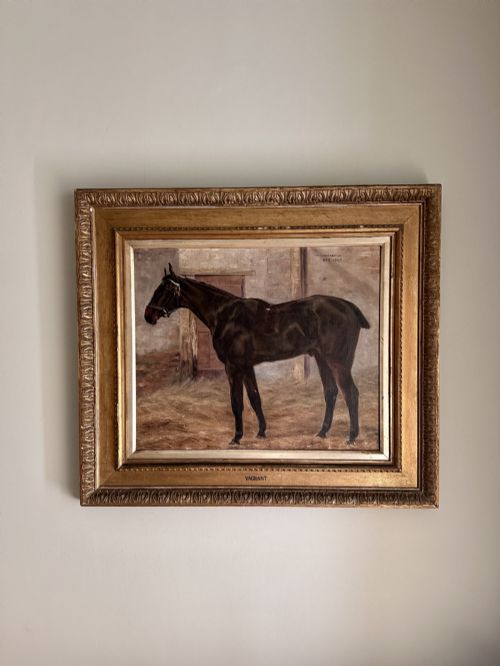
When you search for gilt framed horse pictures, you encounter a specialised selection of nineteenth-century oil paintings, watercolours, prints and needlework depictions of equines. The most common pieces met on this page are oil on canvas works spanning the Victorian era and the broader nineteenth century, reflecting British sporting art traditions.
These artworks portray subjects ranging from racehorses and hunters with their jockeys or grooms to farmyard scenes, hunting meets and pastoral landscapes. English School works predominate, alongside pieces by named artists working across the nineteenth and early twentieth centuries.
The enclosing frames are integral to the presentation, typically formed from wood finished in gilt or giltwood to accentuate the artwork within. Forms vary from single portraits of named horses to pairs of hunting scenes and larger framed prints after notable artists.
Materials and construction
The primary medium for these artworks is oil on canvas, supplemented by watercolour paintings, pastel on paper, lithographs, photographic prints and silk needlework. Canvases are stretched over wooden supports and paired with paper or card where works are executed on paper.
Frames are constructed from wood, utilising gilt or giltwood finishes to provide a metallic decorative border. Glazing appears on works executed on paper, watercolours and prints to protect the delicate surfaces behind glass.
One mid-nineteenth-century piece offers a remarkably tactile surprise: an actual sand picture capturing a textured equine scene.
Quality factors in equine art
Quality in these pieces rests upon the fidelity of the equine anatomy, the expressiveness of the brushwork and the provenance connecting the subject to specific estates, races or historical figures. Masterful rendering of muscle, coat texture and equine posture separates accomplished works from standard decorative pieces.
The craftsmanship of the frame also dictates overall standard, with hand-carved and gilded wooden mouldings commanding greater regard than simpler or later replacements. Works bearing signatures from established sporting artists or detailed contemporary inscriptions offer a higher level of historical documentation.
William Powell Frith·Fred Fitzpatrick·John Frederick Herring Snr·Herman S Melville·Charles Walter Simpson·John Frederick Herring Jnr·Basil Nightingale·Edward Lloyd of Ellesmere·Charles Faulkner·J.C. Grey·Alfred Wheeler·Clifton Tomson·Gilbert Scott Wright·Thomas Mackay·Abraham Cooper RA·John Sanderson-Wells·Charles H Poingdestre·Isaac Cullin·Heywood Hardy
The Gilt Framed Horse Pictures Glossary
- Equine portraiture
- The artistic depiction of horses, often capturing specific named animals, racehorses or hunters. These portraits record the conformation and lineage valued by owners and breeders.
- Sporting art
- A genre of painting and illustration dedicated to equestrian subjects, hunting, racing and rural field sports. It flourished in Britain throughout the nineteenth century.
- Giltwood
- Wood that has been treated with gold leaf or a gold-coloured metallic finish. It provides the characteristic bright border surrounding many period paintings.
- English School
- A designation for works produced by artists working in England within a shared stylistic tradition. It groups together painters whose specific academy training may be undocumented.
- Aquatint
- A printmaking technique that produces tonal effects similar to watercolour washes. It was frequently utilised in the nineteenth century to reproduce sporting scenes and horse portraits.
Gilt Framed Horse Pictures: Frequently Asked Questions
What periods do these horse pictures date from?
The pieces span the nineteenth century and the early decades of the twentieth century, with a strong representation of Victorian sporting art. Dates extend from the Regency period through to mid-twentieth-century equestrian studies and photographic prints.
Individual works carry specific dates or stylistic markers that place them within eras such as the 1870s, 1890s or the Edwardian period.
What subjects are depicted in the paintings?
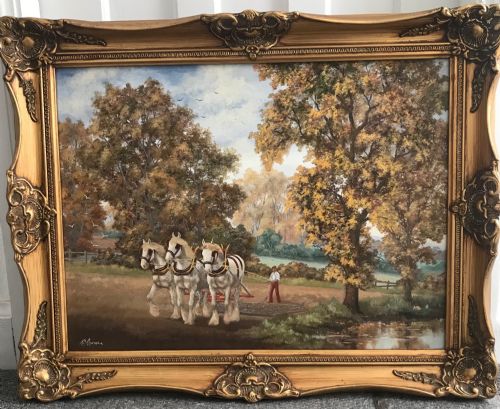
Subjects include famous racehorses with their jockeys, hunters in stable or field settings, and regional hunt meets with hounds and huntsmen. Other works capture working horses on farms, ploughing fields or pulling transport.
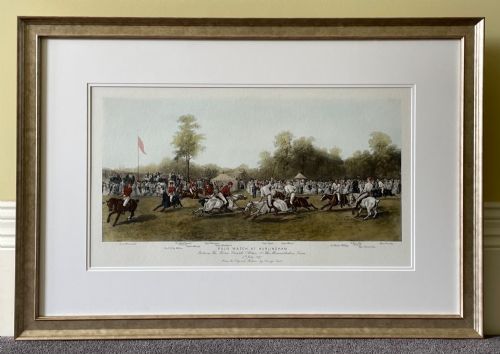
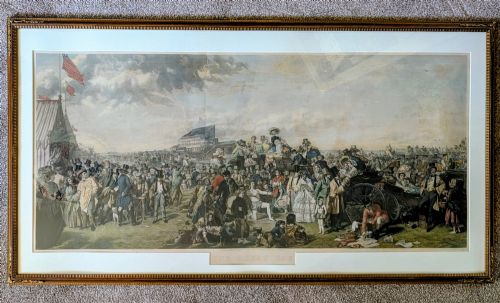
Historical racing events, polo matches and estate scenes also form part of the recorded subject matter.
How should I care for a gilt framed painting?
Keep the artwork away from direct sunlight and sources of heat to protect both the canvas and the gilt wooden frame. Dust the frame gently with a dry, soft cloth without applying liquid cleaners to the gold leaf.
Ensure that hanging environments maintain stable humidity levels to preserve the stability of the wood and canvas.
Are the frames original to the artwork?
Many pieces retain their period gilt wood frames, which were selected to complement the tonal qualities of the painting or print within. Some works may feature frames added at a later date during the history of the piece.
Examining the corner joints, backboards and gilding wear helps determine the relationship between the artwork and its current enclosure.