
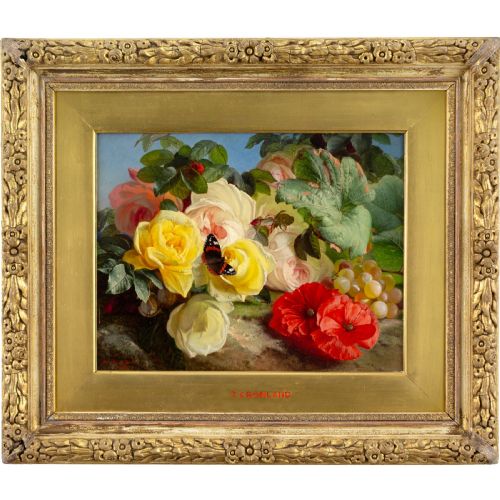
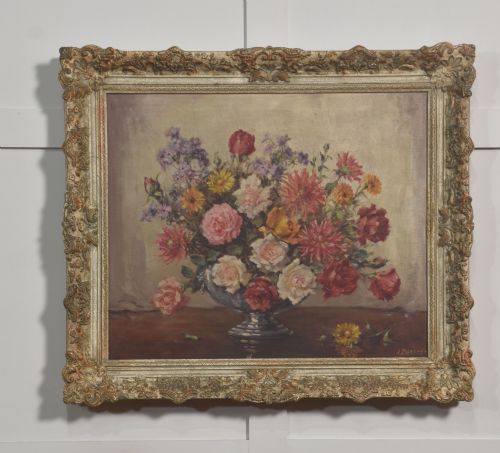
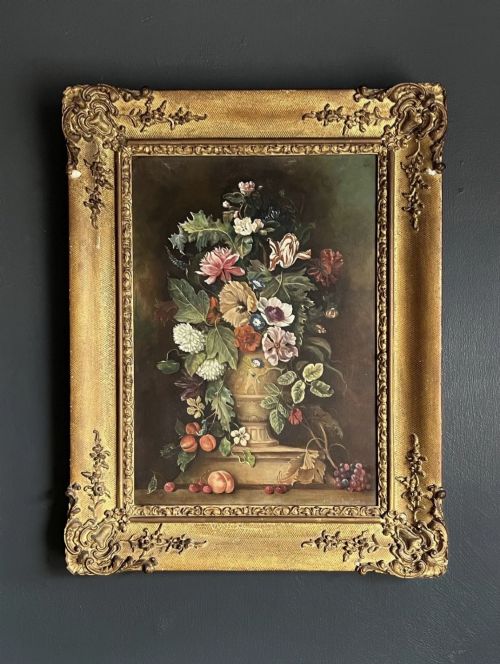
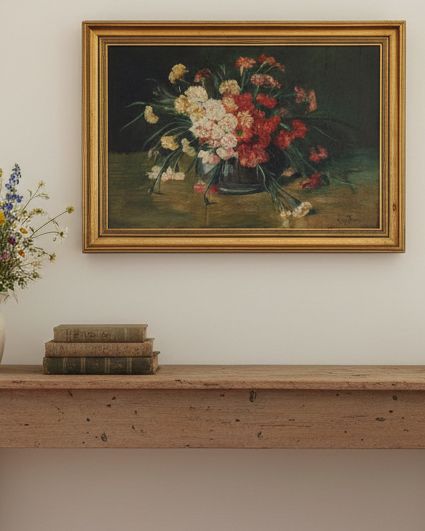

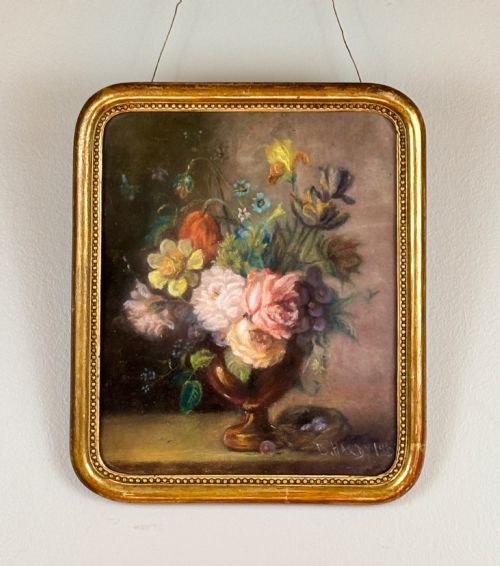
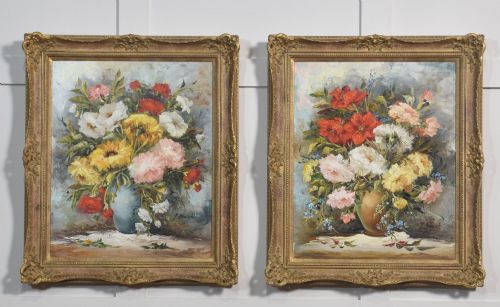
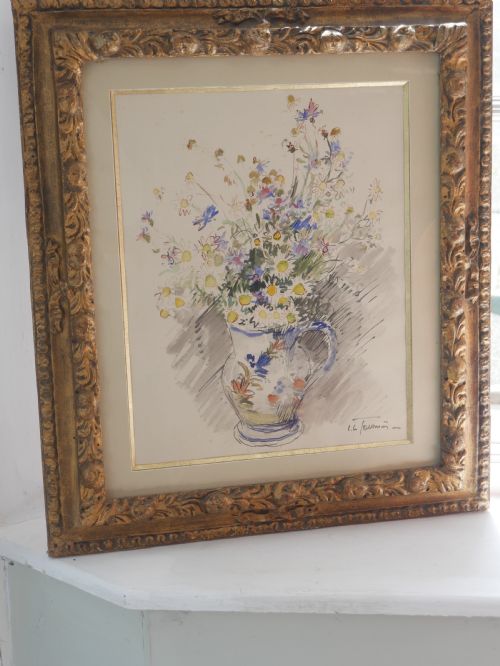
Gilt Framed Flower Painting
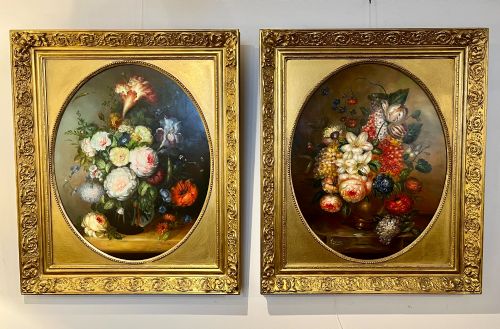
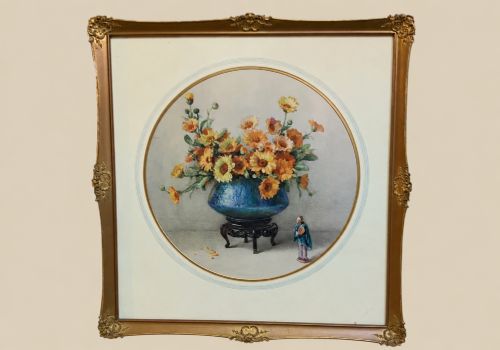
A gilt framed flower painting brings botanical studies and still-life compositions into interiors through period frames.
Gilt Framed Flower Painting
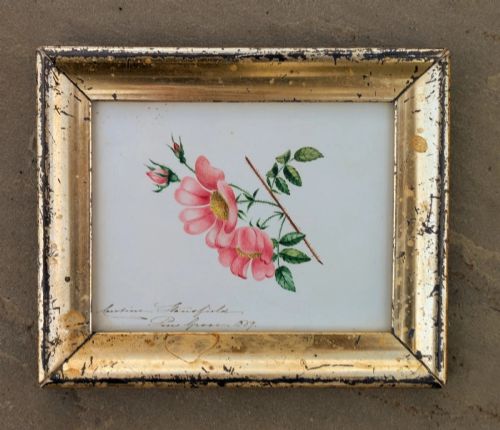
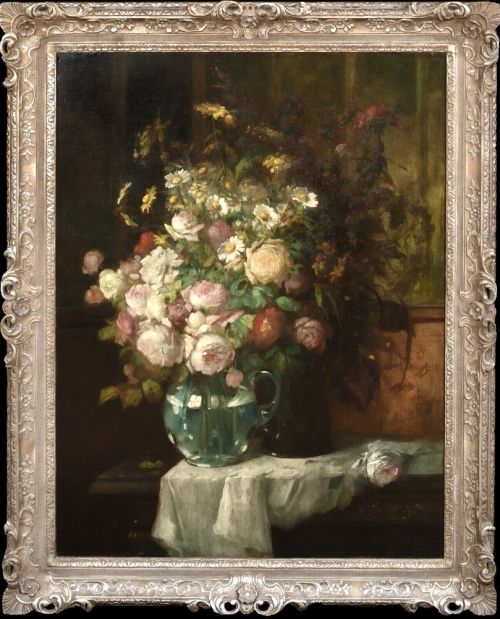
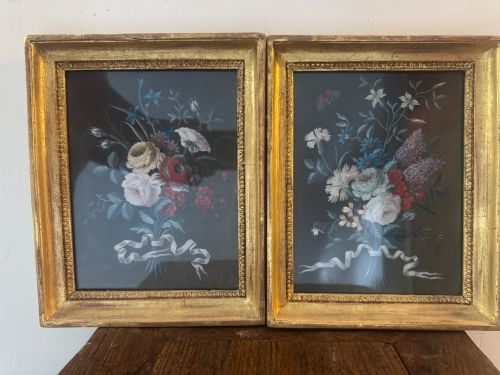
A gilt framed flower painting encompasses botanical watercolours, gouache works on silk or paper, and oil paintings on canvas or board depicting floral subjects. These pieces span from the eighteenth century through the nineteenth century and into mid-century twentieth-century production.
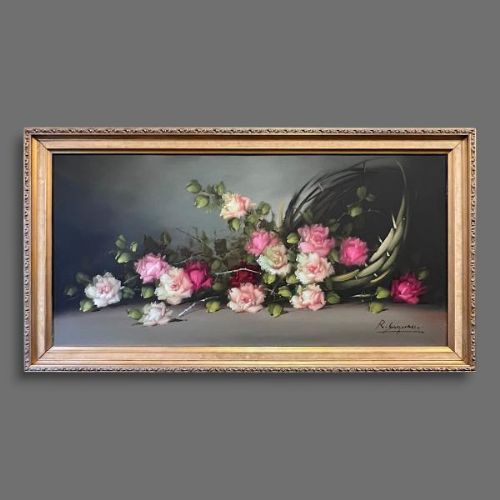
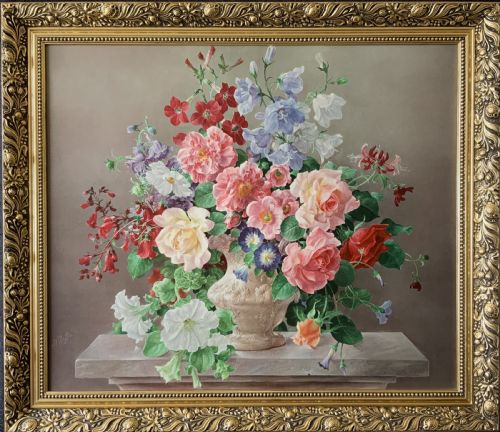
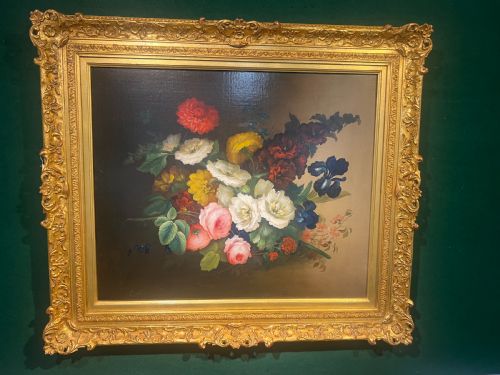
The most common examples on this page are oil and watercolour still-life studies presented in gilded wood or gesso frames. Subjects range from Dutch-style arrangements of summer blooms to impressionist baskets of roses and individual botanical specimens.
Originating across Britain, France, the Netherlands, Italy, Switzerland, and Austria, these artworks reflect diverse regional approaches to floral representation. They include both detailed academic studies and looser post-impressionist or luminist interpretations.
How they were made
Artists worked primarily with oil paint, watercolour, gouache, and oleograph print methods applied to canvas, wood panels, paper, or silk supports. Canvases and wooden boards provided stable grounds for rich oil applications, while paper and silk suited delicate watercolours and gouache details.
Frames combine structural wood with moulded gesso and gold leaf applications to create ornate or simple gilded borders. These frames protect the edges of the canvas or paper while providing a reflective boundary that complements the warm tones of the floral subjects.
Several paintings capture flowers tumbling from wicker baskets, mixing botanical study with domestic chaos.
What varies in quality
Quality rests in the handling of light, shadow, and botanical accuracy within the painted surface. Skilled artists capture the translucency of petals and the natural weight of stems, whereas lesser works remain rigid or formulaic in their composition.
The integration between the artwork and its frame affects the overall integrity of the piece. Period-appropriate gilding and gesso work that harmonises with the age and style of the painting indicate a higher standard of presentation.
Theude Grönland·I. Berezny·Konstantin Stoitzner·Harold Clayton·Edwin Steele·Manuela Bonati·Alice Anne Renshaw·Simon Pietersz Verelst·Amile Coppieters·Florence Hess·Edward Ladell·Owen Bowen·Sir George Reid·Rowland Holyoake
The Gilt Framed Flower Painting Glossary
- Gesso
- A plaster-like mixture applied to wood frames to create a smooth surface for gilding. It is carved or moulded into decorative patterns before gold leaf is laid down.
- Gilding
- The application of gold leaf or powder to a surface such as wood or gesso. This technique protects the underlying material while adding a bright, metallic finish to the frame.
- Still-life
- An artwork depicting inanimate subject matter, typically commonplace objects such as flowers, fruit, or vessels. These compositions allow artists to focus on colour, texture, and arrangement.
- Oleograph
- A mechanical print produced in imitation of an oil painting, often using lithographic stones to build up colour and texture. They became popular in the nineteenth century as an affordable alternative to original art.
- Impressionism
- A nineteenth-century art movement characterised by relatively small, thin, yet visible brush strokes and an emphasis on accurate depiction of light. Artists working in this style sought to capture the fleeting visual experience.
Gilt Framed Flower Painting: Frequently Asked Questions
What periods do these paintings come from?
The selection includes works from the eighteenth century, nineteenth century, and mid-twentieth century.
Specific pieces date across Victorian, Georgian, and post-impressionist eras, reflecting changing artistic tastes over time.
How do I hang a heavy gilt frame?
Heavy frames require sturdy wall fixings anchored directly into masonry or wall studs.
Ensure the hanging wire or brackets on the back of the wood frame match the weight of the artwork before mounting.
Are these paintings original works?
Most listings feature original oil paintings, watercolours, or gouache works created by individual artists.
Some items include vintage prints such as oleographs after known artists, which are clearly noted in their descriptions.
How should I clean a gilded frame?
Dust the gesso and gold leaf surface gently with a soft, dry brush to remove loose particles.
Avoid using water, chemical solvents, or abrasive cloths, as these can damage the delicate metallic leaf.