
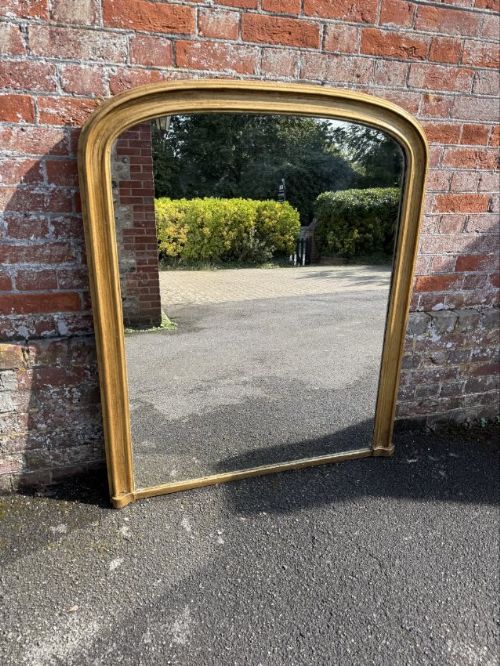
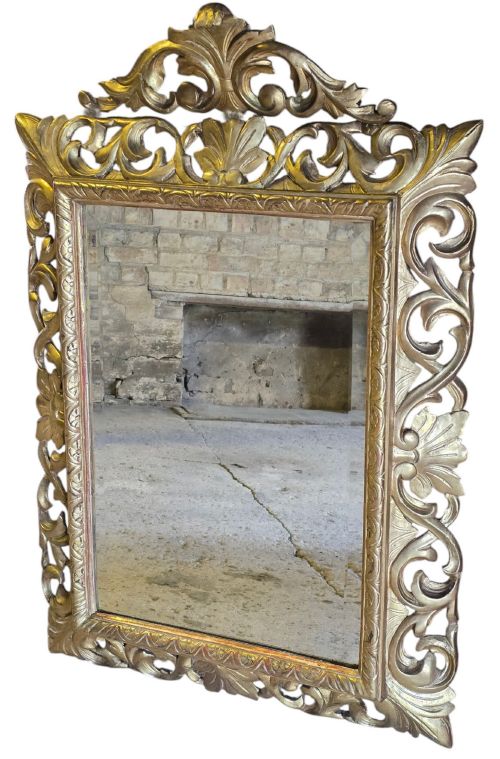

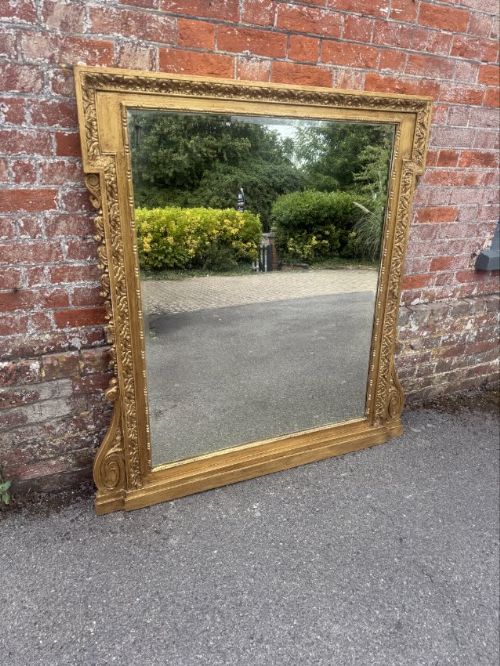
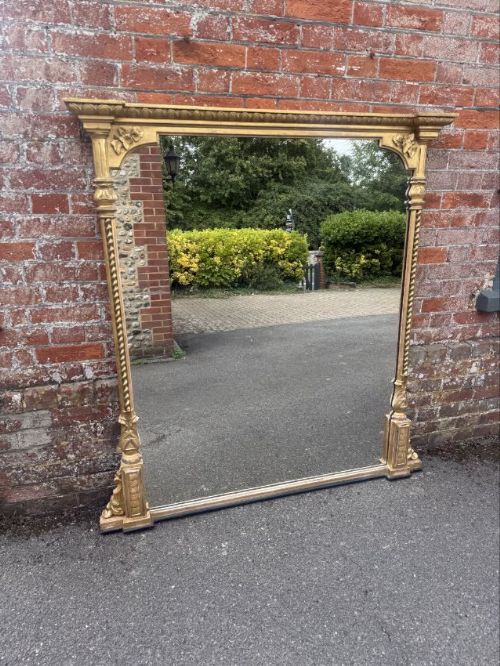
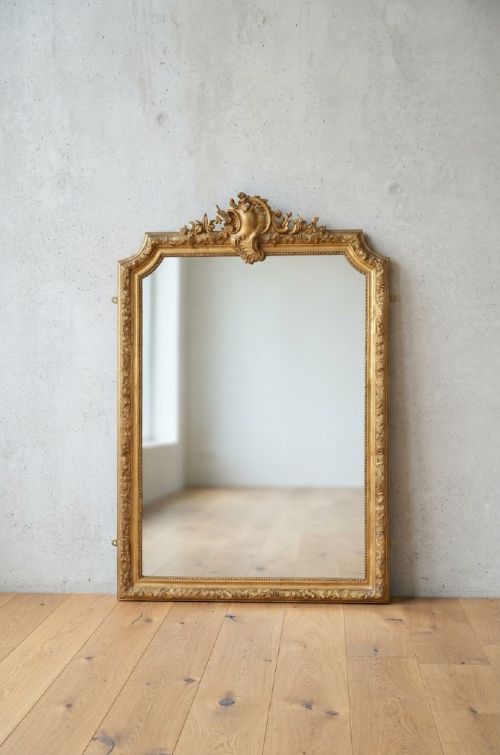
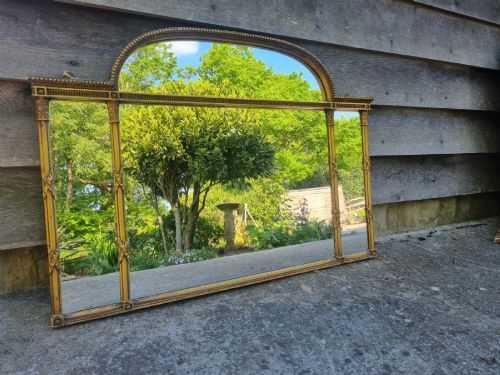
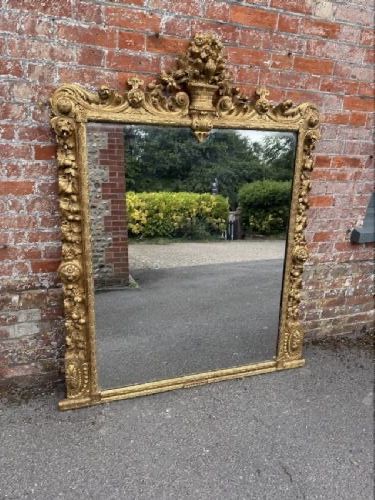
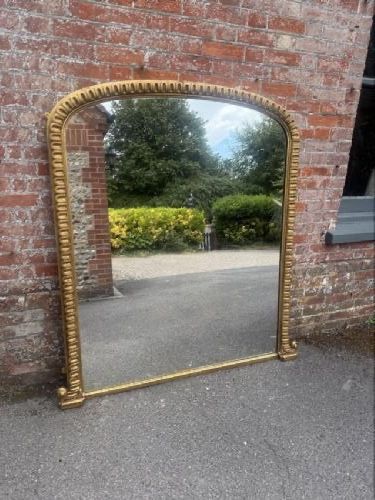
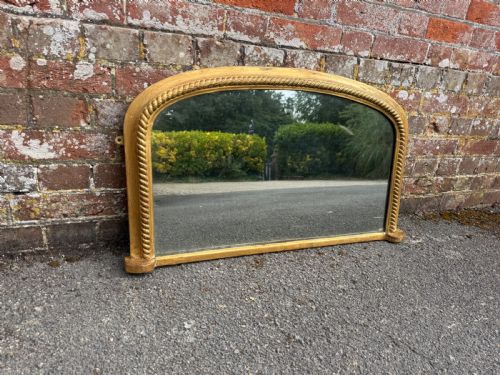
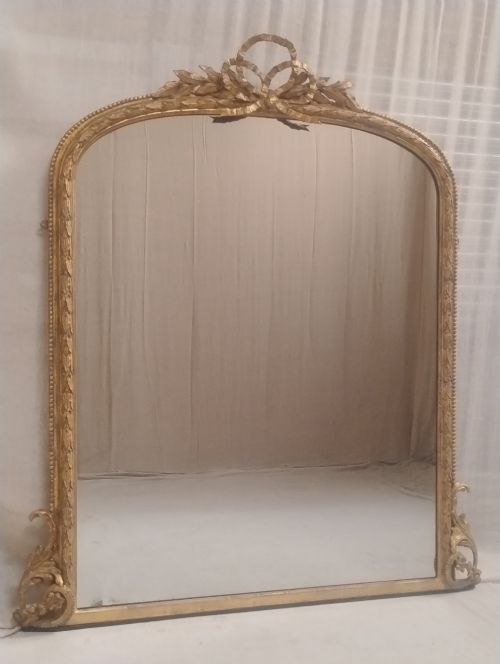
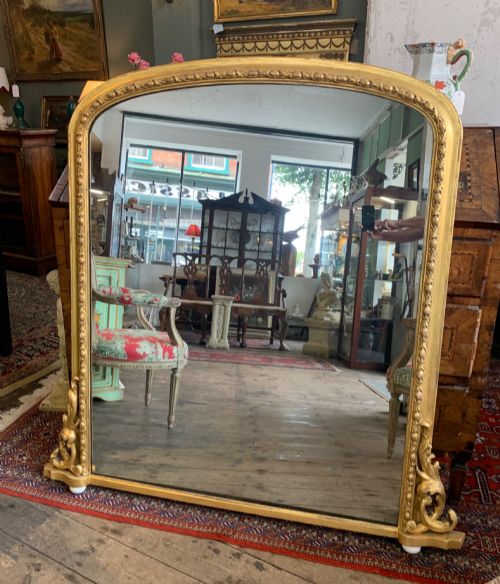
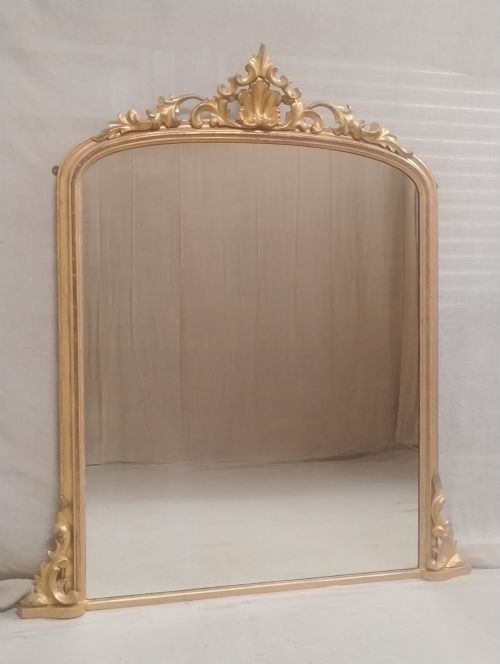
Gilt Framed Fireplace Mirror
A gilt framed fireplace mirror brings scale and reflected light to a room, anchoring the hearth with the presence of the nineteenth century.
Gilt Framed Fireplace Mirror
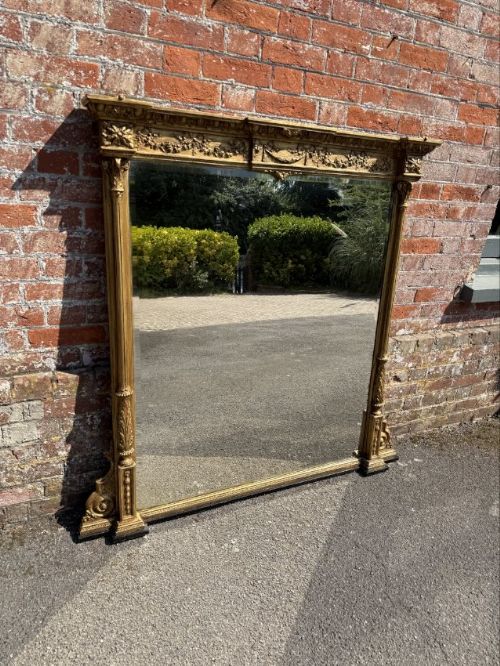
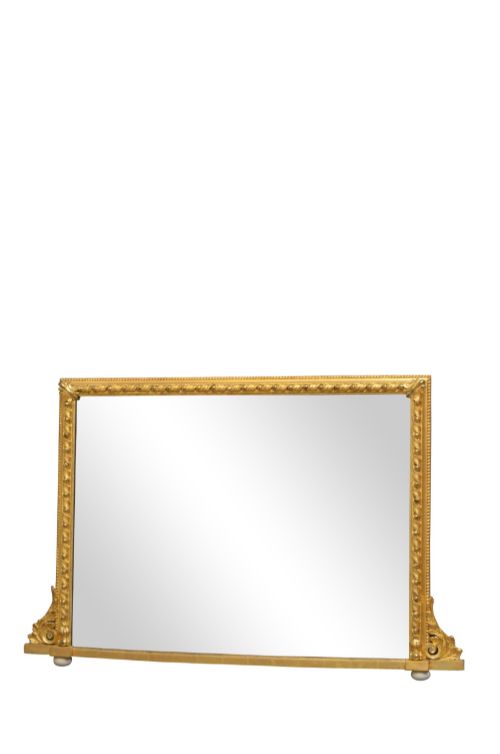
A gilt framed fireplace mirror, most frequently encountered here as a large nineteenth-century overmantel mirror, is designed to sit directly upon the mantelpiece and command the chimney breast. These pieces span Victorian, Regency, and Edwardian periods, adopting forms from arched tops to rectangular formats shaped for nineteenth-century interiors.
The overriding form is the overmantel mirror, built wide and tall to draw light downward into the room from the hearth. English and French provincial iterations dominate, alongside specific revivals like the Chinese Chippendale style and neoclassical frames.
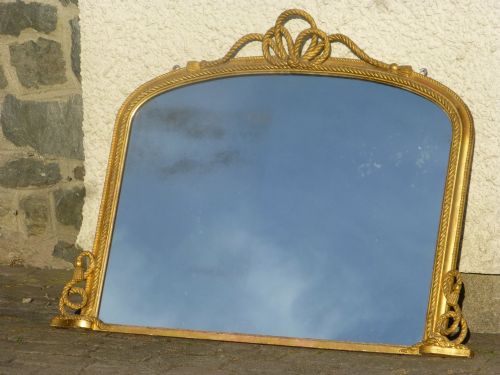
Victorian examples with carved wood and gesso frames appear most often on this page, frequently displaying rope twist, tulip, or column details. They reflect a period when mirrors were scaled up to dominate domestic reception rooms.
How they were made
Makers constructed the structural frames from carved wood or built up intricate ornamentation using gesso and composition over a wooden substrate. Composition, a malleable mixture of whiting, resin, glue, and linseed oil, allowed craftsmen to press complex decorative motifs into moulds before applying them to the frame.
The surface finish relied upon gold leaf or gilding applied over preparation layers, creating the luminous metallic sheen characteristic of these pieces. Mirror glass was set into the rebate, occasionally retaining original foxing where the silvering has aged organically over time.
Some nineteenth-century mirrors feature nautical rope twist carvings, proving that even a formal overmantel occasionally fancied a trip to sea.
What varies in quality
The depth and crispness of the carved wood and moulded gesso decoration define the upper tier of these pieces, separating hand-finished work from simpler production. Frames that retain their original gilding without heavy over-painting show greater integrity and historical survival.
Structural scale combined with balanced proportions dictates desirability, particularly in larger overmantel formats where maintaining rigidity across a wide span required expert joinery. The presence of original mirror glass with natural age adds further distinction to an example.
The Gilt Framed Fireplace Mirror Glossary
- Gesso
- A plaster-like preparation mixture spread over wood to provide a smooth surface for gilding. It accepts detailed moulding and carving very cleanly.
- Composition
- A moulded material made from glue, resin, whiting, and oil used for decorative ornaments on frames. It hardens firmly and mimics carved wood.
- Giltwood
- Timber that has been coated with gold leaf or metal leaf. This finish gives the frame its characteristic warm metallic brilliance.
- Overmantel
- A large mirror or painting specifically designed to hang or stand upon the mantelpiece above a fireplace. Its proportions match the width of the hearth below.
- Foxed glass
- Mirror glass showing spots and discolouration caused by the degradation of the backing over time. Collectors prize this authentic sign of age.
Gilt Framed Fireplace Mirror: Frequently Asked Questions
How do I hang an overmantel mirror?
Most large overmantel mirrors are traditionally designed to rest directly on the mantelpiece itself, secured safely to the wall behind with heavy-duty brackets to prevent tipping.
When wall mounting without a mantel support, professional fixings into the structural masonry are essential to bear the considerable weight of the wood and glass.
Are these mirrors original to the nineteenth century?
The pieces listed here date primarily from the nineteenth century, encompassing Victorian and Regency periods through to Edwardian examples.
Construction methods such as layered gesso, carved wooden frames, and period glass help confirm their exact age and manufacturing context.
What is foxed glass?
Foxed glass refers to the natural speckling and dark spots that develop behind the mirror plate as the silvering oxidises over decades.
Rather than a defect, this gentle clouding is viewed by many as an authentic marker of nineteenth-century age and character.