




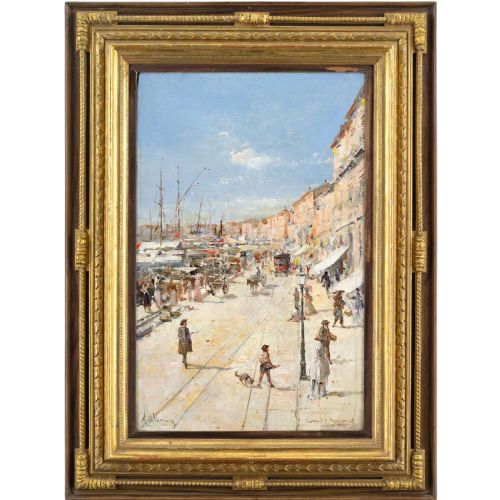

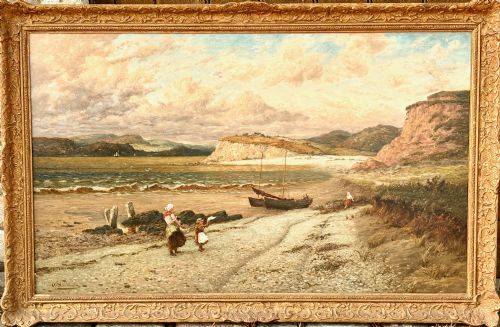
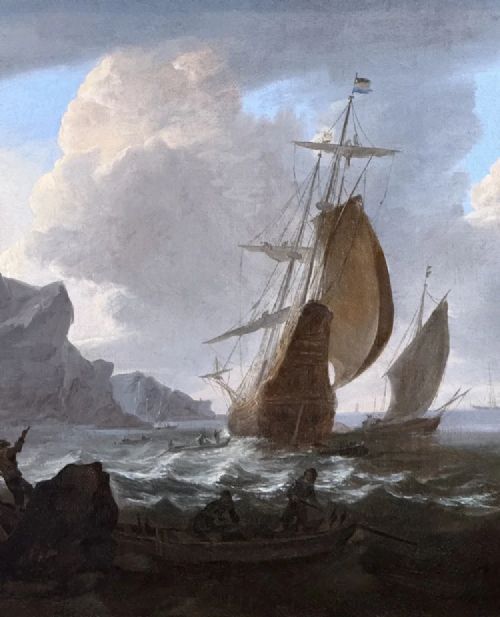
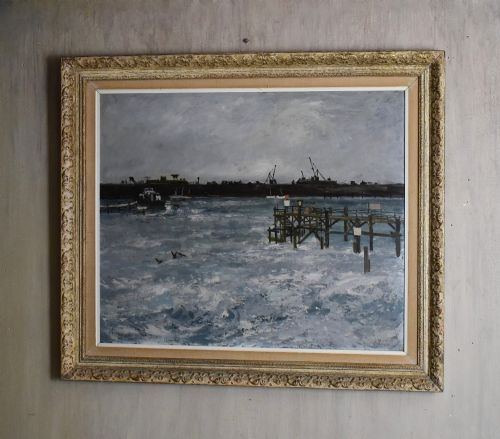

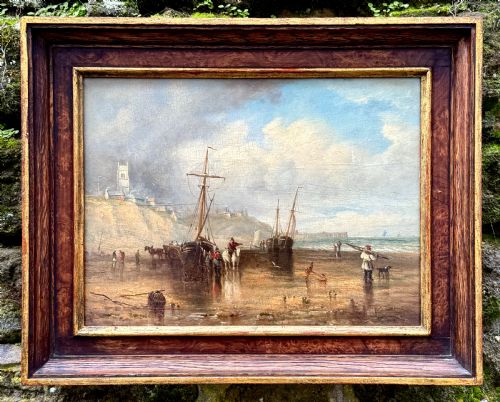
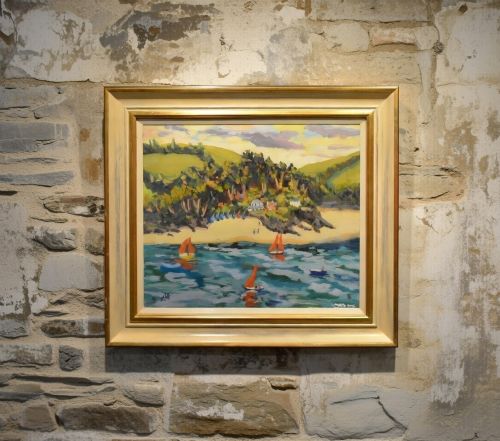
Gilt Framed Coastal Painting
A gilt framed coastal painting brings the movement and salt air of the shore directly into a room through historic brushwork.
Gilt Framed Coastal Painting
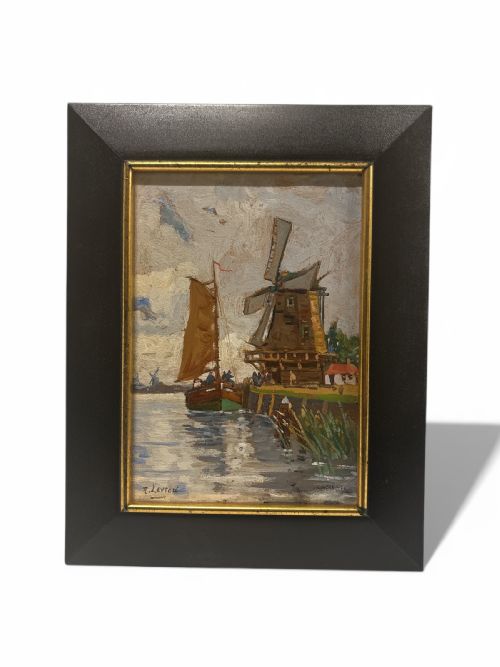
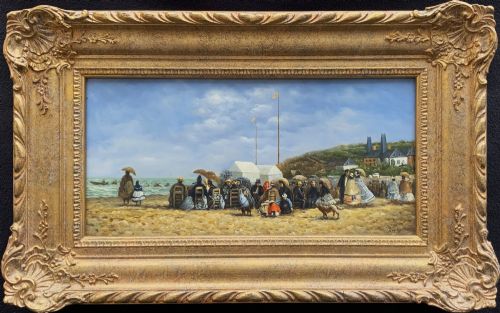
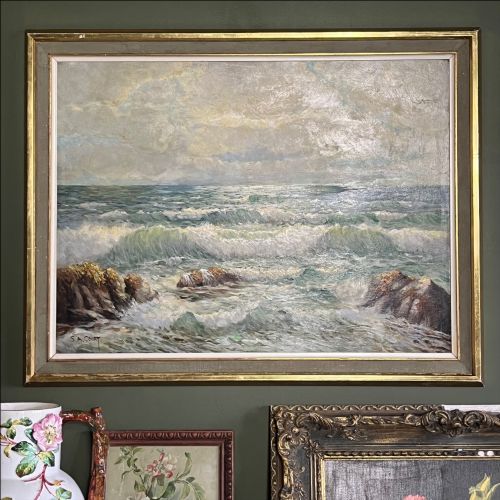
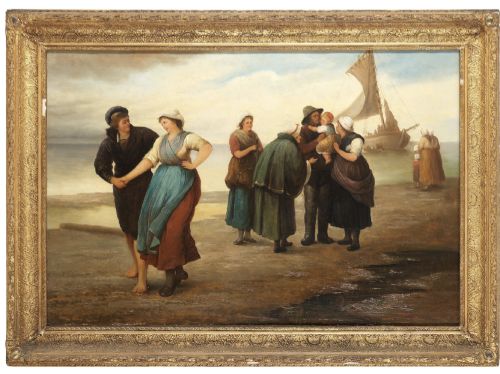
A gilt framed coastal painting captures maritime scenes, harbour views, and seaside gatherings across the nineteenth and twentieth centuries. These artworks range from tranquil watercolour paintings of fishing ports to dramatic oil paintings of Dutch boats in a gale.
The selection here draws heavily from Victorian and Edwardian periods, alongside later mid-century interpretations. Common subjects include St Ives, Cornwall, Dublin Bay, and international coastal harbours rendered by named artists and regional schools.
Materials and construction
Artists worked primarily with oil paint and watercolour on canvas, panel, board, or paper, often painting en plein air to capture immediate light. Canvasses were stretched and secured within moulded wood frames finished in gilt.
Gilt wood frames provide the traditional border for these maritime scenes, utilising applied metallic leaf over gesso and timber mouldings. Glass is frequently present on works executed in watercolour or on paper to protect the delicate medium.
Listings feature works spanning the nineteenth and twentieth centuries, using oil and watercolour on canvas, board, and paper.
Distinctions in quality
Quality rests in the handling of light, atmospheric perspective, and the fidelity of maritime detail by the painter. Stronger examples demonstrate confident brushwork that conveys the texture of waves and the specific architecture of historical vessels.
The execution of the surrounding gilt wood frame also contributes significantly to the overall piece. Hand-carved or deeply moulded frames that complement the period of the artwork indicate higher workshop standards than simpler later replacements.
James Hardy·R Leyton·Sidney A Court·Edward Mills·William Banks Fortescue·Augusto Alberici·Bonaventura Peeters·Peter Brannan·Bernard Benedict Hemy·Thomas Creswick·Lucy Pratt·Charles Euphraisie Kuasseg·John Wilson Carmichael·Abraham Cooper·Joseph Farquharson·Erich Mercker·William Henry Williamson·John Moore of Ipswich·Abraham Hulk I·John Bedloe Goddard·Raymond Moritz·William Edward Webb·George Stanfield Walters
The Gilt Framed Coastal Painting Glossary
- En plein air
- Painting outdoors to capture natural light and atmospheric conditions directly. This method was widely adopted by artists recording coastal weather and shifting seas.
- Gilt wood
- Timber decorated with a thin layer of gold leaf or metallic gilt powder. It forms the traditional ornate border characteristic of period art framing.
- Marine art
- Artistic representation of maritime subjects, including ships, harbours, and coastal landscapes. It encompasses both calm seascapes and dramatic storm narratives.
- Provenance
- The documented history of ownership of an artwork. Clear records help verify the attribution of nineteenth-century maritime paintings.
Gilt Framed Coastal Painting: Frequently Asked Questions
How do I date a coastal painting?
Dating relies on stylistic clues, artist signatures, and the construction methods of both the canvas and the gilt frame. Clothing styles of figures and the types of ships depicted also offer clear chronological markers.
Material analysis of the wood panel or canvas weave provides further confirmation of the period. Comparing known signatures against historical artist registries helps narrow the creation window.
Were these always framed in gilt wood?
Gilt wood frames were a popular choice for significant maritime artworks, intended to reflect candlelight and enhance the perceived depth of the scene. Many nineteenth-century pieces retain their original frames.
Subsequent owners occasionally swapped frames to match changing interior aesthetics. Checking the rabbet and corners of the frame reveals if it is contemporary to the canvas.
How should I hang a canvas safely?
Secure wall fixings suited to the weight of the timber frame and canvas are essential for safe display. Avoid positioning heavy gilt pieces in direct sunlight or above active heat sources.
Stable indoor humidity prevents the canvas from slackening and protects the wooden frame from warping. Professional picture wire and D-rings ensure even weight distribution across the hanging point.
What is the difference between marine and coastal art?
Marine art typically focuses on ships, naval engagements, and deep-water navigation. Coastal art places greater emphasis on the shore, harbours, cliffs, and beach-bound activities.
Many nineteenth-century works bridge both categories by featuring vessels at anchor near a populated port. The horizon line and proximity to land generally define the primary genre.