



Cornish Coastal Landscape Painting
These cornish coastal landscape painting works capture the changing light and harbours of the peninsula through oils and watercolours.
Cornish Coastal Landscape Painting
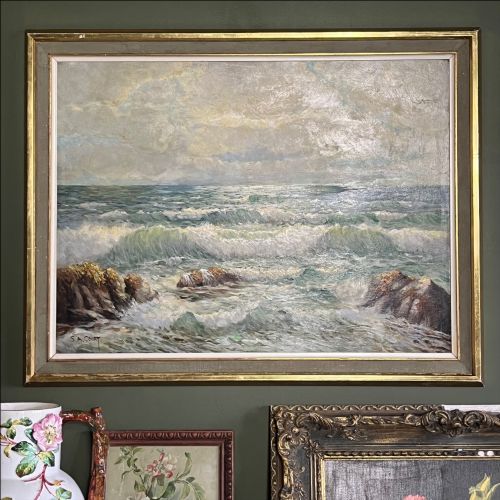
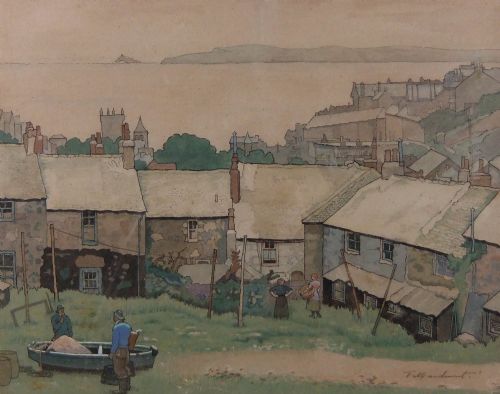
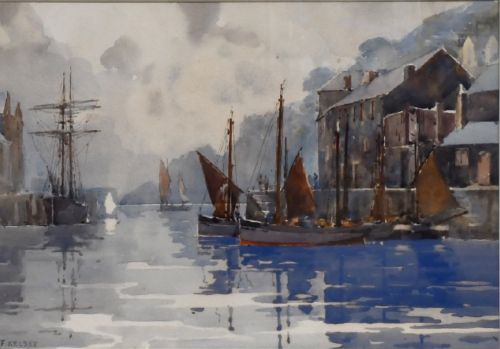
A cornish coastal landscape painting records the harbours, cliffs and fishing villages of the far south-west, often created on the spot in the open air. The watercolours and oil paintings found here span the Victorian era through the mid-twentieth century, capturing busy ports like St Ives and Polperro alongside quieter coves.
Buyers meet works originating from established regional groupings such as the Newlyn School and the St Ives School, alongside independent artists working across the nineteenth and twentieth centuries. These pieces typically take the form of framed paper or canvas works executed in oil paint or watercolour.
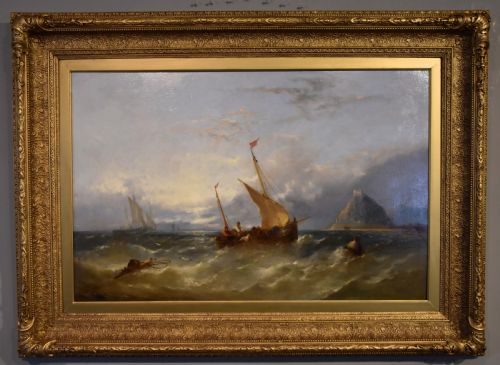
The subjects range from traditional English seascapes and moody shipwreck scenes to bright impressionistic harbour views. Most examples ground their composition in specific local landmarks, from St Michael's Mount to Mousehole and Mevagissey.
Materials and methods
Artists painted these coastal scenes using oil paint or watercolour on stretched canvas, wooden panels, or heavy paper supports. Many earlier works were produced en plein air to capture the shifting marine light directly on location.
Finished pieces are typically housed in period frames of gilt wood and glass, which protect the fragile surfaces of watercolours and pastels. Oil paintings on canvas are frequently secured within heavy wooden mouldings suited to the maritime subject matter.
Periods represented stretch from Victorian maritime works through Edwardian views to mid-century British impressionism.
Standards of execution
The strength of a cornish coastal landscape painting rests on the artist's handling of marine atmosphere and coastal light rather than the mere recording of topography. Superior examples demonstrate confident brushwork and a sure sense of tonal balance, particularly when rendering water and open sky.
Material preservation significantly affects quality, with works retaining their original pigments and appropriate period framing commanding greater interest. The directness of execution in en plein air studies often distinguishes a more vibrant composition from a stiffly rendered scene.
Sidney A Court·William Banks Fortescue·Thomas Maidment·William Henry Williamson·Frank Kelsey·George F Pennington·Edward Matthew Elliott·Gyrth Russell·George Turland Goosey·Charles Sim Mottram·William Pitt·Ernest F Hill·Frederick Stuart Richardson·William Lambert Bell·Jack R Mould·Walter Sweet·S J Lamorna Birch·Herbert James·Cuthbert Crossley·William Edward Webb
The Cornish Coastal Landscape Painting Glossary
- En plein air
- Painting outdoors to capture direct observations of natural light and weather. This French term describes the working method used by many coastal artists.
- Newlyn School
- An art colony established in a Cornish fishing village during the late nineteenth century. Artists associated with this group focused on naturalistic depictions of local life and marine subjects.
- St Ives School
- A twentieth-century grouping of artists based in Cornwall who embraced both traditional landscape and modernist approaches. Their work often reflects the intense coastal illumination of the area.
- Watercolour
- A paint consisting of pigment suspended in a water-based solution, applied to paper. It offers transparency and luminosity well suited to maritime scenes.
- Seascape
- A painting depicting the sea, coastal views, or marine vessels. These works form a core category within nineteenth and twentieth-century British art.
Cornish Coastal Landscape Painting: Frequently Asked Questions
How do I date a Cornish coastal painting?
Dating relies on stylistic clues, framing materials, and the documented working periods of the artist. Victorian pieces often feature heavier romantic or academic treatments, whereas twentieth-century works lean towards impressionism.
Signatures, exhibition labels on the reverse, and the type of canvas or paper support also provide reliable chronological markers for these regional scenes.
What is the Newlyn School?
The Newlyn School was an art colony founded in Cornwall that championed realistic depictions of local fishermen, coastal communities, and marine landscapes. Artists worked closely with nature, often painting outdoors.
This movement brought national attention to the region and established Cornwall as a major hub for British landscape painting through the turn of the twentieth century.
Where should I hang these watercolours?
Watercolours and works on paper require careful placement away from direct sunlight to prevent the fading of pigments and paper discolouration. Glass-fronted frames help shield the delicate mediums from atmospheric moisture.
Positioning them on interior walls with stable humidity ensures the longevity of both the paper support and the period wooden frames.
How do oil and watercolour styles differ here?
Oil paintings on canvas allow for rich, textured brushwork that captures the heavy weight of stormy seas and craggy cliffs. Watercolours offer a transparent fluidity suited to bright skies and calm harbour water.
Both mediums were utilised extensively by coastal artists, though oils frequently appear in larger formats designed for prominent interior display.