
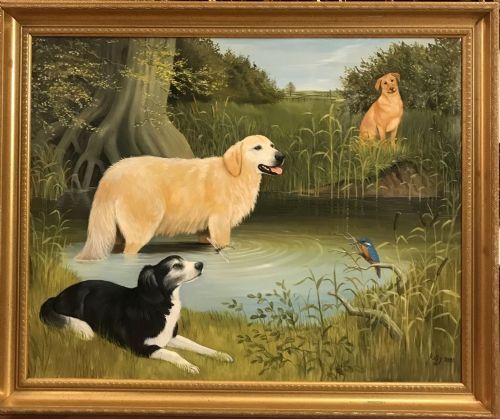


Gilt Framed Canine Portrait
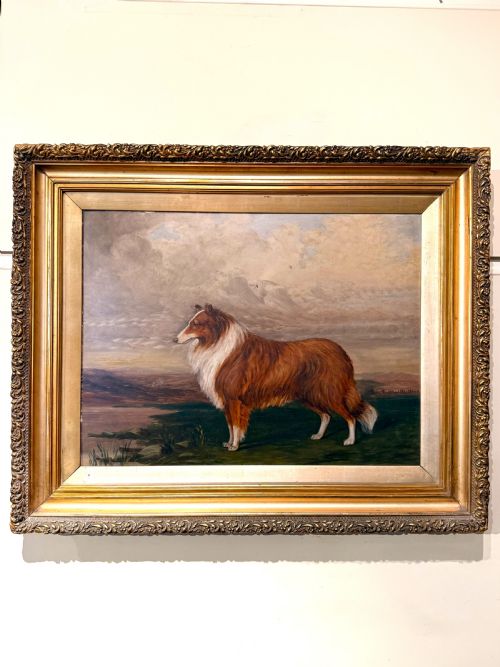
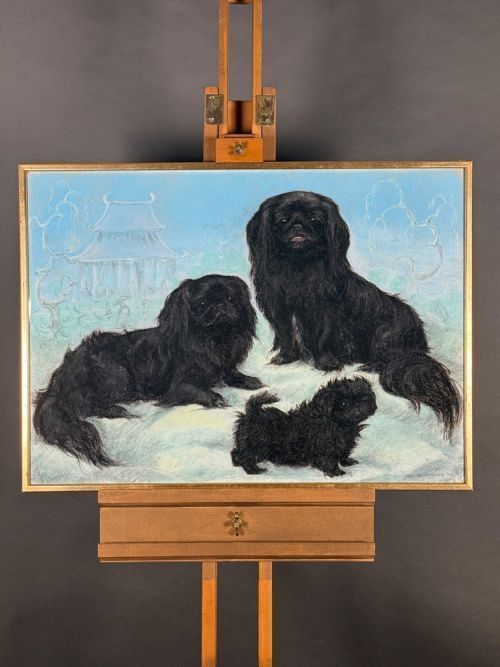
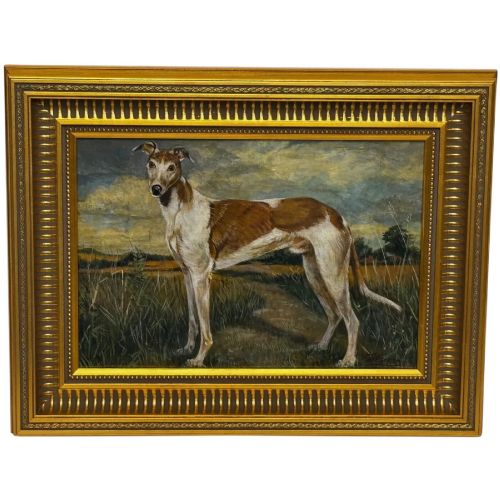
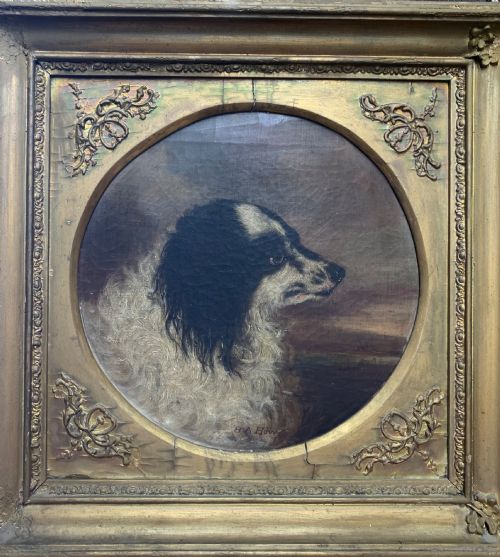
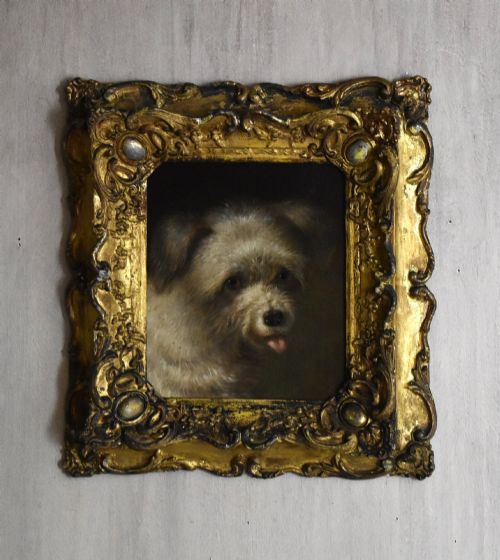
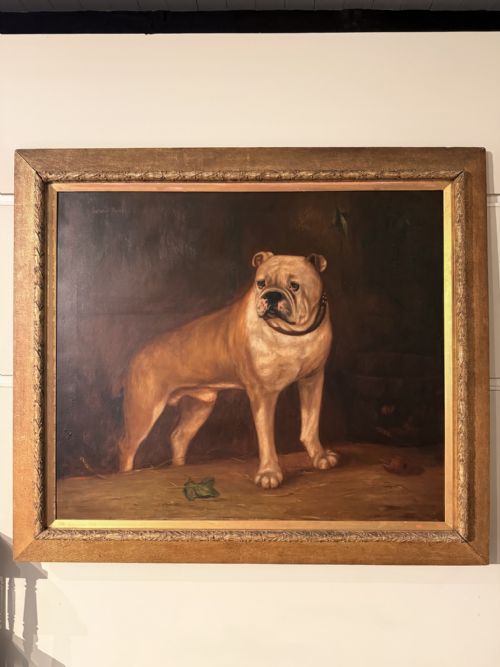
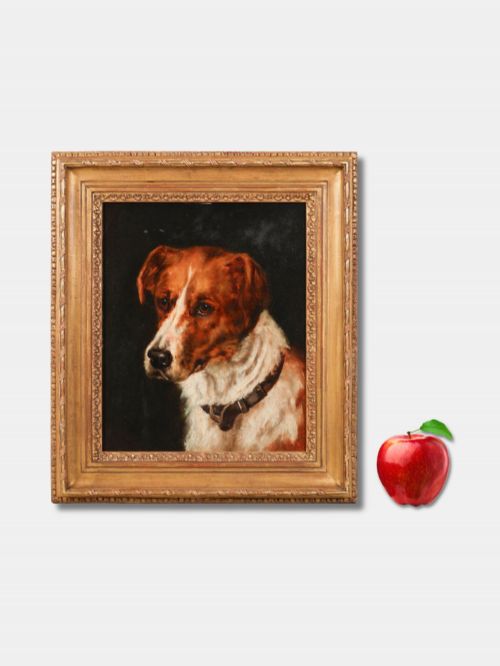
When you search for a gilt framed canine portrait, you are looking at historical oil paintings and drawings of dogs housed in gilded wooden surrounds.
Gilt Framed Canine Portrait
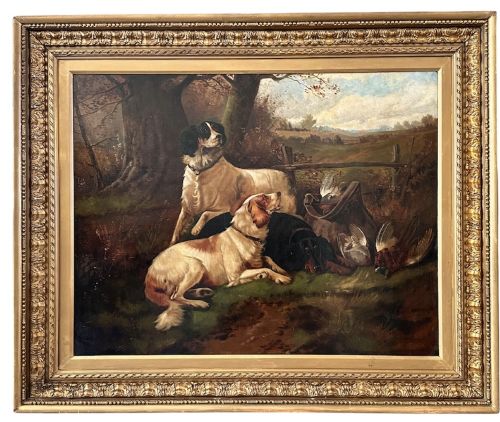
A gilt framed canine portrait captures dogs ranging from working spaniels and terriers to prized show hounds. These works span the nineteenth century through the mid-twentieth century, recording individual animals and sporting scenes.
The format relies heavily on oil on canvas or board, complemented by nineteenth-century and Victorian framing styles. Subjects appear either in isolated head studies or within pastoral landscapes and barn settings.
Victorian sporting art and British realism dominate the offerings. Many pieces reflect the era's fascination with canine character, whether depicting working gundogs or household companions.
Materials and construction methods
Artists worked primarily in oil paint applied to canvas or wooden panels, with occasional pastel on paper drawings appearing in later periods. Brushes captured the texture of fur and the depth of animal eyes through layered pigments.
Frames utilise wood finished with gold leaf or gilt layers to create the characteristic metallic border. These surrounds range from simple gilded mouldings to heavy Victorian frames built to complement the artwork.
Listings feature oil paintings on canvas and board alongside pastel drawings, spanning the nineteenth century through the mid-twentieth century.
Factors determining quality
Anatomical precision and the depiction of the animal's expression separate accomplished works from standard decorative pieces. Master painters rendered bone structure, coat texture, and posture with acute observation.
The integration of the dog within its landscape or interior setting dictates the overall composition. Finer examples maintain proportional balance between the subject and the surrounding environment.
Martin Theodore Ward·John Sargent Noble·John Emms·John Frederick Herring Senior·Arthur Wardle·William Barraud·Edwin Landseer·Colin Graeme Roe·Valentine Thomas Garland·George Earl·Florence Mabel Hollams·James Ward·Charles Bilger Spalding
The Gilt Framed Canine Portrait Glossary
- Giltwood
- Wood that has been treated with gold leaf or a gold-coloured finish. This material forms the ornate borders common in nineteenth-century framing.
- Sporting Art
- A genre of painting focused on fieldsports, hunting, and animals. These works record hounds, gundogs, and horses in working environments.
- Oil on Canvas
- Pigment mixed with drying oil applied to stretched woven fabric. This medium allows for deep colour saturation and gradual blending.
- Pastel
- A medium consisting of powdered pigment and a binder formed into a stick. Artists use this to create soft-textured drawings on paper.
- Victorian Realism
- An artistic approach focusing on accurate, unidealised representation of subjects. Painters in this tradition rendered animals with lifelike anatomical detail.
Gilt Framed Canine Portrait: Frequently Asked Questions
What is a canine portrait?
A canine portrait is an artwork dedicated entirely to depicting a specific dog or group of dogs. These pieces focus on recording the likeness, breed characteristics, and personality of the animal.
Historically, owners commissioned these works to celebrate valued pets, working animals, or prized hunting dogs. The tradition spans centuries of British and European fine art.
How were these paintings displayed?
These artworks were traditionally hung in country houses, estate libraries, and domestic parlours. The gilt frames ensured the paintings caught the flickering light of candles and oil lamps.
Frames were selected to project status and to complement the heavy interior furnishings of Victorian and Edwardian homes.
How do I identify the period?
Dating relies on a combination of painting style, clothing or landscape elements in the background, and the construction of the wooden frame. Victorian works often feature darker palettes and ornate, heavy gilding.
Signatures, artist dates, and historical framing techniques provide further clues for establishing when a piece was created.
How do I care for an oil painting?
Oil paintings require stable indoor humidity and protection from direct sunlight to prevent the canvas from cracking and the pigments from fading. Dusting should be done gently with a soft, dry brush.
Avoid using liquid cleaners on the canvas or the gilt frame, as moisture can damage the gold leaf and the underlying preparation layers.