
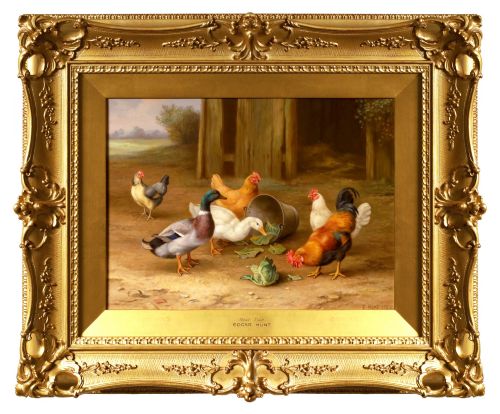


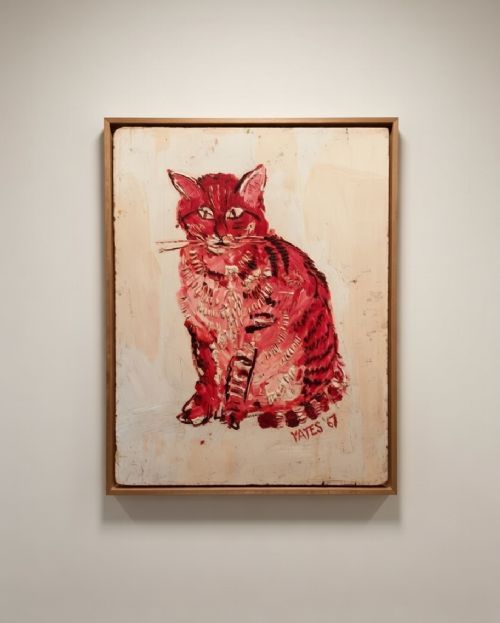


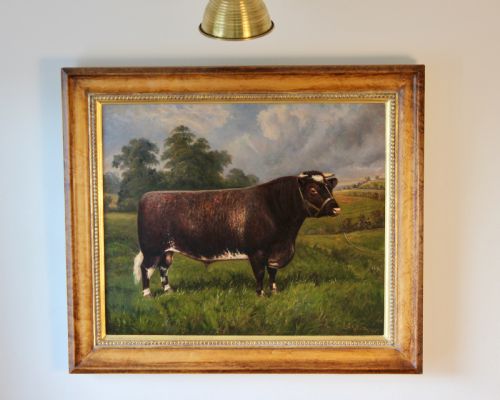

Signed Animal Oil Painting
These signed animal oil painting works bring centuries of skilled portraiture into your rooms, capturing domestic pets and farm livestock with remarkable fidelity.
Signed Animal Oil Painting
When you search for a signed animal oil painting, you encounter framed canvases and boards dating from the nineteenth century through to the mid-twentieth century. The subjects range from prized livestock and farmyard poultry to individual dogs, cats, and exotic wildlife.
Most examples you meet on this page hail from the Victorian era and the interwar period, reflecting shifting tastes in domestic animal portraiture and sporting art. These works span traditional realism and detailed animalier studies by named artists and skilled regional painters.
The dominant formats are oil on canvas and oil on board, often presented within period giltwood frames that complement the depth of the painted surface. Whether depicting a solitary collie or a pair of terriers, each piece serves as a direct window into historical human-animal bonds.
Materials and construction
Artists painted primarily with oil paint upon stretched canvas or wooden board, building texture and tonal depth through layered brushwork. Gold leaf and gilt ornamentation feature heavily on the frames that house these works, providing a warm metallic border.
Wood serves as the foundation for both rigid painting supports and the decorative frames, utilising traditional joinery and carved giltwood mouldings. The combination of durable oil pigments and sturdy wooden framing ensures these works survive across generations.
Listings feature works spanning the nineteenth century, Victorian era, and the 1920s through to the 1960s, executed primarily in oil on canvas or board.
Judging quality and execution
Quality rests upon the artist's command of anatomy, light, and texture, separating hurried commercial studies from deeply observant portraiture. Superior works capture the distinct personality and physical presence of the animal rather than relying on generic forms.
The integration between the painted surface and the original frame influences the overall integrity of the piece. Masterful brushwork in the rendering of fur, expression, and background landscape elevates a canvas well above standard decorative output.
Edgar Hunt·John Emms·Thomas Sidney Cooper·John Trivett Nettleship·Florence Mabel Hollams
The Signed Animal Oil Painting Glossary
- Animalier
- An artist who specialises in the realistic portrayal of animals. This term applies particularly to nineteenth-century sculptors and painters.
- Canvas
- A heavy woven fabric stretched across a wooden stretcher frame to act as a support for oil paint. It provides a flexible yet durable surface for brushwork.
- Giltwood
- Wood that has been coated with a thin layer of gold leaf or gilt powder. It is common on antique picture frames from the Victorian period onwards.
- Sporting Art
- Artwork depicting field sports, hunting dogs, horses, and livestock. This genre gained immense popularity in British art throughout the nineteenth century.
- Realism
- An artistic movement focused on depicting subjects truthfully without artificiality. In animal painting, this involves precise attention to anatomical accuracy.
Signed Animal Oil Painting: Frequently Asked Questions
How do I date an animal oil painting?
Dating relies heavily on stylistic clues, framing methods, and the type of canvas or board used by the artist. Signatures and biographical dates of the painter offer the most definitive timeline.
Examining the reverse of the stretcher or board often reveals historical labels, stamps, or inscriptions that clarify the period of creation.
Where should I hang these paintings?
These works suit traditional reception rooms, studies, and hallways where traditional lighting enhances the oil pigments and gilt frames. Keep them away from direct sunlight and excessive moisture to protect the canvas.
Pair smaller dog or cat portraits together on a single wall to create a traditional gallery effect reminiscent of nineteenth-century interiors.
What is Victorian animalier art?
Victorian animalier art focuses on the detailed representation of animals, ranging from working farm dogs to prized livestock and exotic creatures. Artists in this tradition sought to capture both physical accuracy and individual character.
This genre reflects the period's deep fascination with domestic pets, agriculture, and the natural sciences.
Are these paintings signed by the artist?
Many examples feature visible signatures, monograms, or studio stamps left by the original painter in the corners of the canvas. These marks help attribute the work to specific historical artists.
Unsigned pieces still appear frequently, often attributed to followers of notable schools or identified through subject matter and technique.