
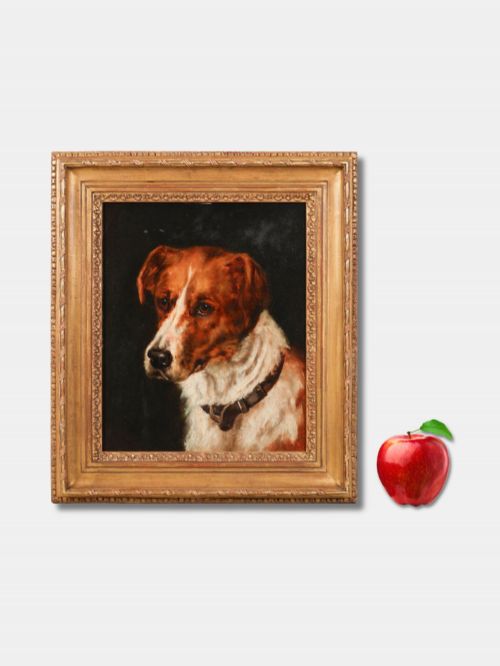


Original Canine Oil Painting
An original canine oil painting captures the distinct character of a cherished dog through traditional brushwork on canvas or board.
Original Canine Oil Painting
An original canine oil painting depicts dogs in various settings, ranging from intimate single portraits to dynamic groups of hunting hounds. Buyers exploring original canine oil painting will encounter works spanning the nineteenth century through the mid-twentieth century.
The pieces on this page include framed portraits of specific breeds such as Jack Russells, boxers, bloodhounds, terriers, and Pekingese. Artists render these subjects using oil paint on supports like canvas, wooden boards, and artist palettes.
These works reflect historical styles including Victorian realism, British sporting art, and mid-century realism. Many feature named dogs or specific breeds recorded by period painters.
Materials and Techniques
Painters build these works using oil paint applied to prepared canvas, wooden board, or repurposed supports such as artist palettes. The medium allows for rich blending of tones to render the texture of dog coats and the depth of their expressions.
Many surviving examples retain their period frames, often constructed from wood with gilded finishes. The application of oil paint ranges from smooth nineteenth-century realism to looser mid-century brushwork.
One bloodhound found immortality by being painted directly onto an artist's wooden palette.
Assessing Quality and Execution
Quality in these works rests upon the artist's ability to render canine anatomy, bone structure, and coat texture with convincing realism. Superior paintings capture a alert expression and individuality rather than a generic depiction of a breed.
The handling of light across the subject and the integration of the background further distinguish finer examples from standard decorative works. Condition of the painted surface and the originality of the frame contribute to the standing of a piece.
C W Tuck·Jules Chardigny·M.E.Hankinson·Florence Mabel Hollams·Edward Armfield·Samuel Fulton
The Original Canine Oil Painting Glossary
- Canvas
- A woven fabric stretched across a wooden frame acting as a primary support for oil paint. It provides a flexible and durable surface favored by nineteenth and twentieth-century painters.
- Board
- A rigid wooden or composition panel used as an alternative to canvas for oil paintings. Artists frequently utilised board for smaller portrait studies.
- Realism
- An artistic style aiming to represent subject matter truthfully without artificiality. In canine art, this appears as accurate anatomical rendering and lifelike textures.
- Sporting Art
- A genre depicting field sports, horses, and hounds. Works in this category often record hunting dogs in action or repose.
- Palette
- A thin board used by painters to hold and mix colours. Occasionally, artists painted direct onto discarded palettes, creating unique shaped artworks.
Original Canine Oil Painting: Frequently Asked Questions
What periods do these paintings come from?
The works span the nineteenth century, the Victorian era, and the mid-twentieth century up to the 1960s.
Each period brings distinct framing choices and shifts in how artists approached animal portraiture.
Which dog breeds appear most often?
Terriers, foxhounds, bloodhounds, Pekingese, and boxers frequently feature in these historical oils.
Named pets and working dogs both appear across the nineteenth and twentieth-century selections.
How should I display an oil painting?
Keep paintings away from direct sunlight and dramatic fluctuations in room temperature to protect the canvas and oil medium.
Most pieces arrive in period wooden frames suited for immediate hanging on interior walls.
What supports were used for the paintings?
Artists painted on stretched canvas, wooden boards, and occasionally even wooden artist palettes.
Each support reflects the practical choices available to the painter during their respective era.