

Gilt Frame Floral Painting
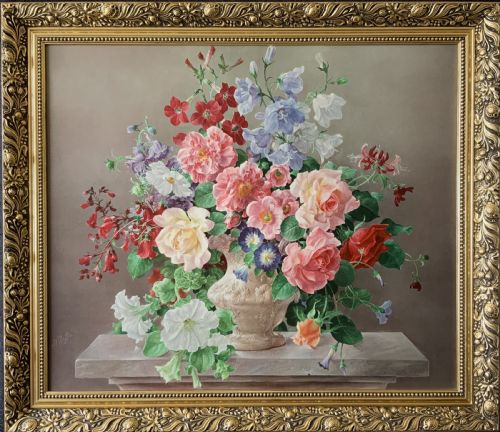
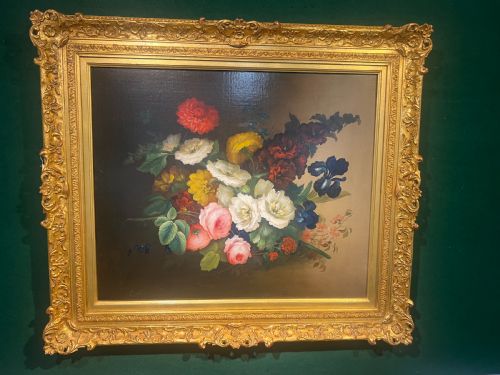
A gilt frame floral painting brings centuries of botanical study and warm metallic light directly into a room.
Gilt Frame Floral Painting
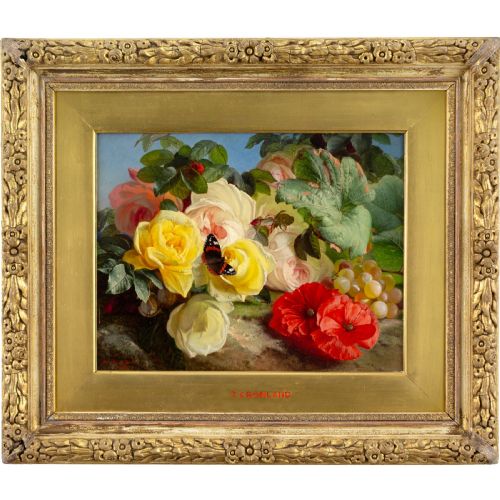
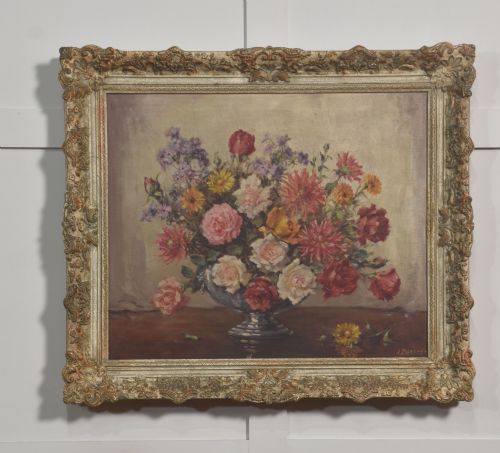
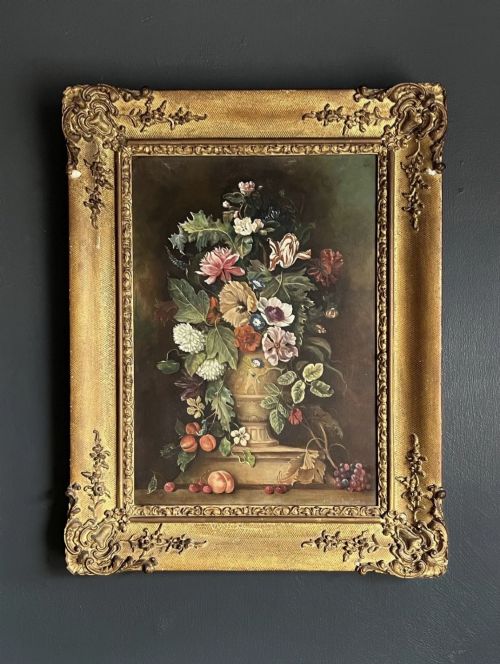
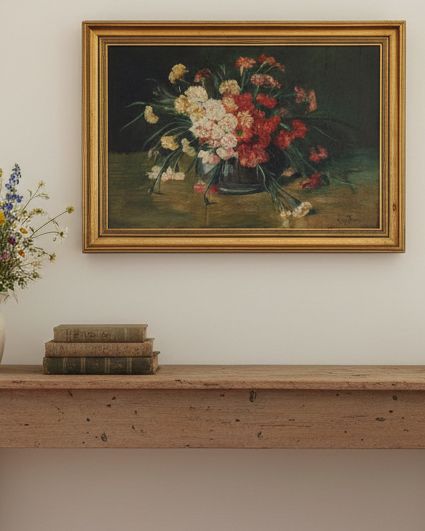
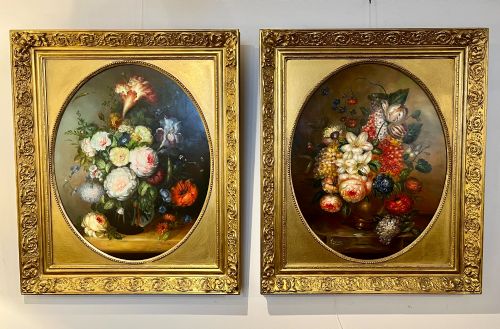
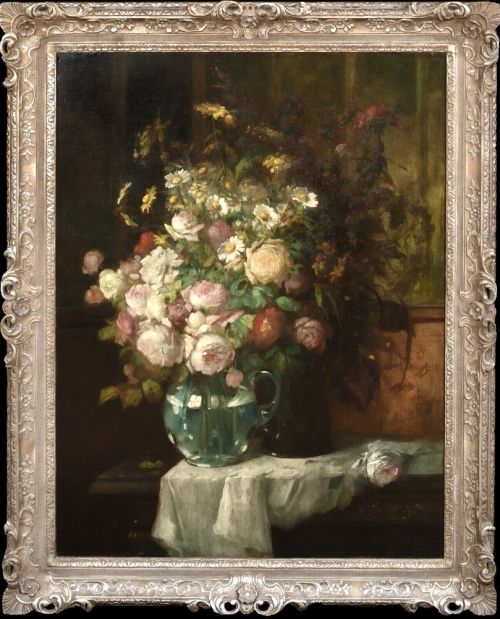
A gilt frame floral painting combines botanical subject matter with ornate metallic borders, spanning canvases, panels and works on paper. When searching for a gilt frame floral painting, collectors encounter compositions ranging from meticulous Dutch Golden Age style arrangements to looser Impressionist and mid-century interpretations of roses, carnations and summer blooms.
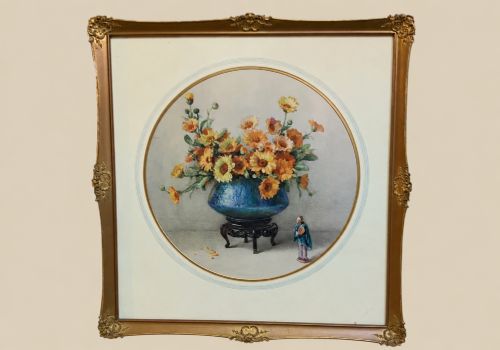
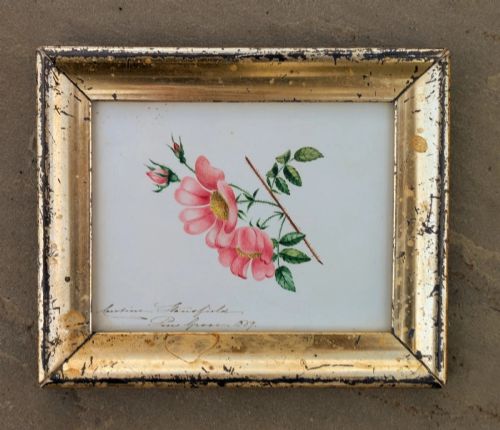
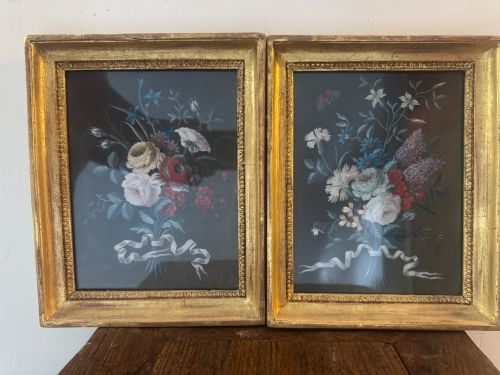
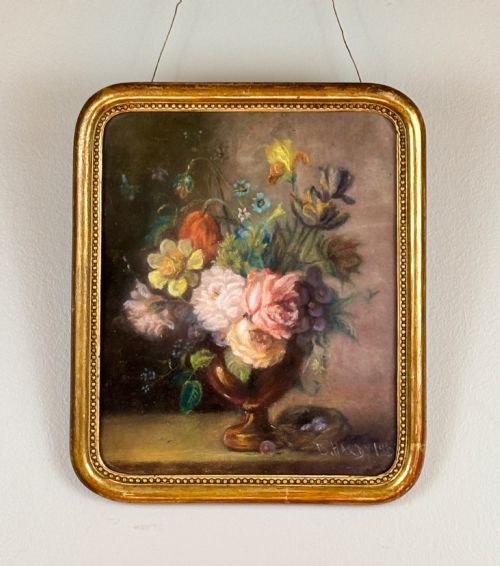
The selections on this page draw from the nineteenth century through to the mid-twentieth century, encompassing British, French, Belgian and Austrian schools. Alongside traditional oil paintings on canvas or board, the category includes delicate watercolours, gouaches and pastels housed in period mounts.
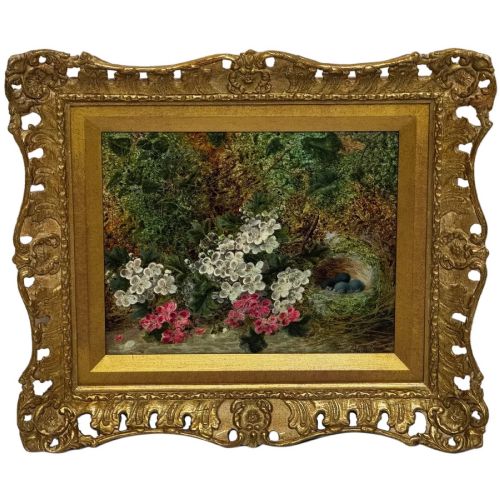
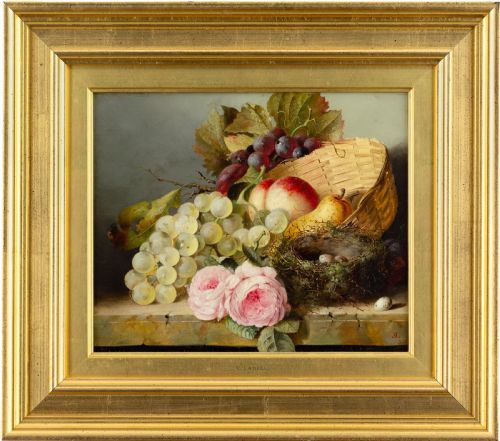
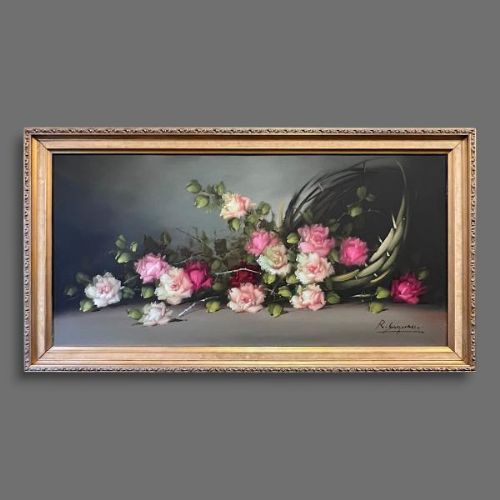
Many examples capture still life studies of flowers in vases, wicker baskets or domestic interiors, while others present garden scenes and botanical studies. The enclosing frames vary from simple gilded wood profiles to deeply moulded gesso designs with ornate crests.
How they were made
Artists painted primarily in oil on stretched canvas or wooden board, though water-based media like gouache and pastel appear frequently behind glass. Pigments were applied to build up petals, leaves and tonal backgrounds, often finished with a protective varnish.
The surrounding frames utilise timber bases coated in gesso, a plaster-like mixture sculpted or stamped into decorative patterns before the application of gold leaf or gilt paint. This traditional layering creates the reflective, textured borders characteristic of the period.
Several floral arrangements manage to include a discreet butterfly or a stray bird's egg hidden amongst the petals.
What varies in quality
The refinement of the brushwork and the anatomical accuracy of the botanical subject matter separate standard works from exceptional examples. Skilled artists manage light, shadow and texture to give depth to petals and foliage.
The craftsmanship of the enclosing frame contributes significantly to the overall standard. Original gilt gesso frames with crisp moulding and intact gilding hold greater distinction than later replacements or heavily restored surrounds.
Theude Grönland·I. Berezny·Oliver Clare·Edward Ladell·Konstantin Stoitzner·Harold Clayton·Edwin Steele·D Hardy·Manuela Bonati·Victor Simonin·Alice Anne Renshaw·Simon Pietersz Verelst·Amile Coppieters·Florence Hess·A. Nikolokov·PAUL LELONG
The Gilt Frame Floral Painting Glossary
- Gesso
- A plaster mixture applied to wooden frame bases to provide a smooth surface for gilding. It is often moulded into intricate relief patterns.
- Giltwood
- Timber that has been coated with gold leaf or metallic paint. This material gives frames their characteristic warm sheen.
- Impressionism
- An art movement focusing on light and spontaneous brushwork rather than strict academic detail. Many floral pieces adopt these looser techniques.
- Still life
- A painting genre depicting inanimate subject matter, commonly featuring cut flowers, fruit and vessels. These arrangements allow artists to explore form and colour.
- Gouache
- An opaque watercolour paint containing pigment and a binding agent. It dries to a matte finish and appears frequently in works on paper.
Gilt Frame Floral Painting: Frequently Asked Questions
How do I date a painted floral study?
Dating relies on stylistic clues, framing techniques and artist signatures. Victorian and earlier works often feature tight botanical precision, while mid-century pieces embrace looser brushwork.
Examining the reverse of the canvas, stretcher bars and framing methods provides further clues to the era of production.
Are these works always painted in oil?
While oil on canvas or board forms a large portion of the selection, artists also utilised watercolours, gouaches and pastels. Each medium creates a distinct visual texture.
Works on paper are typically mounted behind glass to protect the delicate pigments from environmental damage.
How do I care for antique gilt frames?
Gilt frames require gentle dusting with a soft, dry brush to prevent the accumulation of dirt within the gesso mouldings. Avoid liquid cleaners or chemical polishes, which can strip the metallic leaf.
Keeping the pieces away from direct sunlight and high humidity protects both the paint surface and the wooden structure.
What subjects appear besides vases of flowers?
Artists frequently arranged floral studies alongside fruit, wicker baskets, birds' nests and Chinese objects. Some compositions place blooms within domestic interiors or open garden settings.
These varied backdrops provide context and narrative depth to the central botanical arrangement.