


Gilt Edge China Dish
A gilt edge china dish brings refined ceramic artistry and painted detail to any table, combining porcelain surfaces with polished metallic borders.
Gilt Edge China Dish
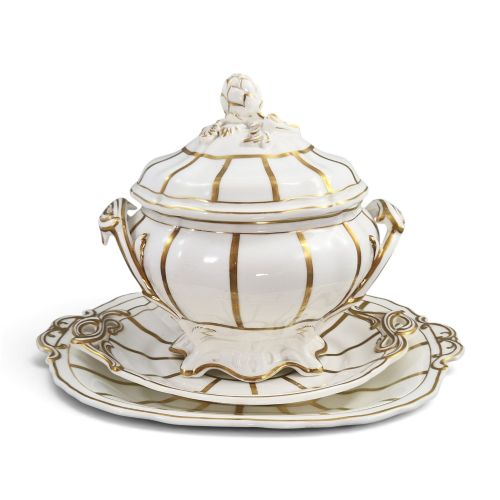
A gilt edge china dish encompasses a variety of ceramic forms, including cabinet plates, decorative dishes, saucers, and serving trays. These items originate from periods ranging across the eighteenth, nineteenth, and twentieth centuries, produced by notable European and English potteries.
Styles represented across the selection span English Imari, Neoclassical, and Rococo Revival, alongside Japanese Imari influences. Each gilt edge china dish serves either decorative display purposes or formal table service.
How they were made
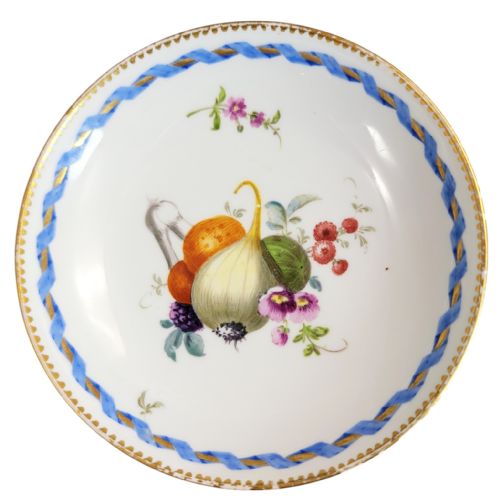
Makers shaped these wares from fine porcelain, bone china, or hard-paste porcelain, often applying hand-painted enamel pigments for floral, armorial, or scenic motifs. Artisans then utilised gold leaf or gilding to line the rims and edges.
Firing techniques varied depending on the period, with eighteenth-century factories and later nineteenth-century potteries employing high-temperature kilns to set the body before adding delicate overglaze enamel details.
David Dewsberry hand-painted orchids onto porcelain, capturing botanical precision just in time for the Edwardian parlour.
What varies in quality
The standard of painting heavily dictates the quality of a piece, distinguishing mass-produced wares from those bearing the hand-painted signatures of skilled artists. The crispness of the porcelain moulding and the preservation of the gold leaf or gilding also influence the overall standard.
Pieces featuring named artists, specific retailer commission marks, or complex patterns such as English Imari typically represent higher levels of factory output and craftsmanship.
Royal Crown Derby·Davenport·Meissen·Copeland·Sevres·Royal Worcester·Ridgway·Coalport·Chamberlain Worcester·Flight, Barr and Barr·Royal Doulton
The Gilt Edge China Dish Glossary
- Bone china
- A type of soft-paste porcelain containing bone ash, known for its high strength and milky translucency. It became a staple of English potteries during the nineteenth century.
- Hard-paste porcelain
- A durable ceramic composed of kaolin and petuntse, fired at very high temperatures. European factories adopted this formula to produce robust plates and dishes.
- Gilding
- The application of gold leaf or gold powder onto the ceramic surface to create a metallic border. This finish catches the light along the rim of a dish.
- Enamel pigment
- Coloured glass powder fused to the porcelain surface during a secondary low-temperature kiln firing. It provides vibrant hues for floral and pictorial scenes.
- Cabinet plate
- A decorative ceramic plate intended for display in a cabinet or on a wall rather than for daily dining use.
Gilt Edge China Dish: Frequently Asked Questions
Can I use these dishes for serving food?
Many of these pieces, including dessert plates and serving trays, were originally designed for dining and entertaining. However, age, delicate enamel work, and worn gilding often prompt modern owners to use them purely for display.
For pieces featuring intricate hand-painted scenes or nineteenth-century gold leaf, hand washing is essential to preserve the surface. Daily practical use is generally reserved for sturdier twentieth-century wares.
How do I identify the date of a piece?
Dating relies heavily on factory backstamps, impressed marks, and stylistic clues such as Neoclassical borders or Rococo scrolls. Comparing the pattern number with historical factory records often narrows down the production decade.
Changes in material composition, from eighteenth-century hard-paste porcelain to Victorian bone china, also help establish the era of manufacture.
What is English Imari?
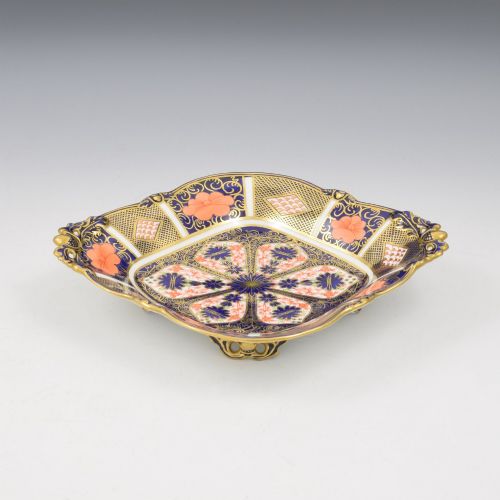
English Imari refers to ceramic designs inspired by traditional Japanese export porcelain, typically featuring a palette of iron red, cobalt blue, and rich gilding. British factories adopted these striking motifs during the Georgian and Victorian periods.
These patterns often combine floral arrangements with geometric borders, creating a dense and decorative visual effect across plates and dishes.
Why are some plates called cabinet plates?
Cabinet plates were created primarily for visual exhibition inside fine furniture cabinets rather than for culinary use. They often showcase exceptional hand-painted artwork, pierced rims, or extensive gilding.
Because they avoided the wear and tear of the dining table, many survive today with their painted surfaces and gold edges remarkably well preserved.