
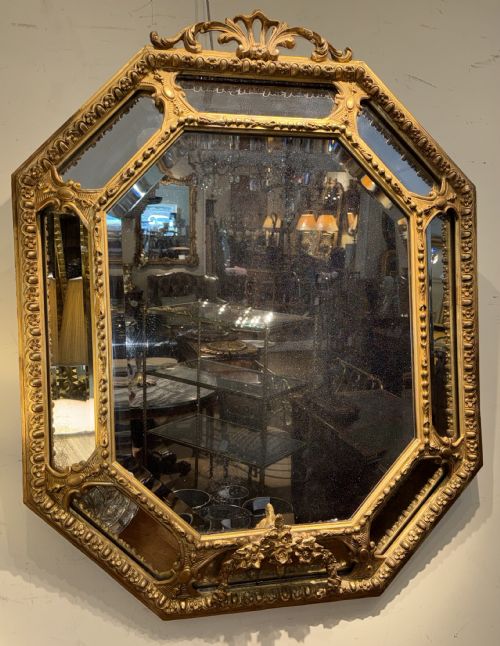
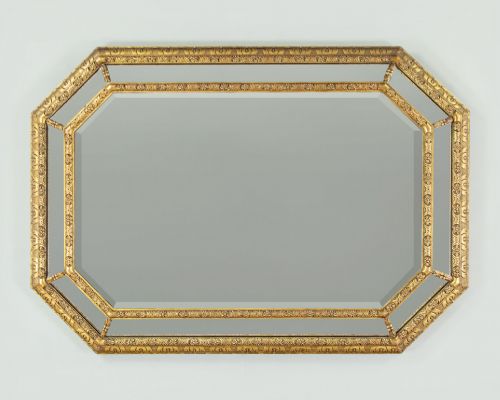


Gilt Cushion Mirror
A gilt cushion mirror brings depth and reflected light to a room through its distinctive outward-sloping frame.
Gilt Cushion Mirror
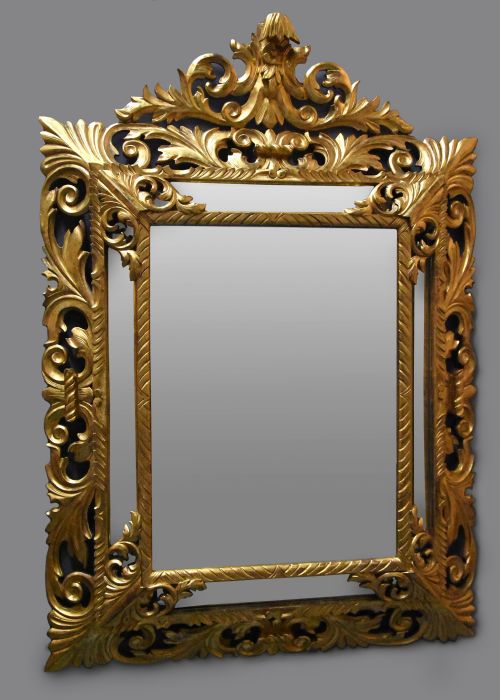
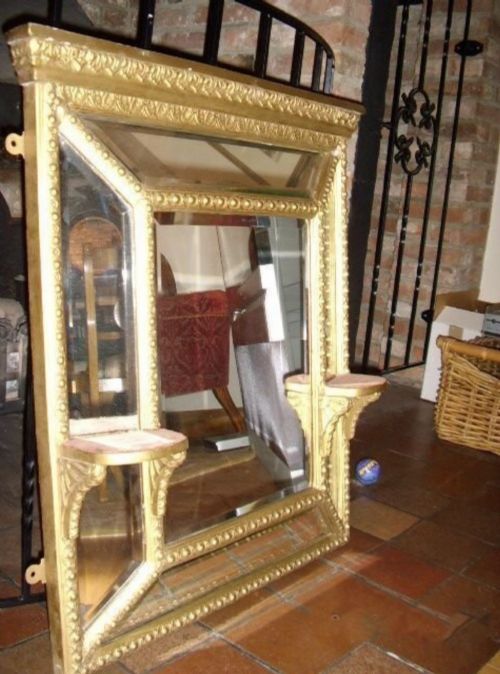
A gilt cushion mirror is a wall hanging defined by a convex, sloped frame profile that directs attention inward toward the glass plate. Buyers seeking this phrase encounter wall mirrors, overmantels, and large decorative pieces designed to dominate a chimney breast or main wall.
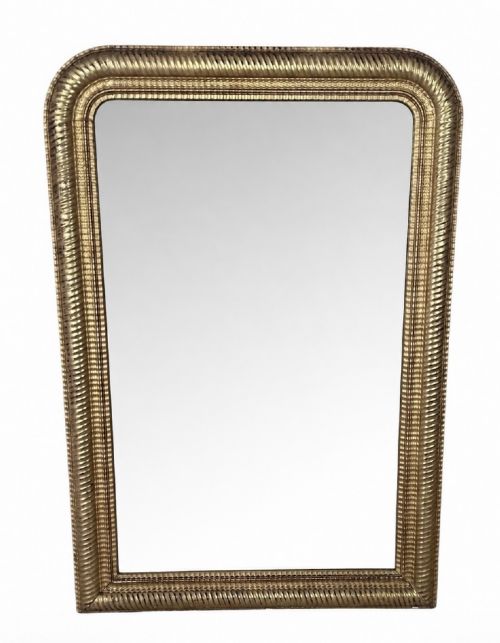
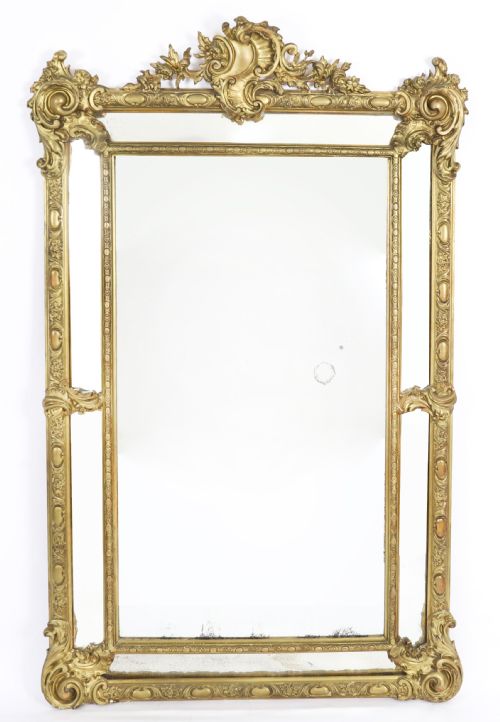
The selections span the nineteenth century predominantly, with frequent appearances of French Louis Philippe, Italian Baroque Revival, and Victorian designs. Origins stretch from French workshops to Italian centres, alongside occasional Georgian and early twentieth-century examples.
Most pieces on offer utilise the characteristic bevelled or flat glass surrounded by heavily moulded wooden frames. Forms range from neat rectangular wall mirrors to expansive overmantels featuring crests and ornamental detail.
How they were made
Makers built the foundational frames using timber such as wood and walnut, shaped to create the characteristic sloping cushion profile. Wood and gesso provided a smooth base layer for subsequent gilding.
Giltwood, gold leaf, and parcel-gilt finishes were applied to the prepared surfaces to achieve the desired metallic sheen. Metal mounts and brass hardware occasionally secured structural elements or added decorative contrast.
Glass plates included bevel cut, bevelled mercury glass, and marginal plates set within the timber surrounds. Ripple frames and rope twist motifs required precise carving directly into the wood or gesso layers.
Several mirrors include hidden metal mounts designed to keep ambitious nineteenth-century overmantels securely anchored against wandering parlour walls.
What varies in quality
The crispness of the carved detail on the gesso and wood distinguishes standard frames from finer works. Deeply undercut relief work and well-defined ripple or rope twist patterns indicate skilled craftsmanship.
Originality of the gilding surface heavily influences the standing of a piece. Surviving gold leaf or original parcel-gilt retains a softer, integrated patina compared to later re-gilding.
The integrity and age of the glass plate matter significantly. Period mercury glass with authentic foxing or clean bevel-cut edges holds greater interest than modern replacement glass.
The Gilt Cushion Mirror Glossary
- Gesso
- A plaster-like mixture applied to wood frames to create a smooth surface for gilding. It allows carvers to achieve sharp ornamental details before applying gold leaf.
- Giltwood
- Timber that has been coated with gold leaf or a gold-coloured finish. This material defines the bright, reflective appearance of traditional luxury frames.
- Margin plate
- A central mirror plate surrounded by smaller, individual glass panels fitted into the frame border. This technique creates multiple angles of reflection.
- Mercury glass
- Older mirror glass produced using a tin and mercury amalgam backing before the invention of modern silvering. It often develops characteristic dark spots known as foxing.
- Ripple frame
- A frame profile featuring undulating, wave-like concentric mouldings. Makers produced these patterns using specialised woodworking machinery during the nineteenth century.
Gilt Cushion Mirror: Frequently Asked Questions
How do I hang a heavy cushion mirror?
Large overmantel and wall versions require robust wall fixings secured directly into masonry or structural studs. Professional mirror hangers utilise heavy-duty brackets to support the substantial weight of wood and gesso frames.
Due to the projection of the cushion frame, ensure the hanging wire or flush mount brackets distribute the load evenly. Balance is critical given the outward slope of the moulding.
Are the glass plates original?
Many nineteenth-century pieces retain their original glass, often identifiable by slight distortions, bubbles, or mercury foxing. Close inspection of the edges reveals the historical bevel cut.
Replacement glass appears clean and uniform without the atmospheric clouding developed over generations. Collectors generally value the visual depth that authentic period glass provides.
How do I clean a giltwood frame?
Dust the carved surfaces gently with a soft, dry brush to prevent damage to the delicate gesso and gold leaf layer. Moisture and chemical cleaning agents strip historical gilding.
Maintain the environment away from direct heat sources and excessive humidity to protect the underlying timber frame from warping.