


Gilt Chinoiserie Accent Table
A gilt chinoiserie accent table brings hand-painted lacquer and gilded detail into a room through occasional, side and coffee table forms.
Gilt Chinoiserie Accent Table
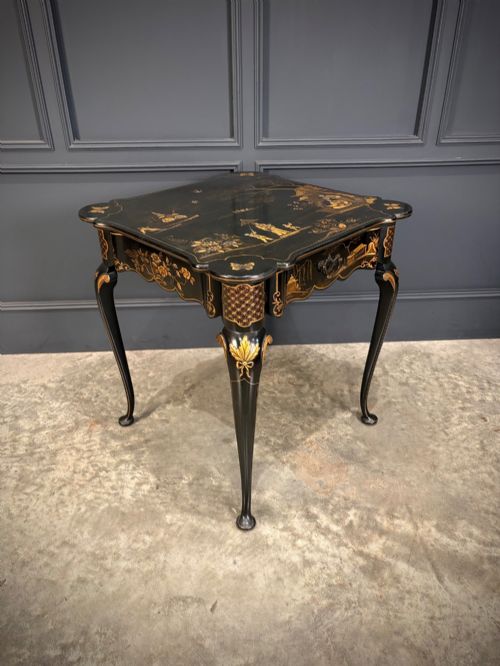
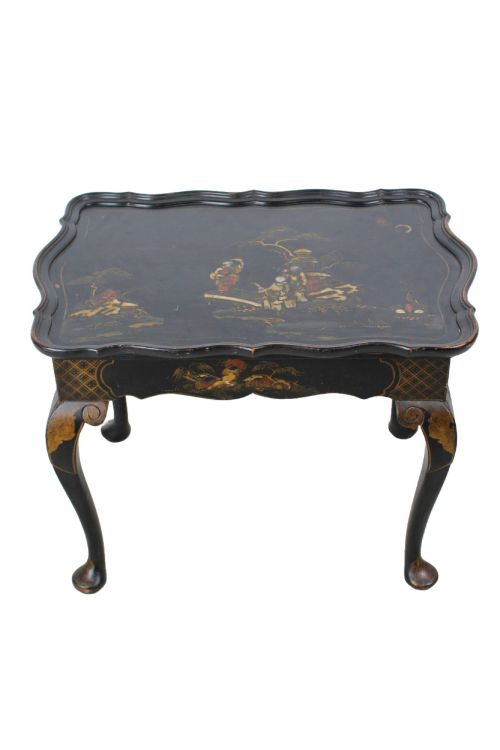
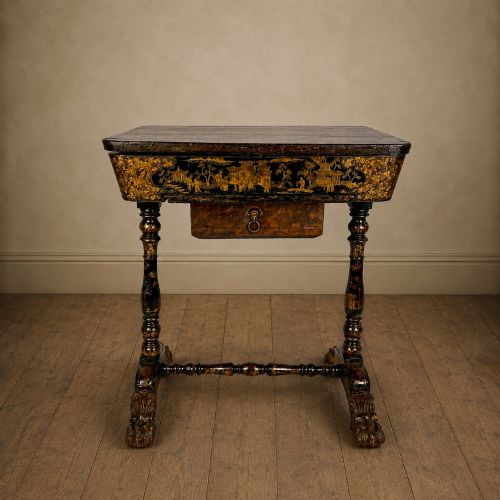
When you search for a gilt chinoiserie accent table, you find a range of small furniture forms including side tables, occasional tables, coffee tables, tray tables and work tables. These pieces span several periods, featuring examples from the eighteenth century, the nineteenth century, the Edwardian era and the 1930s.
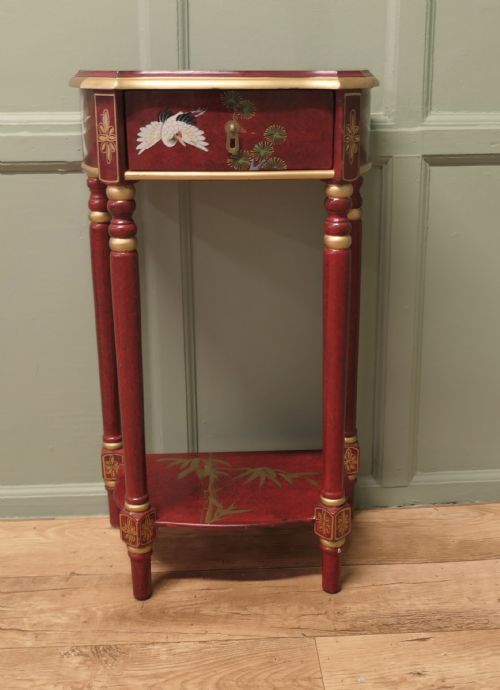
The aesthetic draws on Chinoiserie, Victorian Chinoiserie, Edwardian Chinoiserie, Regency style, Sheraton, French Rococo Revival and George III Chinoiserie. You will encounter black and red lacquer surfaces, hand-painted decoration and parcel-gilt details across the various forms.
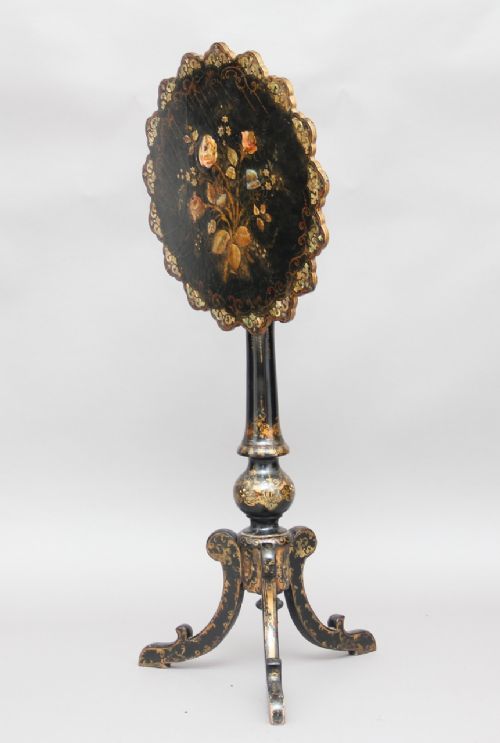
Beyond standard tables, the selection includes nest of tables, wine tables, centre tables and table lamps utilising lacquer, wood, gilt, gold leaf, brass, fabric and papier-mâché.
What varies in quality
Quality rests in the execution of the hand-painted decoration and the depth of the lacquer work. Fine pieces exhibit intricate detail on surfaces like black or red lacquer and papier-mâché.
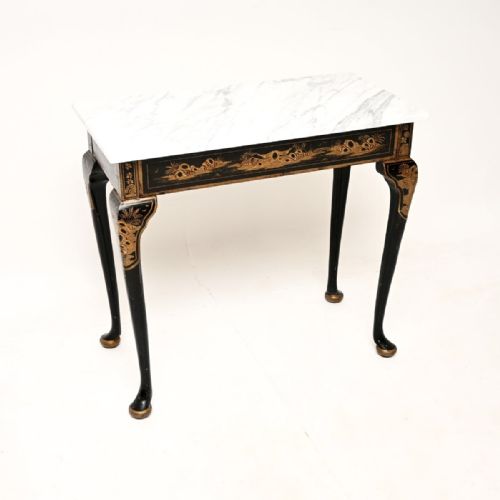
Material selection divides standard production from finer items, seen in the use of gold leaf, marble tops, and quality timber frames across George III, Regency and Edwardian pieces.
Materials recorded across the selection include lacquer, wood, gilt, gold leaf, brass, fabric and papier-mâché.
Mallets
The Gilt Chinoiserie Accent Table Glossary
- Chinoiserie
- European decorative style reflecting Chinese artistic influences. It employs painted motifs of figures, landscapes and pagodas on lacquered furniture.
- Lacquer
- A durable resin finish applied in multiple layers to wood or papier-mâché. It provides a glossy surface for subsequent hand-painting and gilding.
- Parcel-gilt
- Partially gilded woodwork or metalwork. The technique highlights specific carved details or edges against a dark or painted background.
- Papier-mâché
- A composite material made from paper pulp and binder. It forms lightweight trays and tables suitable for smooth painted and lacquered finishes.
- Work table
- A small specialised table fitted with compartments or a bag for sewing and needlework. These often feature decorative lacquer and gilt exteriors.
Gilt Chinoiserie Accent Table: Frequently Asked Questions
What is a chinoiserie accent table?
A chinoiserie accent table is a small piece of furniture decorated with European interpretations of Chinese motifs. These items include side tables, coffee tables and work tables finished in lacquer and gilt.
They serve as functional surface areas while adding decorative painted scenes and metallic highlights to a room scheme.
How do I date a lacquer table?
Dating relies on the underlying furniture form, construction methods and the specific style of the painted decoration. Pieces range from eighteenth-century George III designs to Edwardian and 1930s interpretations.
Examining the materials, such as papier-mâché or solid timbers, helps place the object within its historical period.
Where should I place a tray top table?
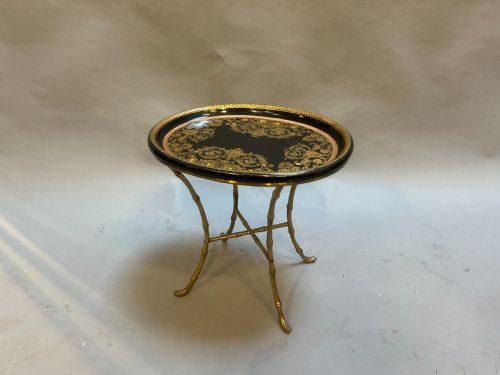
Tray top coffee tables and occasional tables work well in reception rooms as central surfaces or beside seating. Their raised edges help contain smaller decorative objects or drinks.
Ensure they sit away from direct heat sources to protect the historic lacquer and gilt surfaces.
What is the difference between black and red lacquer?
Black and red lacquer denote the primary background colour applied to the wooden or papier-mâché substrate before painting. Both colours receive hand-painted motifs and gold leaf detailing.
Red lacquer examples often provide a bolder focal point in an interior compared to the more sombre black ground.