


Black Gilt Plant Stand
These black gilt plant stands combine dark ebonised surfaces with bright metallic gilding to lift greenery and display ornaments.
Black Gilt Plant Stand
A black gilt plant stand brings together dark ebonised timber or lacquer with contrasting metallic highlights, creating a striking silhouette for interior spaces. You will encounter various forms across this selection, ranging from classical columns to low display tables and decorative torcheres.
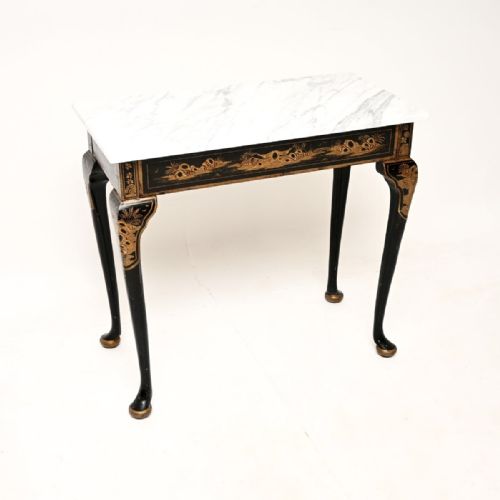
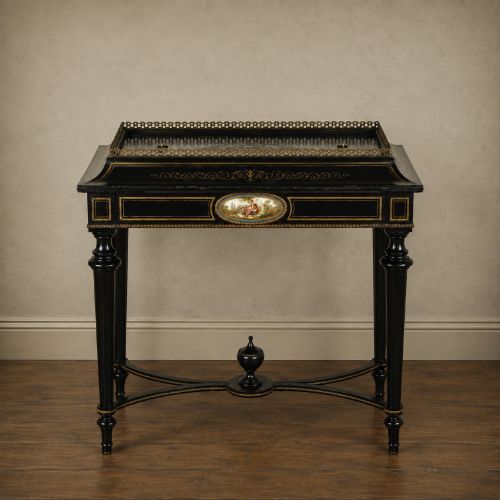
The objects span multiple periods, from Regency and Victorian creations to later revivals, reflecting shifts in taste towards ornate display pieces. Many incorporate specific styles such as Chinoiserie, Aesthetic Movement, and French Napoleon III design.
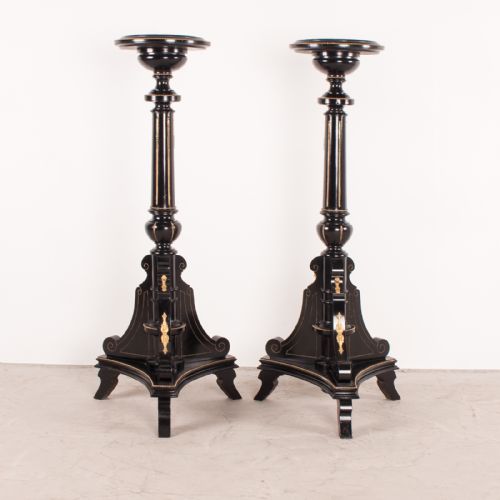
Makers utilised diverse formats including side tables, jardiniere stands, and tall pedestals to elevate porcelain bowls, bronze vessels, and potted plants. Each piece serves primarily to frame and support decorative items within a room.
Materials and construction methods
Makers relied heavily on ebonised wood and dark lacquer to achieve a dense, light-absorbing black ground across the frame and surfaces. Artisans applied gold leaf or parcel gilt highlights to accentuate carved details, turnings, and edges.
Several examples incorporate inset marble tops, painted porcelain plaques, or bronze mounts to add texture and colour contrast to the dark timber structures. Traditional joinery secures these varied elements, supporting heavy display items like large porcelain jardinieres.
Design influences across the selection include Victorian Chinoiserie, French Empire, Aesthetic Movement, and Queen Anne revivals.
Judging the standard of execution
Quality rests on the depth and finish of the ebonisation or lacquer work, alongside the precision of the gilding. Superior examples display crisp hand-applied gold leaf rather than flat modern paint, with well-preserved decorative motifs.
The choice of secondary materials dictates the grade of the piece, with genuine inset marble slabs, hand-painted porcelain plaques, or cast bronze mounts marking out finer productions. Structural stability in tall torcheres and pedestals also separates standard items from exceptional ones.
The Black Gilt Plant Stand Glossary
- Ebonised wood
- Timber treated to resemble ebony by staining or finishing it deep black. This process creates a uniform dark surface popular in nineteenth-century decorative arts.
- Torchere
- A tall stand or pedestal designed to support a light fixture or decorative object. Originating as candle stands, they evolved into display furniture for vases and plants.
- Jardiniere
- An ornamental pot or stand for holding plants or flowers. These items often feature waterproof liners or decorative exterior painting.
- Parcel gilt
- Wood or metal partially covered with gold leaf or gilt. This technique highlights specific carved details against a contrasting background.
- Aesthetic Movement
- A late nineteenth-century design style emphasising visual beauty over narrative content. Pieces from this movement often show Japanese artistic influences.
Black Gilt Plant Stand: Frequently Asked Questions
What is a black gilt plant stand?
A black gilt plant stand is a decorative piece of furniture featuring a dark ebonised or lacquered finish combined with gold leaf highlights. These stands elevate plants, jardinieres, and decorative objects above floor level.
They appear in various formats throughout the inventory, including tall torcheres, classical columns, and low display tables.
How were these stands used originally?
Households used these stands to display prized indoor plants, heavy porcelain jardinieres, and sculptural ornaments in reception rooms and parlours. Raising plants protected delicate floor surfaces and improved visibility for trailing foliage.
Tall torcheres also served to illuminate dark corners when paired with lamps or candles.
How do I care for ebonised wood?
Maintain ebonised wood surfaces by dusting gently with a soft, dry cloth to prevent scratching the dark finish. Avoid placing them near direct heat sources or strong sunlight, which can fade the lacquer and dry out the timber.
Apply mild furniture wax sparingly if the finish requires nourishment, avoiding any abrasive cleaners.
How do I date a Victorian stand?
Dating relies on examining the timber preparation, construction techniques, and stylistic markers such as Aesthetic Movement motifs or Napoleon III influences. Nineteenth-century examples often feature hand-turned elements and traditional joinery methods distinct from later revivals.
Comparing the decorative details against documented period styles helps narrow down the decade of production.