
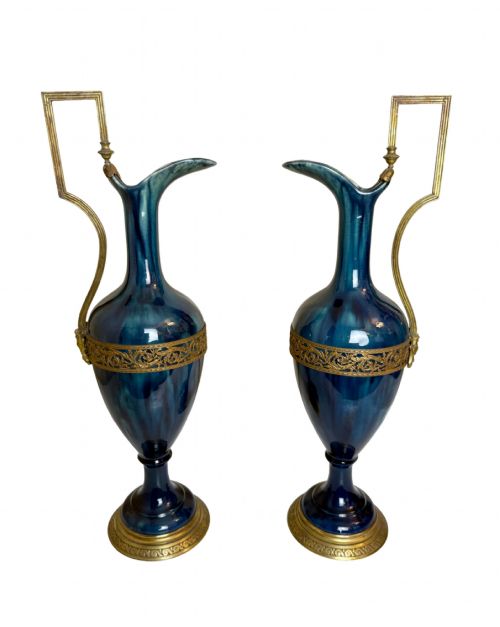
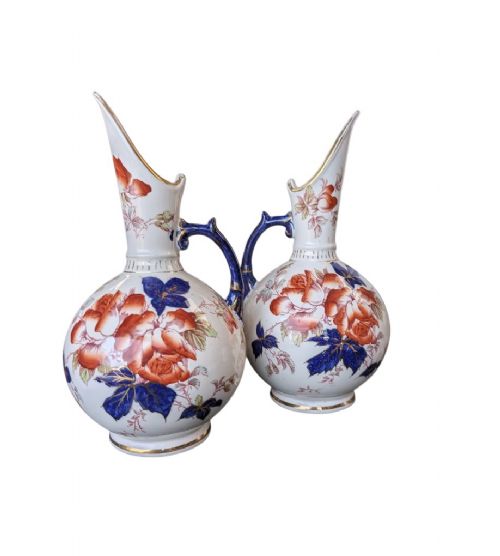


Gilt Ceramic Ewer
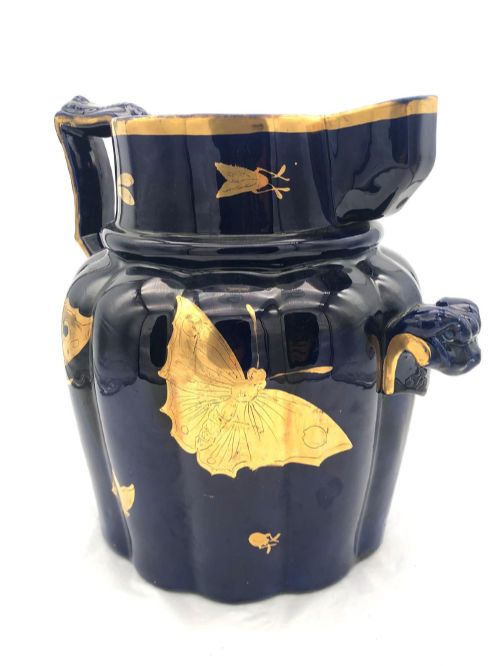
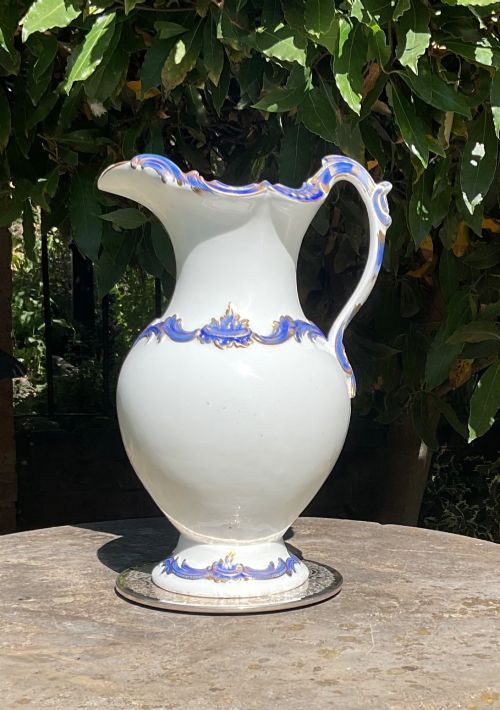
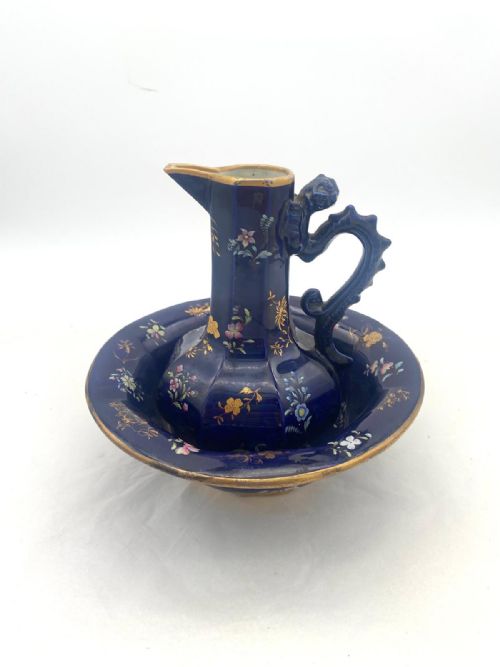
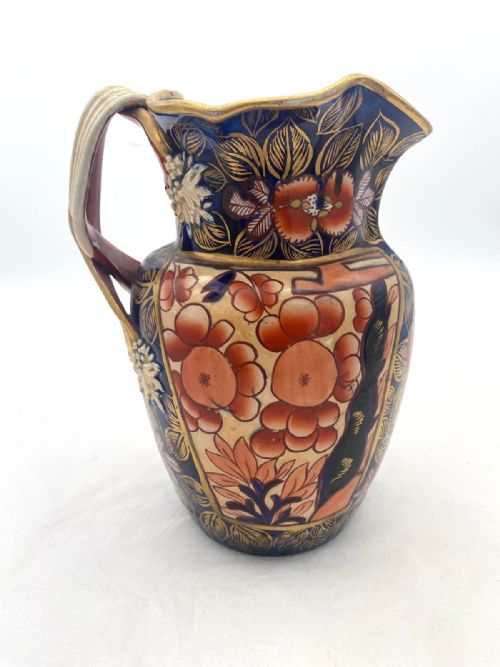
These gilt ceramic ewer selections span the nineteenth and early twentieth centuries, bringing sculptural form and metallic lustre to any room.
Gilt Ceramic Ewer
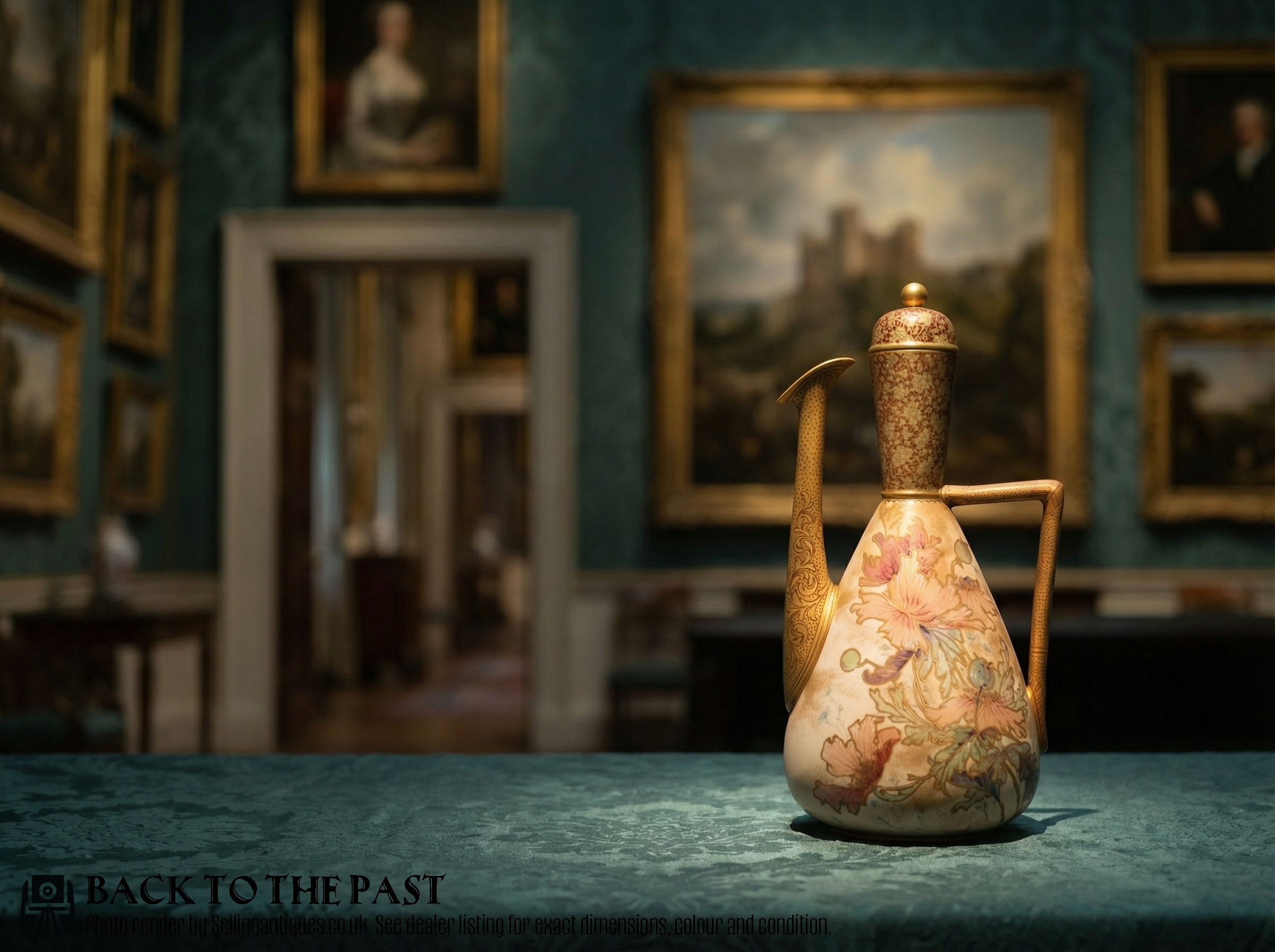
A gilt ceramic ewer serves as a decorative vessel, originating from utility but predominantly surviving as an ornamental display piece across the nineteenth and early twentieth centuries. When searching for a gilt ceramic ewer, collectors typically encounter pieces ranging from Victorian earthenware and ironstone to delicate porcelain creations bearing metallic leaf or gilding.
The forms span from diminutive cabinet specimens and scent bottles to monumental French wine ewers and wash set pitchers. Makers utilised diverse aesthetic influences, incorporating Japanese Imari, Chinoiserie, French Neoclassical, and Persian motifs onto ceramic bodies.
Examples frequently date from the Victorian era through the Edwardian period, often appearing as matched pairs or standalone display items. The integration of gold leaf or applied gilding elevates the earthenware and porcelain substrates, creating striking visual contrast.
Materials and production techniques
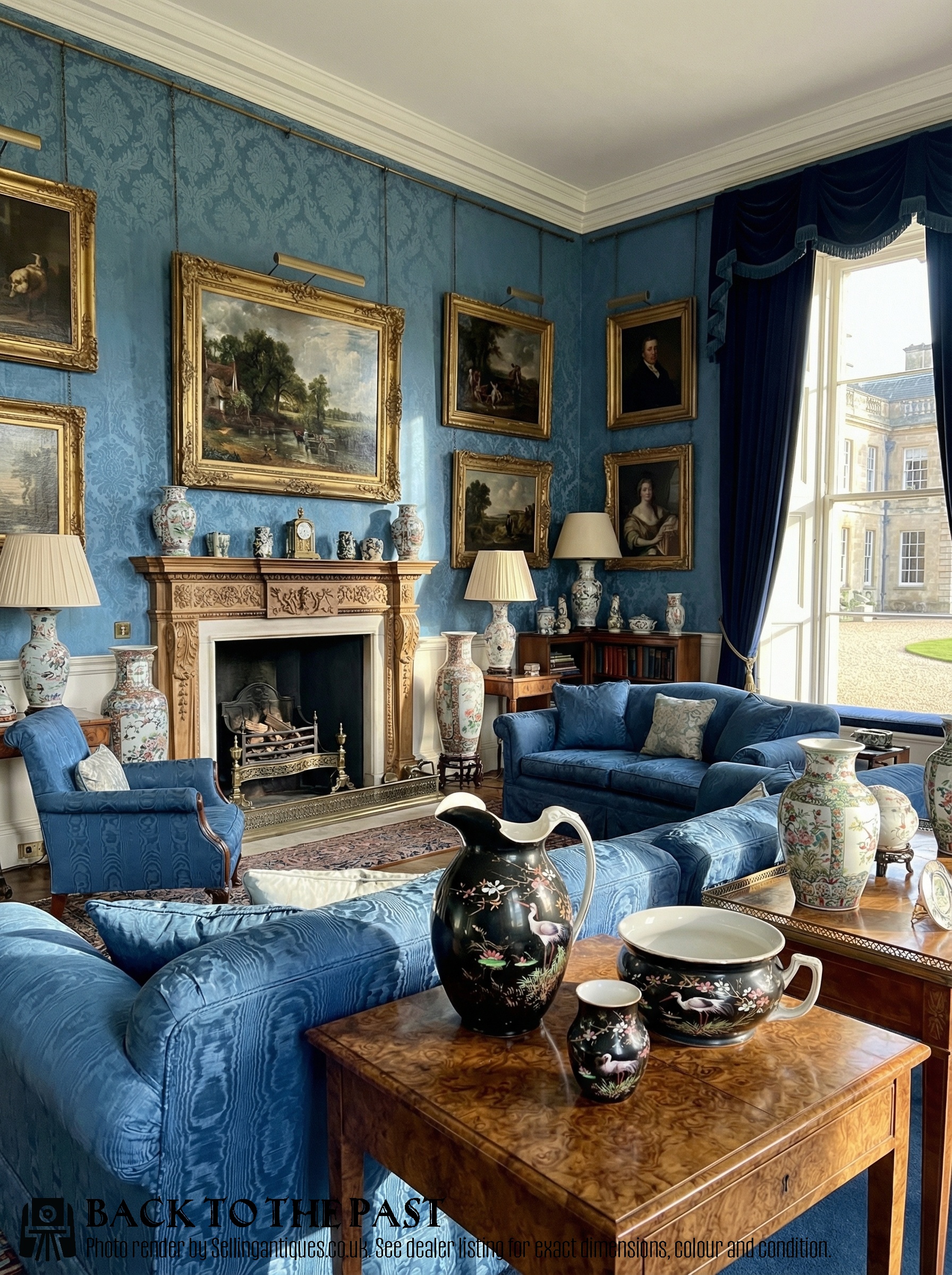
Potters shaped these vessels using fine porcelain, ironstone, and earthenware bodies, which were then fired and finished with coloured glazes or enamel work. The application of gold leaf or liquid gilding highlighted handles, rims, and raised decorative motifs.
Evaluating craftsmanship and condition
Quality resides in the crispness of the moulding, the precision of the hand-painted enamels, and the intactness of the applied gilding. Superior examples demonstrate refined porcelain bodies and balanced, harmonious proportions rather than heavy, utilitarian forms.
Mason's Ironstone·Royal Worcester·Doulton Burslem·Minton·Coalport
The Gilt Ceramic Ewer Glossary
- Ewer
- A large jug with a wide spout and handle, traditionally used for holding water or wine. In antique contexts, these function primarily as decorative art objects.
- Ironstone
- A heavy, durable type of earthenware patented in the nineteenth century. It provided a robust alternative to porcelain while accepting complex glazes and gilding.
- Gilding
- The application of gold leaf or gold powder to the ceramic surface. This technique accents handles, borders, and painted scenes.
- Reticulated
- Describes ceramic work featuring an openwork lattice or net pattern. This delicate technique requires high skill during the drying and firing stages.
- Imari
- A decorative style originating in Japan characterised by iron red, cobalt blue, and gold highlights. European potteries frequently borrowed these patterns during the nineteenth century.
Gilt Ceramic Ewer: Frequently Asked Questions
What is a gilt ceramic ewer?
A gilt ceramic ewer is an ornamental pitcher or jug made from porcelain, ironstone, or earthenware and finished with gold leaf or metallic gilding. These pieces were produced primarily during the nineteenth and early twentieth centuries for display.
While descended from functional water vessels, most examples function as decorative art objects featuring painted enamels, moulded details, and diverse stylistic influences.
How do I date a ceramic ewer?
Dating relies on identifying the ceramic body, glaze characteristics, manufacturer marks, and stylistic clues such as Victorian Aesthetic Movement or Edwardian design motifs. Ironstone pieces often date to the early nineteenth century, while fine porcelain and blush ivory finishes point towards the later decades.
Maker marks stamped or painted on the underside provide the most precise chronological evidence for standard production pieces.
Were these ewers used for water?
Many larger examples formed part of wash sets designed for nineteenth-century bedrooms, pairing a jug with a matching basin for personal grooming. Smaller porcelain and earthenware ewers served decorative purposes or held wine rather than water.
Gradually, the form transitioned entirely from utility to ornamental display on mantelpieces and cabinets.
How should I display my ewer?
Gilt ceramic ewers benefit from stable placement on flat surfaces away from direct sunlight to preserve delicate enamel colours and gilding. Displaying them individually or as matched pairs on sideboards or within glass cabinets highlights their sculptural handles and painted details.
Ensure adequate space around the vessel to fully appreciate the three-dimensional form and metallic lustre.