

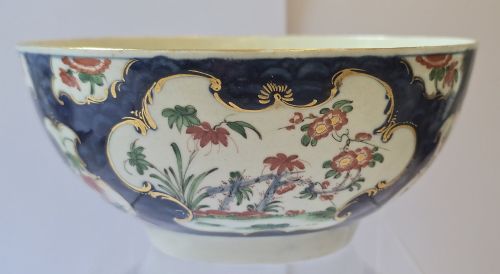
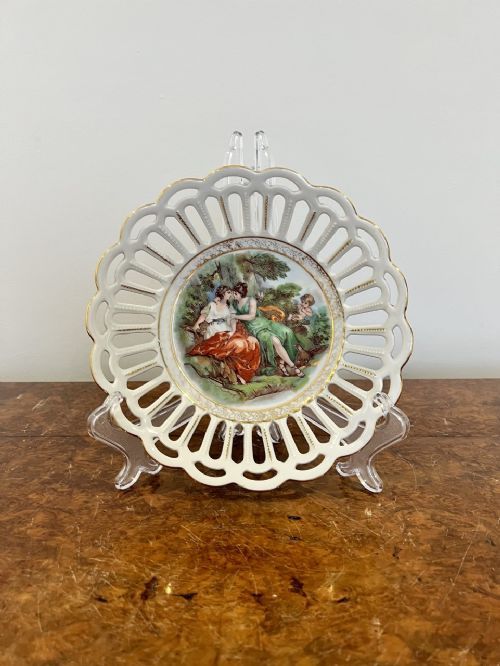
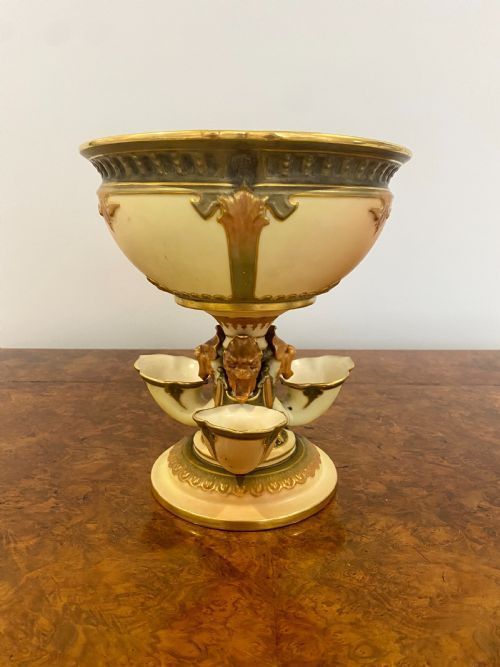
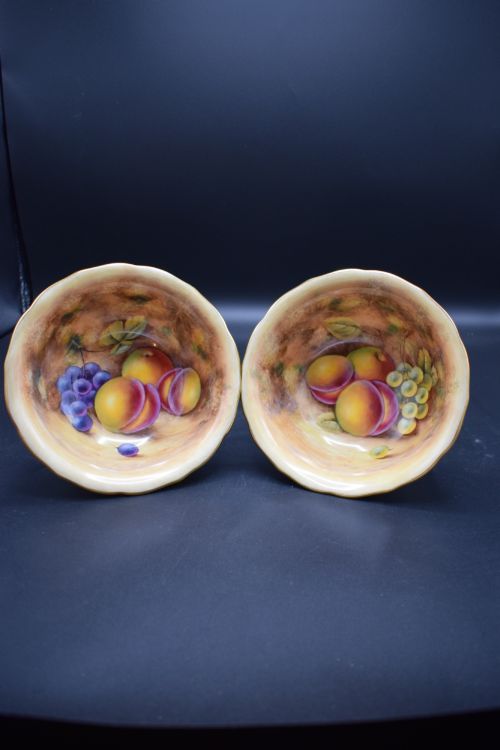



Gilt Ceramic Decorative Bowl
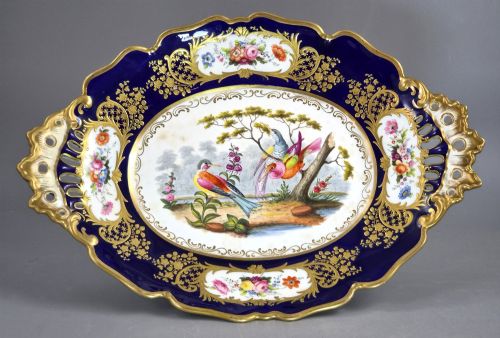
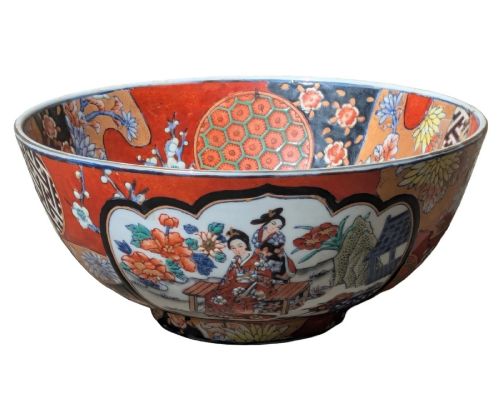
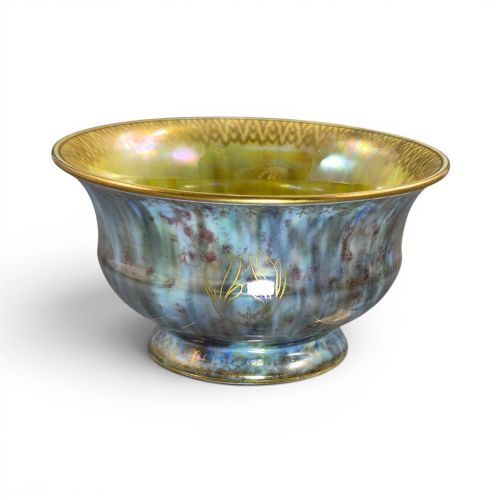
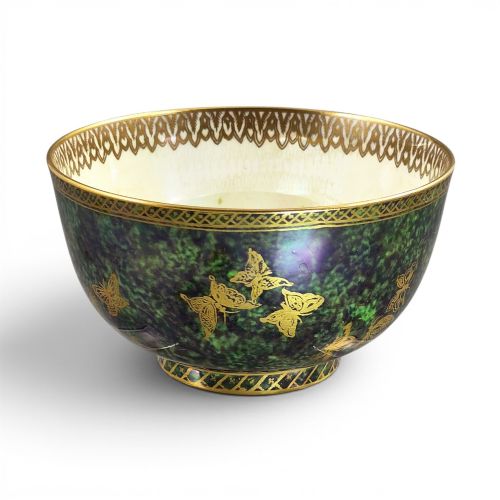
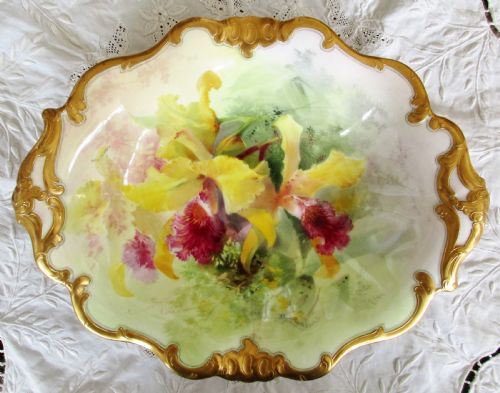
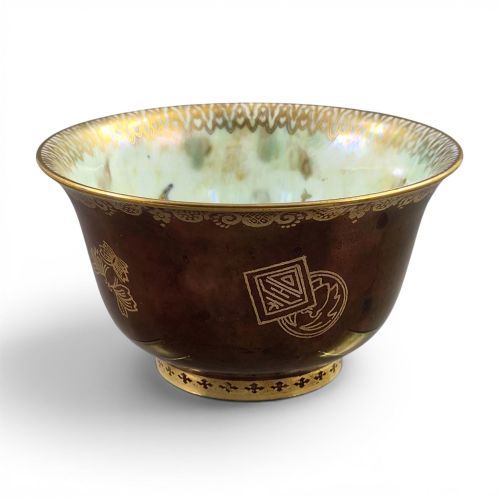
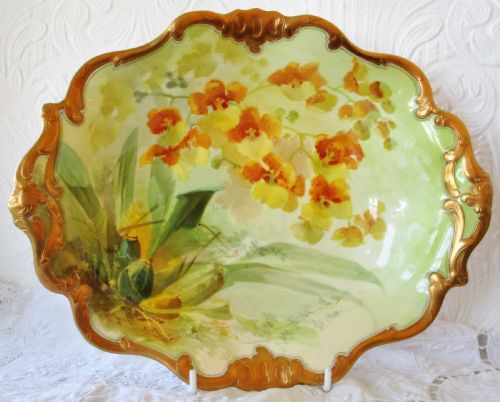
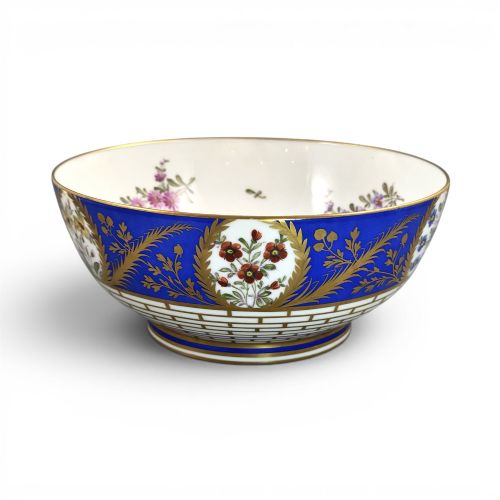
A gilt ceramic decorative bowl brings painted scenes and gilded surfaces together for the table or cabinet.
Gilt Ceramic Decorative Bowl
A gilt ceramic decorative bowl encompasses porcelain, bone china and ironstone forms shaped into centrepieces, cabinet dishes and punch bowls. These vessels originate from diverse traditions, spanning English porcelain manufactories like Royal Worcester and Wedgwood alongside Japanese Imari and Satsuma wares.
The pieces on this page range chronologically from the eighteenth century through the Victorian, Edwardian and Art Deco periods. Buyers frequently encounter nineteenth-century Japanese exports and early twentieth-century British works decorated with hand-painted birds, fruit, dragons or intricate cobalt and gold patterns.
How they were made
Potters shaped ceramic bodies from fine porcelain, bone china or earthenware, applying glazes such as lustres and enamels to the surfaces before firing. Artisans then added gold leaf, gilding and hand-painted details, depicting botanical subjects, animals and figurative scenes.
Many items required multiple firings to set the underlying cobalt blues, polychrome enamels and final metallic gold highlights. Specialised decorators signed their work, recording the hand of individual artists on cabinet dishes and centrepieces.
Gilt Ceramic Decorative Bowl Retail Price Guide 2026
Typical asking prices for gilt ceramic decorative bowl among the pieces listed under this phrase on Sellingantiques today, from the lower quarter to the upper quarter. They describe what is for sale here now, not the wider market.
Listings feature porcelain, bone china and ironstone forms decorated with gold leaf, enamel and lustre glaze across the Georgian, Victorian and Edwardian periods.
What varies in quality
Quality rests upon the precision of the hand-painted brushwork and the complexity of the glaze effects, such as the iridescence found on lustre wares or the crispness of cobalt transfers. Superior examples display detailed miniature painting, secure gilding and well-balanced forms.
The reputation of the maker and the specific artist signing the piece also influence the standing of the work. Well-documented manufactories and named designers elevate a vessel above standard production items.
Dr Wall Worcester·Royal Worcester·Royal Crown Derby·Coalport·Royal Doulton·Doulton Burslem·Kinkozan Kyoto·Wedgwood·Spode·Schierholz
The Gilt Ceramic Decorative Bowl Glossary
- Gilding
- The application of gold leaf or gold paint to ceramic surfaces. This technique highlights rims, handles and decorative motifs.
- Lustre Glaze
- A metallic glaze finish that produces an iridescent sheen. It creates shimmering rainbow or ruby effects on the ceramic body.
- Bone China
- A type of soft-paste porcelain incorporating bone ash. It produces a strong, translucent ceramic body suitable for fine tableware.
- Centrepiece
- A large decorative bowl or dish placed in the middle of a table. These vessels often feature footed bases or elaborate handles.
Gilt Ceramic Decorative Bowl: Frequently Asked Questions
How do I clean an antique ceramic bowl?
Wash the vessel gently by hand using lukewarm water and mild soap.
Avoid soaking the piece, as moisture can damage older glazes and vulnerable gilding over time.
Were these bowls used for food or display?
Many large centrepieces and punch bowls served practical functions at dining tables during the eighteenth and nineteenth centuries.
Cabinet dishes and smaller decorated bowls were primarily intended for visual display in drawing rooms and cabinets.
How can I tell the period of a ceramic bowl?
Examine the base for maker's marks, impressed stamps and painter's signatures that correspond to known manufacturing dates.
The style of the decoration, the type of ceramic body and the application of the glaze also offer clear indicators of age.
What is the difference between porcelain and ironstone?
Porcelain is a fine, translucent ceramic fired at high temperatures from kaolin and petuntse.
Ironstone is a durable, opaque earthenware developed in the nineteenth century to mimic porcelain with greater strength.