
Gilt Carved Wood Sconces
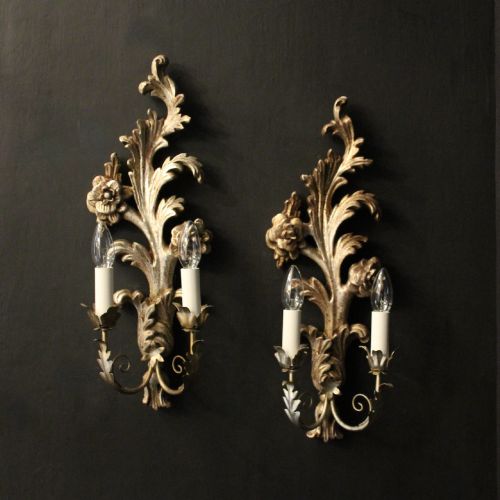
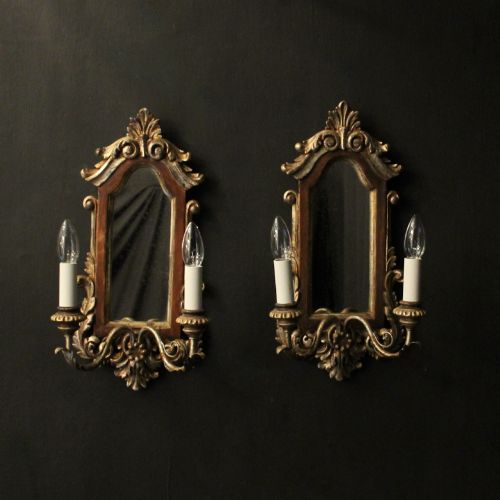
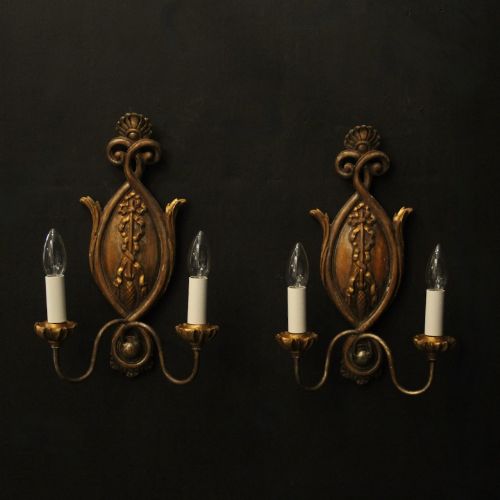
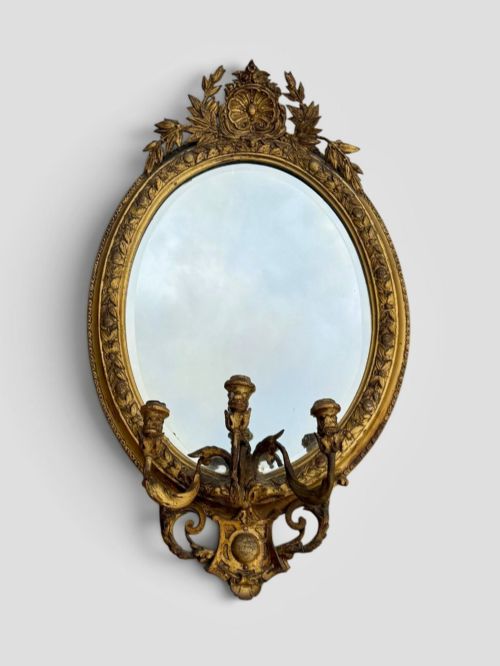
Gilt carved wood sconces bring warm reflected light and sculptural presence to an interior, combining gilded surfaces with carved timber forms.
Gilt Carved Wood Sconces
When searching for gilt carved wood sconces, buyers encounter wall-mounted lighting fixtures, girandoles, and brackets dating from the seventeenth century through to the twentieth century. These pieces originate predominantly from Italian, French, and English workshops, spanning Baroque, Rococo, Neoclassical, and Victorian periods.
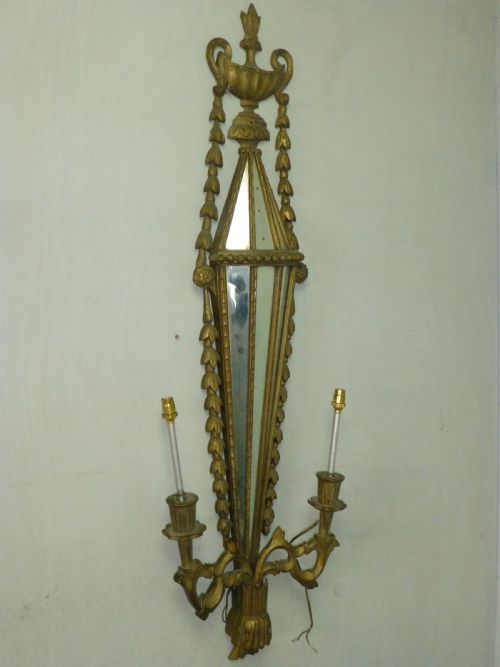
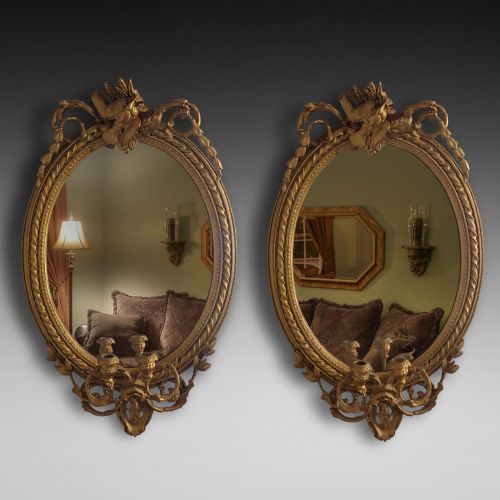
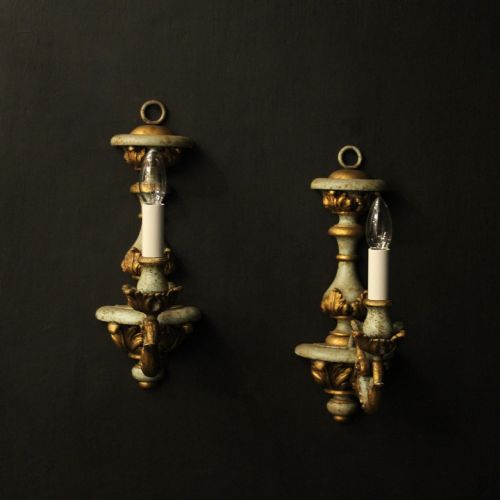
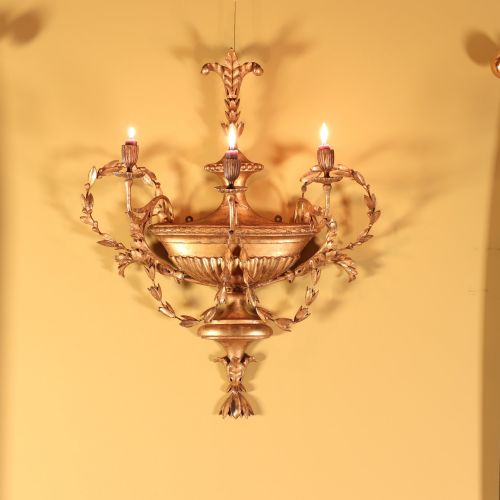
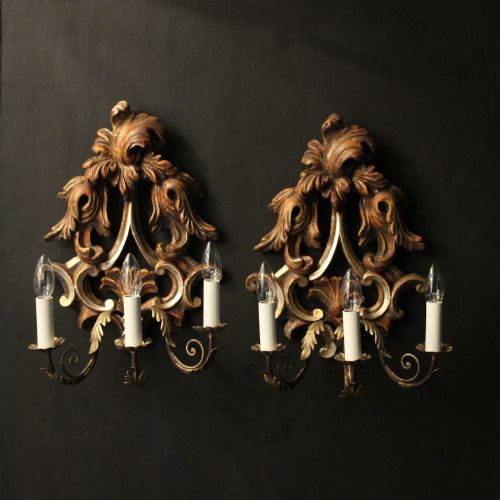
The selection on this page relies heavily on Italian Florentine production from the early twentieth century, alongside eighteenth-century carved mirrors and nineteenth-century girandoles. Twin-arm and triple-arm configurations dominate the lighting options, frequently paired with carved wooden backing plates or mirrored glass.
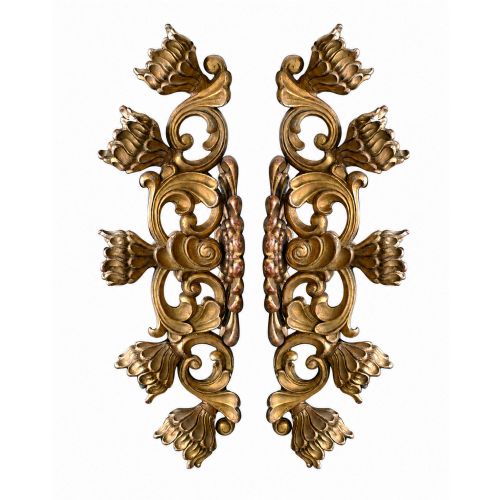
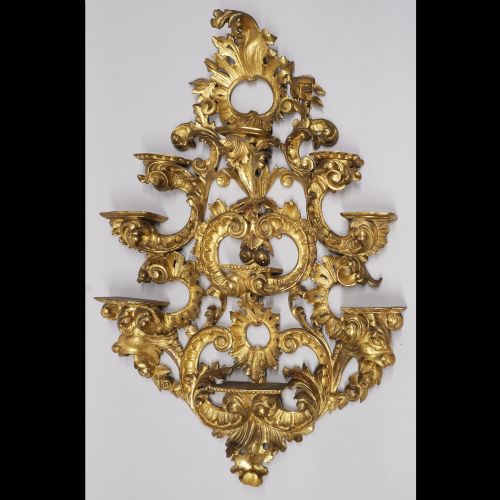
Architectural salvage and wall brackets appear alongside functioning wall lights, offering diverse ways to mount gilded woodwork on interior walls. Buyers select these items to introduce historical character and reflective illumination into reception rooms and hallways.
Materials and Technique
Makers shaped structural bodies from carved wood, applying layers of gesso to smooth the surface before adding gold leaf or silver leaf finishes. Polychrome painted highlights and white painted details frequently appear alongside traditional gilding to accentuate carved scrollwork and foliage.
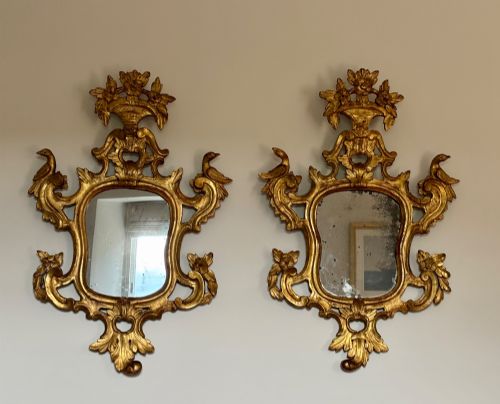
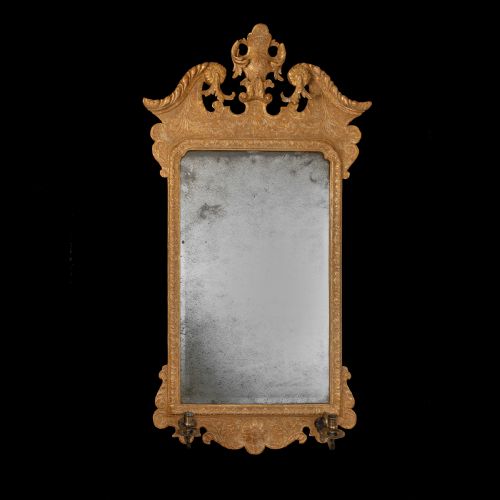
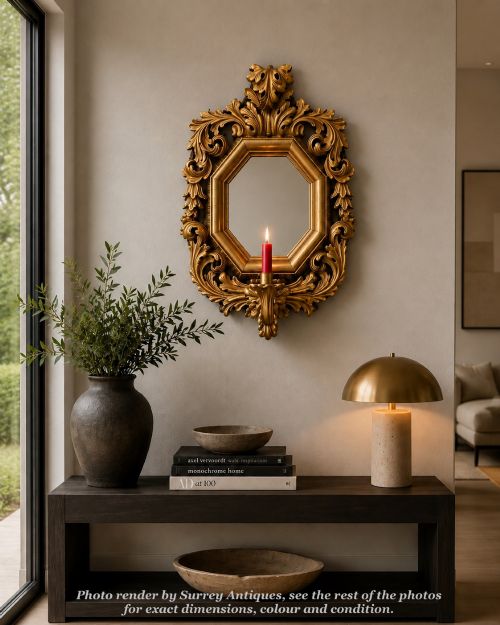
Mirrored glass plates, including foxed antique glass and convex plates, are integrated into girandoles and cartouche frames to amplify the candle or electrical light output. Hand-carving techniques define the depth of relief on arms, brackets, and backplates across all recorded periods.
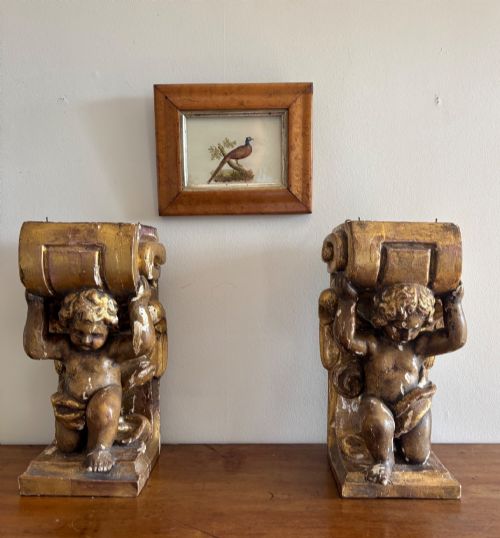
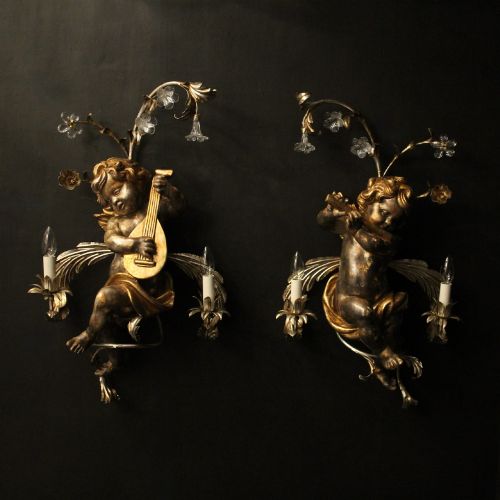
Several Florentine wall lights arrive with cherubs clinging tightly to the woodwork, keeping a watchful eye on the room.
Craftsmanship and Survival
The distinction between tiers rests upon the crispness of the hand-carving and the integrity of the original gesso and gilding layers. Pieces retaining their early gold leaf surfaces without excessive over-painting demonstrate superior historical survival.
The complexity of the arm configurations and the presence of original mirrored plates or Murano glass elements elevate the stature of an individual wall light or girandole. Structural balance in multi-arm lights indicates the competence of the original workshop.
Benjamin Goodison
The Gilt Carved Wood Sconces Glossary
- Giltwood
- Timber that has been coated with gold leaf or metal leaf over a prepared gesso ground. This finish provides the characteristic metallic sheen seen on historical wall lights.
- Girandole
- A branched wall light featuring a mirrored backplate. The reflective glass serves to multiply the illumination cast into the room.
- Gesso
- A plaster-like mixture applied to carved wood to create a smooth surface for gilding. It allows for sharp detail in moulded and carved ornaments.
- Cartouche
- An ornamental frame resembling a rolled-up piece of paper or parchment, frequently seen on eighteenth-century mirror panels and wall sconces.
- Foxed plate
- A mirror glass displaying spots, discolouration, or ageing marks resulting from the degradation of the backing over time.
Gilt Carved Wood Sconces: Frequently Asked Questions
How do I wire old wall lights?
Many historical wall lights arrive adapted for modern electrical circuits, though older fittings may require professional rewiring by a qualified electrician to meet current safety standards.
Concealed internal channels or surface-run flex can be arranged during installation depending on the specific construction of the wooden backplate.
Where should I hang a girandole?
Girandoles perform best on drawing room or hallway walls where they can capture and reflect natural light from windows or ambient evening light.
Positioning them at eye level ensures the decorative carved frame and any integrated mirror plate can be appreciated fully.
How do I clean gilded wood?
Dusting requires a soft, dry brush or feather duster to remove surface particles without disturbing delicate gold leaf or aged gesso surfaces.
Moisture and chemical cleaners must be avoided entirely to prevent lifting or stripping the historical metallic finish.
What is the difference between a sconce and a bracket?
A sconce specifically incorporates arms designed to hold candles or electric lamps, functioning primarily as a wall-mounted light source.
A bracket serves as a decorative shelf or architectural support projection, designed to display objects rather than provide illumination.