
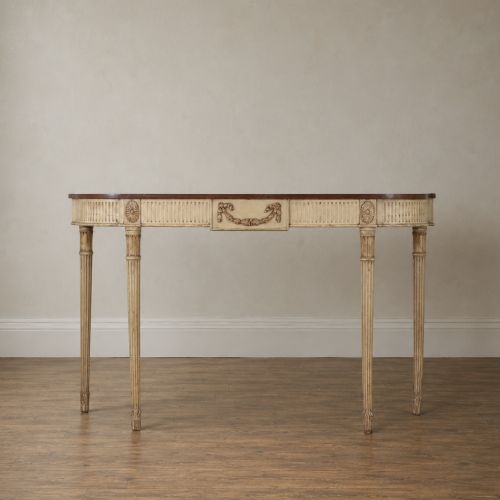
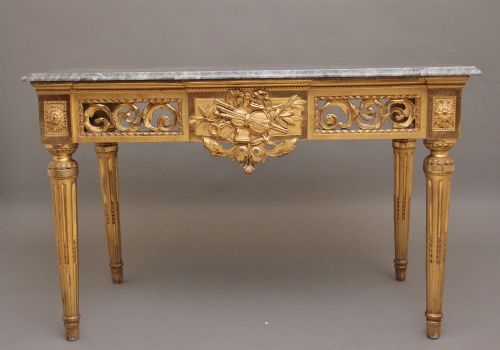
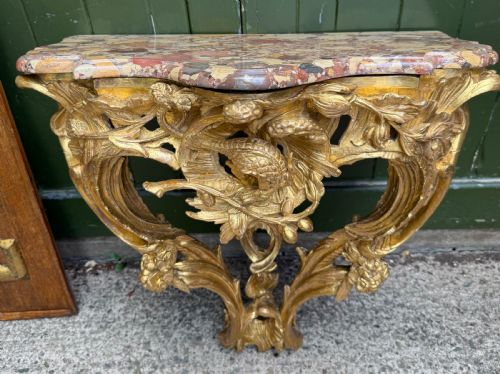
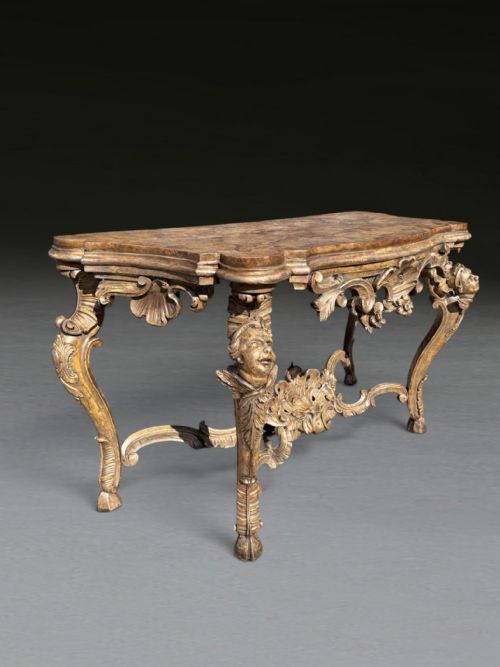
Gilt Carved Pier Table
A gilt carved pier table brings architectural presence and reflective depth to a room through gilded woodwork and inset marble surfaces.
Gilt Carved Pier Table
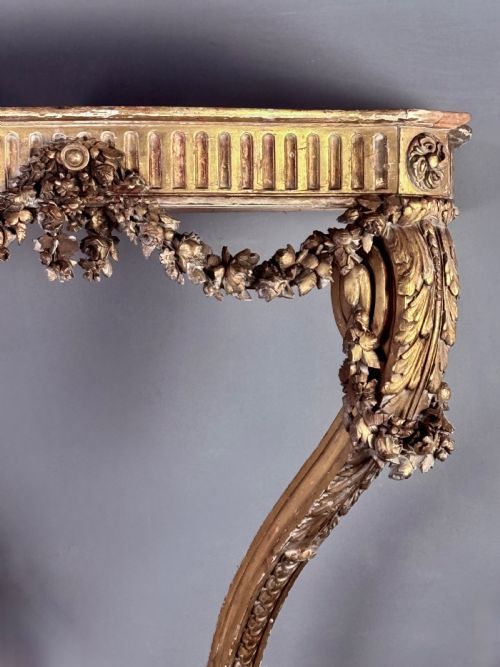
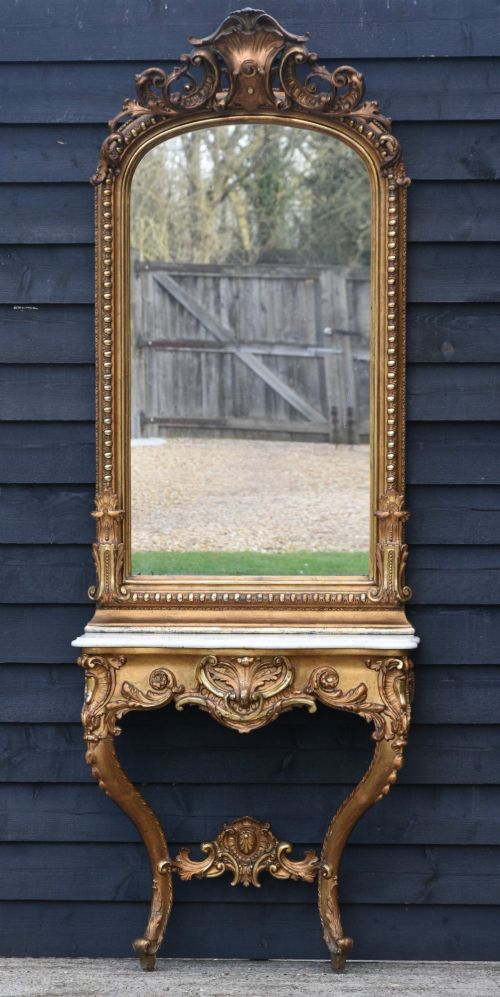
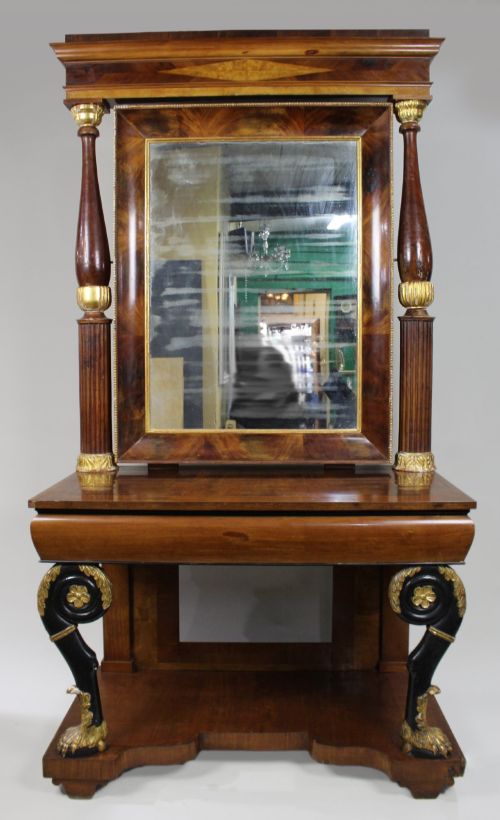
A gilt carved pier table sits against a wall, frequently beneath a matching pier mirror to complete a traditional wall ensemble. The pieces span the eighteenth and nineteenth centuries, taking forms such as console tables, side tables, and centre tables alongside combined console table and mirror sets.
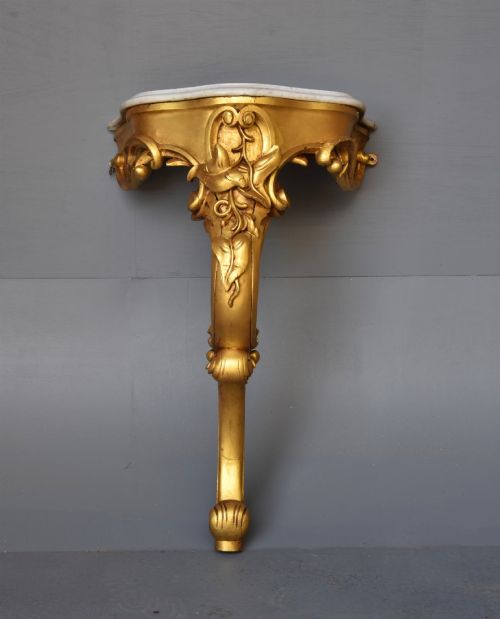
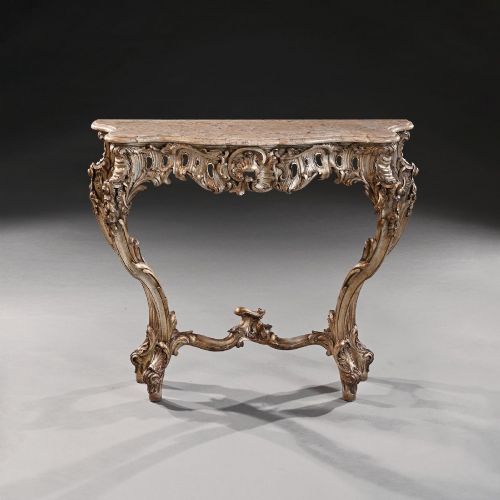
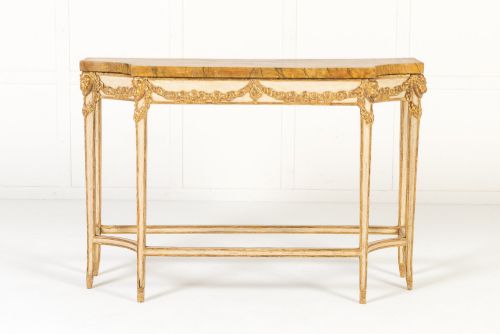
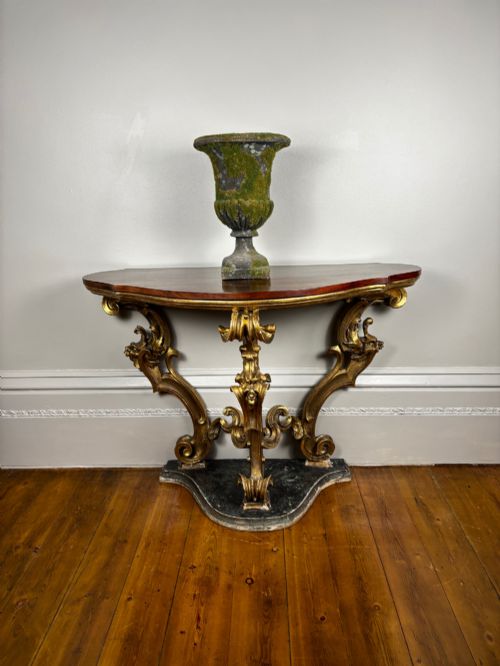
Makers and designers drew upon French Rococo, Italian Neoclassical, Regency, and Louis XV Revival styles. Surviving examples display considerable variety in outline, ranging from serpentine shapes and demi-lune formats to monumental proportions supported by carved legs.
Materials and construction methods
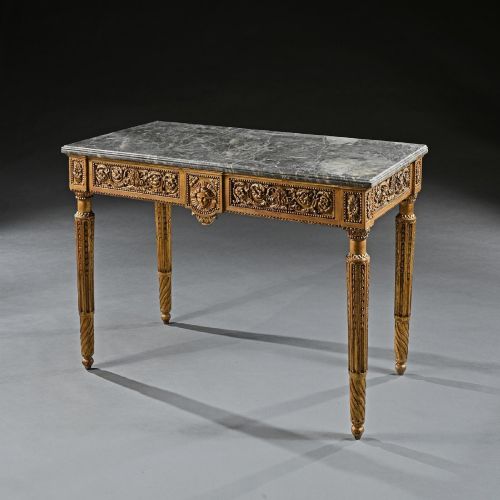
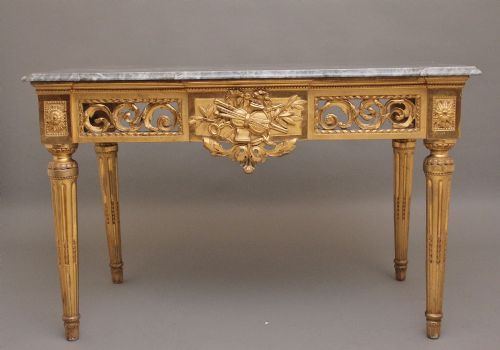
Wood carcasses of walnut, mahogany, or painted wood received layers of gesso before application of gold leaf, silver gilt, or paint. Carved details utilised traditional hand techniques to render scrolling foliage, frames, and figural supports.
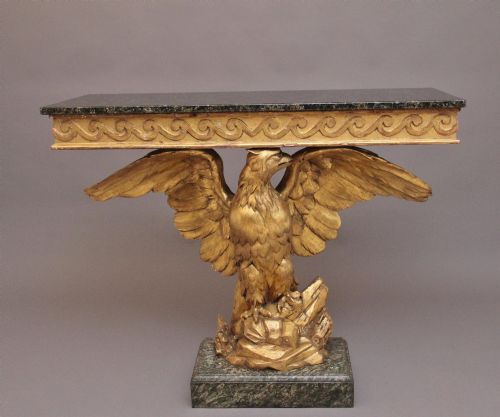
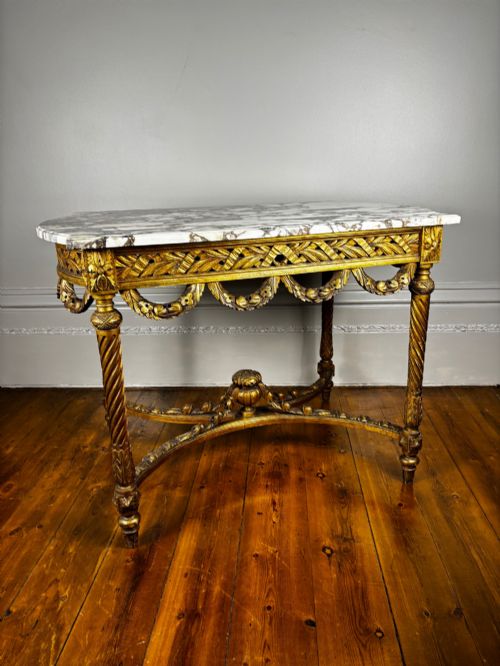
Tops incorporated heavy stone slabs, notably marble of various types including breccia, sienna, and figured varieties such as breche d'alep, alongside faux porphyry. Certain variants paired the wooden base with glass components or mirror-backs.
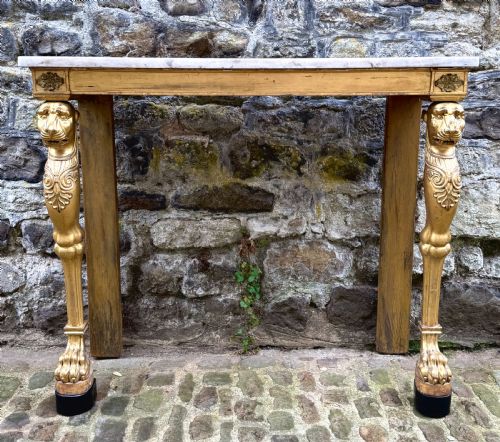
Certain Italian Baroque Revival tables incorporate lion's paw supports, giving heavy marble slabs a predatory stance on the drawing room floor.
Distinctions in craftsmanship
Depth and crispness of hand carving across the wooden frame differentiate standard items from exceptional examples. The intricacy of the gesso application and the integrity of the original gilding dictate the visual impact of the surface.
The selection and thickness of the marble top, along with its specific geological figuring, contribute to the standing of the piece. Integration between the console table and its accompanying pier mirror indicates cohesive workshop design.
Felix Alfred Ternisien
The Gilt Carved Pier Table Glossary
- Giltwood
- Wood coated with gold leaf over a prepared gesso ground. This finish provides the characteristic metallic sheen seen on period furniture.
- Console table
- A table supported against a wall by consoles or legs. These tables often feature elaborate front ornamentation.
- Pier table
- A table designed specifically to stand against the wall space between windows. They frequently incorporate large mirrors to reflect light.
- Breccia
- A composite marble made of angular fragments cemented together in a fine-grained matrix. It yields distinctive patterned surfaces on table tops.
- Parcel gilt
- Portions of an object left unpainted or un-gilded to contrast with the gilded areas. This technique highlights specific carved details on wood.
Gilt Carved Pier Table: Frequently Asked Questions
What is a pier table used for?
A pier table functions primarily as a decorative architectural console positioned against the flat wall space between two windows. Historically, it held ornamental objects and paired with a matching wall mirror to brighten darker rooms.
Today, these tables serve as focal points in entryways or formal reception rooms. Their slim profile allows them to occupy narrow wall spaces without blocking interior pathways.
How do I identify the period of a gilt table?
Dating relies on stylistic motifs, timber choices, and construction techniques visible on the underside or frame. Pieces reflecting French Rococo or Neoclassical designs often date to the eighteenth century or later nineteenth-century revival periods.
Examine the gesso preparation and the wear patterns on the gold leaf. Nineteenth-century revivals frequently employ heavier proportions and distinct mechanical saw marks compared to earlier hand-wrought furniture.
Are marble tops original to these tables?
Many tables retain their heavy stone surfaces, which were fitted to the wooden frames during initial manufacture. Slabs of breccia, sienna, or figured marble correspond directly to the weight and proportions of the base.
Replacement marble occurs due to historical breakages, though matching stone types are typically sourced to preserve the aesthetic. Inspect the seating recess beneath the tabletop to understand how the stone rests on the wooden frame.
How do I care for antique gilded wood?
Preserving gilded surfaces requires gentle dusting with a soft, dry cloth without commercial cleaning sprays or water. Moisture and abrasive materials damage delicate gold leaf and the underlying gesso layers.
Position the table away from direct sunlight and extreme temperature fluctuations to prevent the wood from warping. Stable indoor environments protect both the carved structure and the inset marble top.