
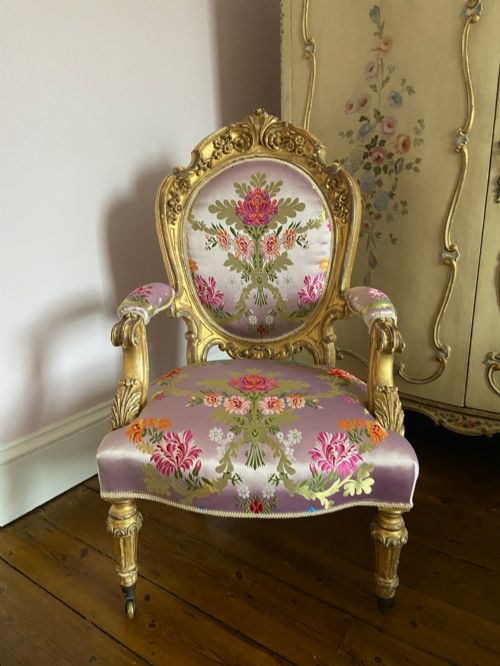
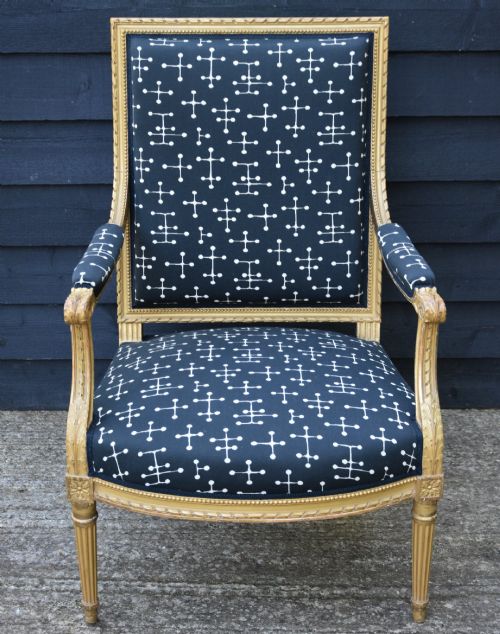
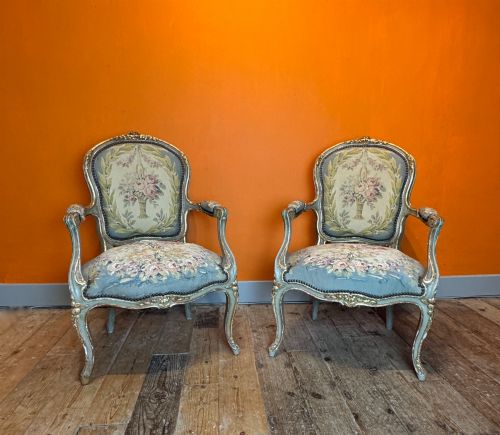
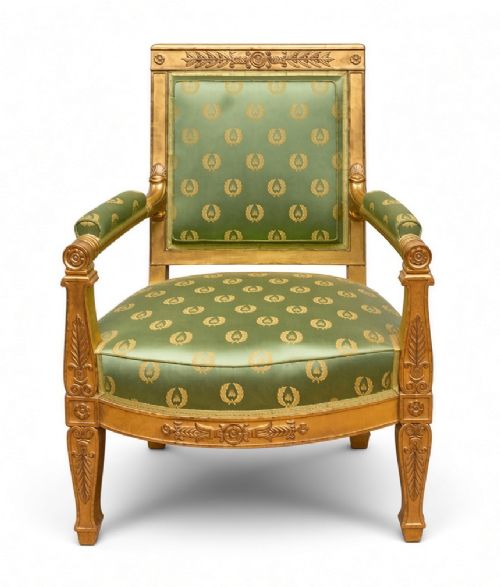
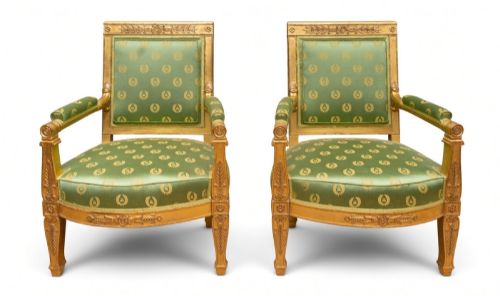
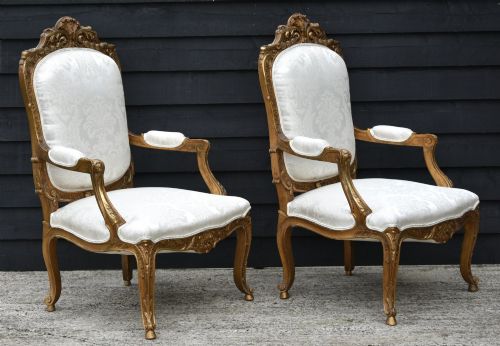
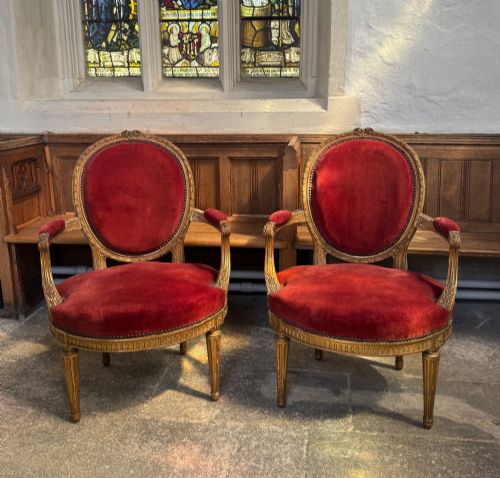
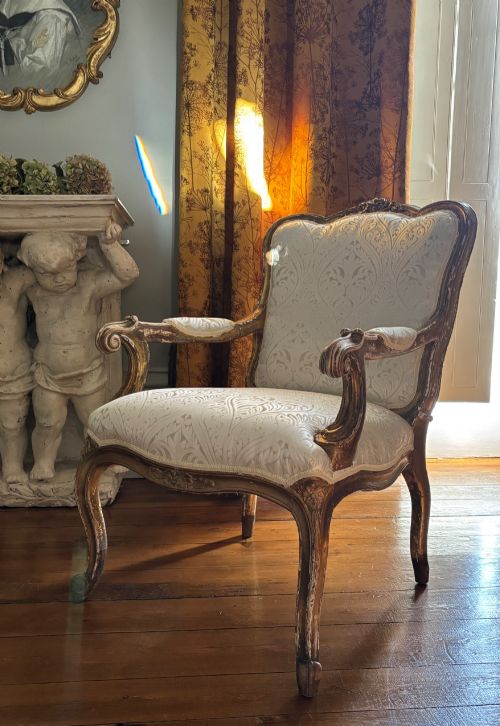
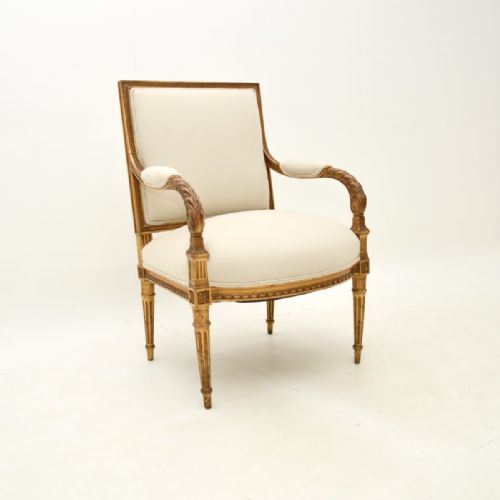
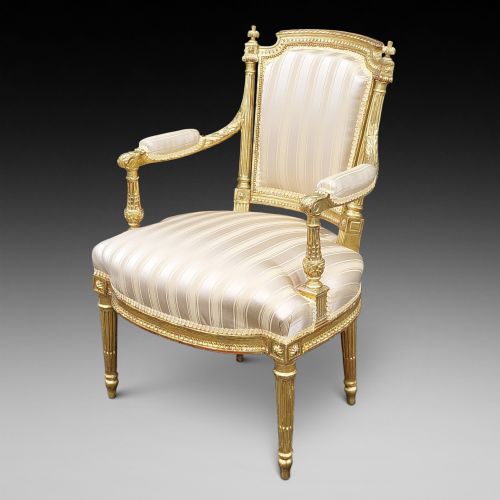
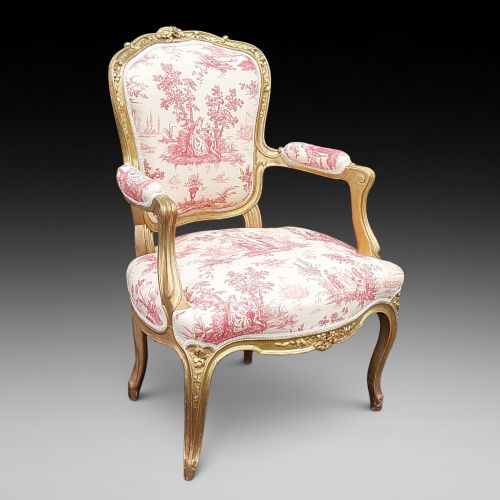
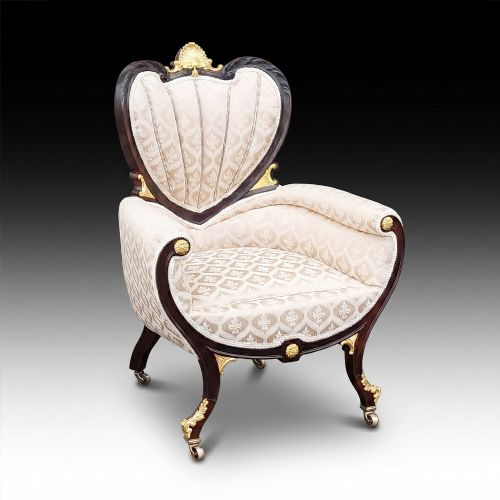

Gilt Carved French Fauteuils
Gilt carved French fauteuils are grand upholstered seats combining gilded woodwork and classic design, offering both historic presence and comfortable sitting.
Gilt Carved French Fauteuils
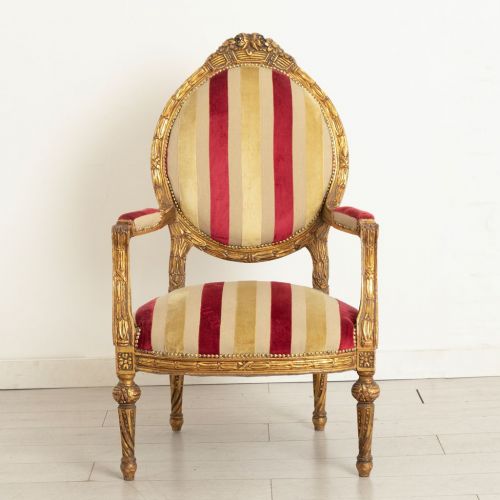
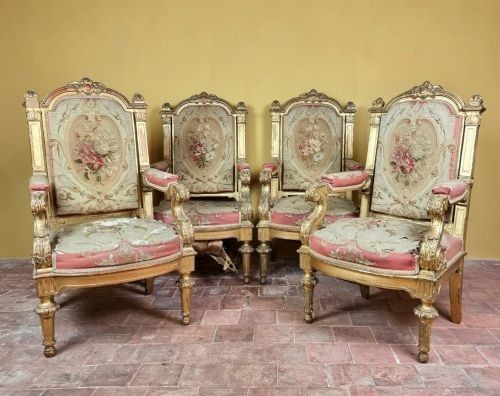
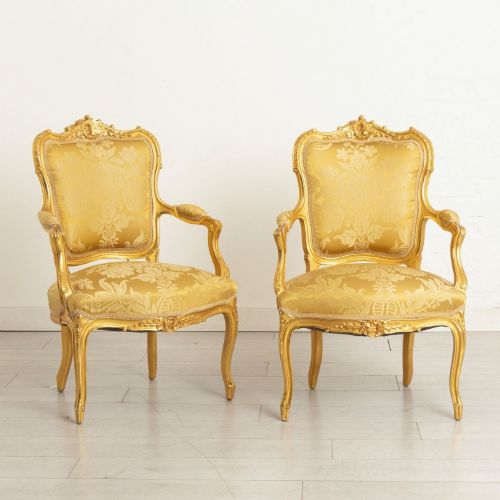
When you search for gilt carved french fauteuils, you encounter open-armed ceremonial seating designed for formal salons and drawing rooms. These items span various periods, with nineteenth-century pieces and revival styles appearing frequently alongside specific iterations from the eighteenth and early twentieth centuries.
The objects take several forms, primarily featuring as single armchairs, pairs, or occasionally within larger salon suites and dining sets. Their origins stretch across French design movements, drawing heavily on Louis XVI, Rococo, and Empire aesthetics.
How they were made
Carpenters typically shaped the underlying frames from timber such as beech and walnut, applying intricate carved detail directly into the solid wood. Artisans then coated these structures in fine layers of gold leaf or paint, sometimes incorporating parcel gilt highlights to accentuate the relief work.
Upholstery completed the construction, utilising traditional stuffings enclosed in decorative textiles. Silk, velvet, tapestry, and silk damask frequently secure the padding to the seats and backs.
Listings feature beech and walnut frames decorated with velvet, silk damask, and tapestry upholstery across the nineteenth century.
What varies in quality
The depth and crispness of the wood carving distinguish finer frames from simpler production, separating workshop pieces executed by hand from standard commercial outputs. Superior examples display balanced proportions, sharp floral or architectural motifs, and smooth integration of joints.
The integrity of the gilding and the quality of the textile upholstery also influence the standard of the piece. Retaining original gold leaf and period-appropriate fabric adds considerable character compared to later re-gilding or modern replacements.
Jacob Desmalter·Blaise Maucuy·Holland and Sons
The Gilt Carved French Fauteuils Glossary
- Fauteuil
- An open-armed upholstered armchair originating in France, traditionally designed with exposed wooden framing and padded armrests.
- Giltwood
- Timber coated with gold leaf or powder applied over a prepared ground layer. It creates a luminous metallic finish characteristic of formal antique furniture.
- Louis XVI Style
- A neoclassical design aesthetic defined by straight tapered legs, geometric symmetry, and classical motifs like fluting and ribbons.
- Ormolu
- Finely chased and gilded bronze mounts applied to furniture. It provides decorative contrast against polished wood or painted surfaces.
- Parcel Gilt
- A technique where only specific portions of a carved wooden surface receive gilding, leaving the underlying paint or stained wood visible elsewhere.
Gilt Carved French Fauteuils: Frequently Asked Questions
What is a fauteuil?
A fauteuil is an upholstered armchair featuring open wooden arms, designed primarily for formal reception rooms.
These seats combine structural woodwork with padded upholstery to provide support while maintaining an elegant silhouette.
How do I style a gilt armchair?
Gilt armchairs work well as accent pieces in modern or traditional living rooms, placed beside fireplaces or seating groups.
Their reflective metallic finishes and decorative upholstery allow them to serve as focal points without dominating the entire interior.
How do I identify Louis XVI style?
Louis XVI pieces are characterised by straight tapered legs, rectangular backs, and restrained neoclassical ornamentation.
This aesthetic contrasts with the earlier curvy asymmetry typical of Rococo furniture.
Were these chairs used for dining?
While most fauteuils were intended for drawing rooms and salons, makers also produced related dining chairs.
Dining variants generally feature higher backs and narrower proportions suitable for placement around a table.