


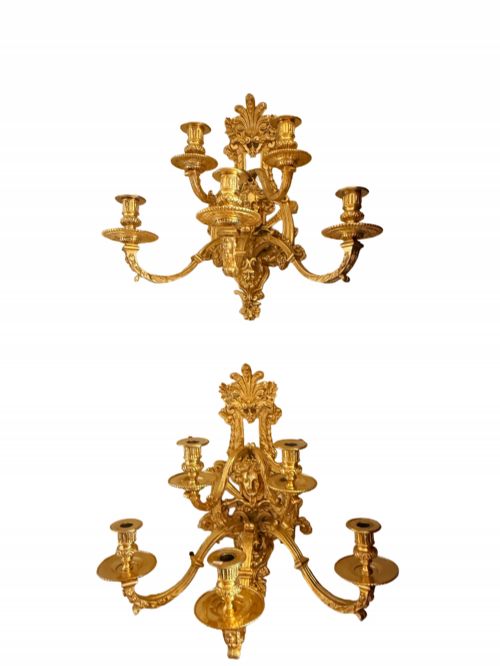
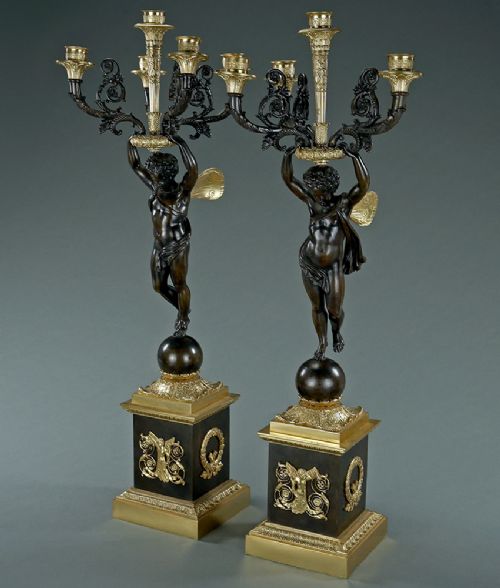
Gilt Candelabra Lighting
These gilt candelabra lighting pieces bring nineteenth-century French and English metalwork into modern rooms to provide warm, ambient illumination.
Gilt Candelabra Lighting
When buyers search for gilt candelabra lighting, they encounter decorative multi-branch candle holders and wired wall lights finished in gold tones. These items span periods from the early nineteenth century through to the interwar years, originating chiefly from French and English workshops.
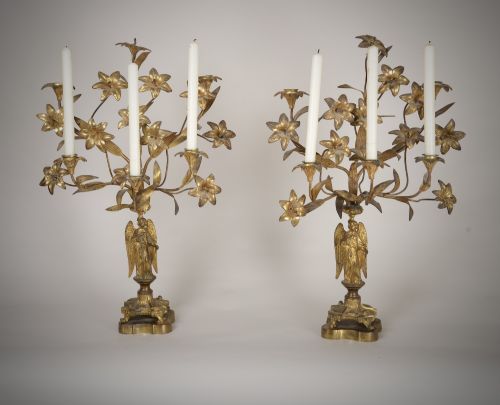
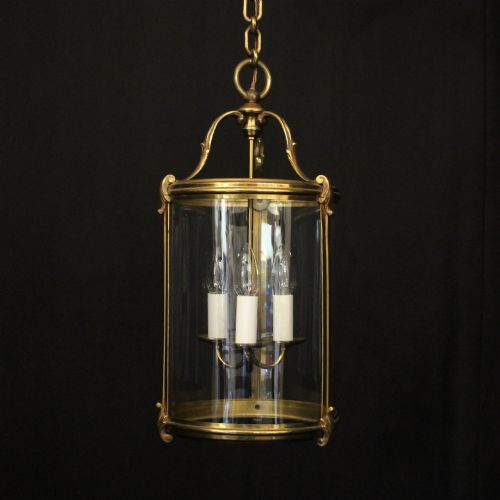
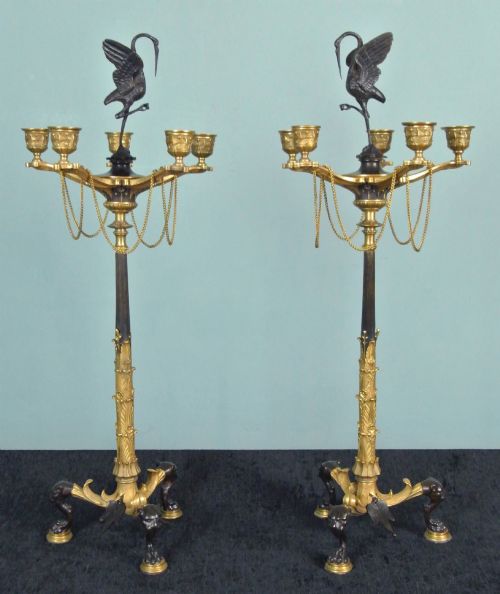
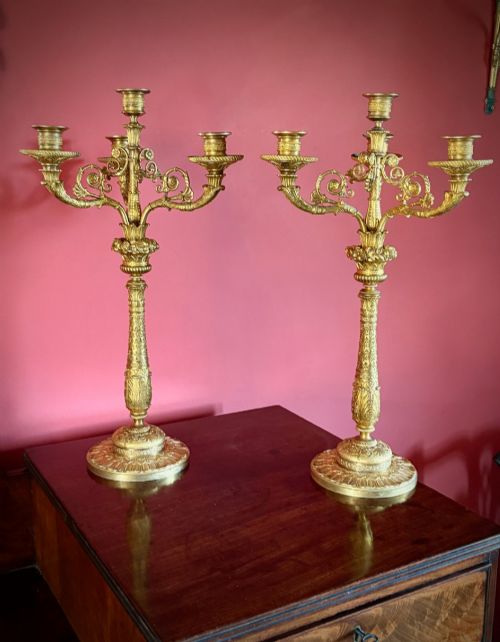
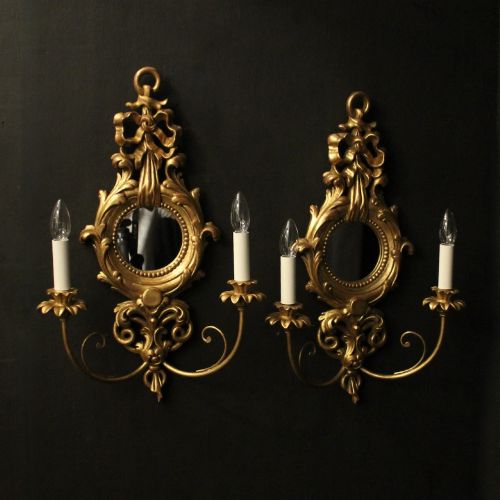
The selection on this page relies heavily on nineteenth-century pairs, featuring cast metal branches designed to hold multiple candles or bulbs. Forms range from freestanding table candelabra and candelabra mounted on marble bases to wall sconces and hanging lanterns.
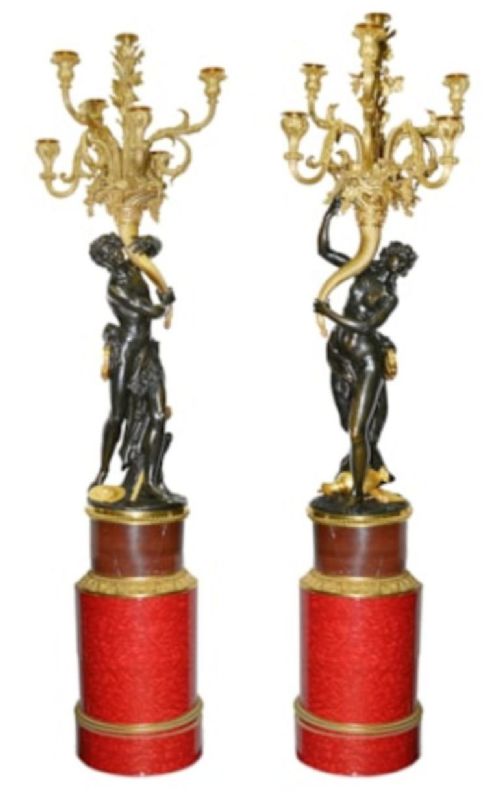
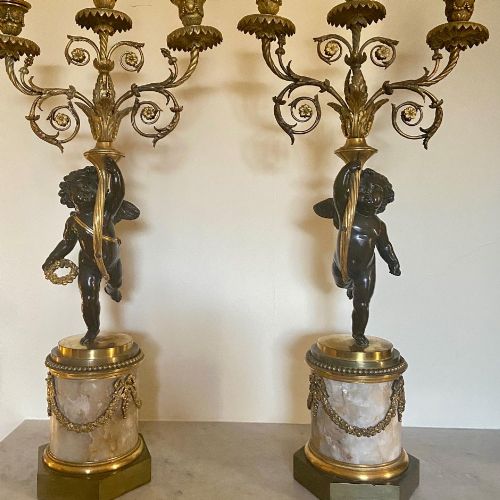
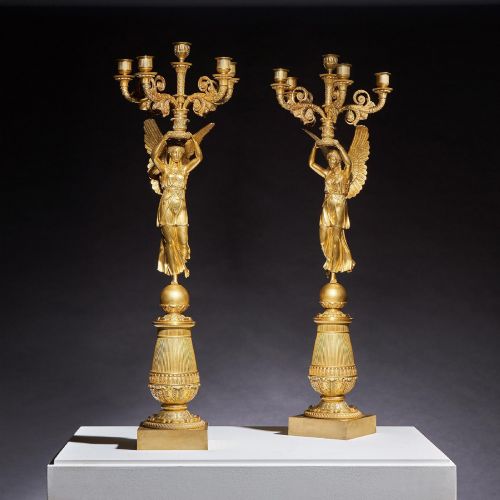
Stylistic influences lean towards French Rococo Revival, Empire, and Louis XVI designs, alongside Gothic and Victorian interpretations. Buyers frequently find matched pairs incorporating figural elements such as putti, cherubs, and classical figures alongside foliate scrolls.
Materials and Construction Techniques
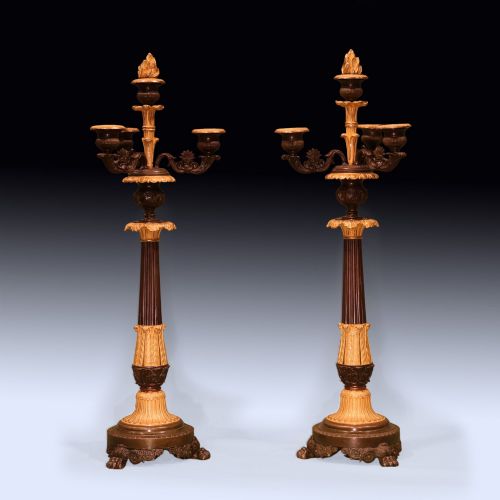
Makers utilised gilt bronze and ormolu as primary surface treatments over cast bronze and brass bases, achieving a rich golden lustre through mercury gilding or electroplating. Patinated dark bronze components create a visual contrast against the bright gilded highlights.
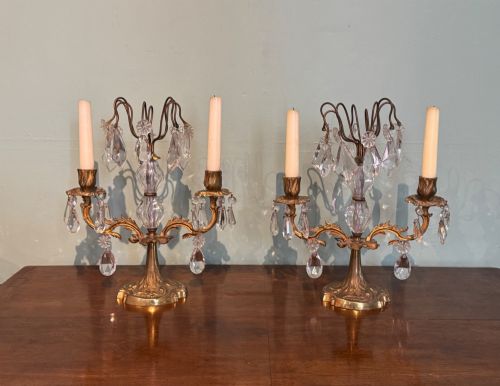
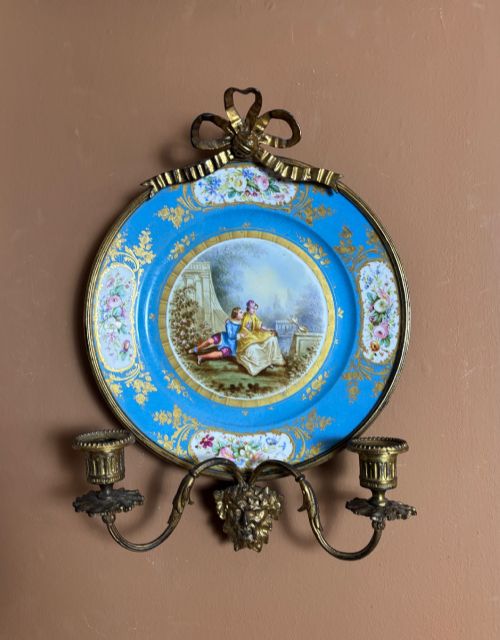
Stonework and mineral elements frequently support the metal structures, with marble bases and carved fluorspar or onyx sections providing weight and stability. Glass pendants, cut glass components, and porcelain inserts appear in specific designs to refract the light.
The listings show pieces spanning from the early nineteenth century through to nineteen-thirty, uniting French and English decorative arts.
Assessing Craftsmanship and Detail
The harmony of the composition dictates the visual success of a pair, particularly where figural bronzes integrate with naturalistic floral mounts. Original fire gilding displays a depth and warmth that differs from later chemical refinishing.
Barbedienne·Francois Redmond·Pierre Philippe Thomire·Rabiat·Thomas Hope
The Gilt Candelabra Lighting Glossary
- Ormolu
- Finely chopped high-karat gold amalgamated with mercury and applied to a bronze base through heat, leaving a durable golden finish. This technique defines the surface of numerous nineteenth-century French pieces.
- Girandole
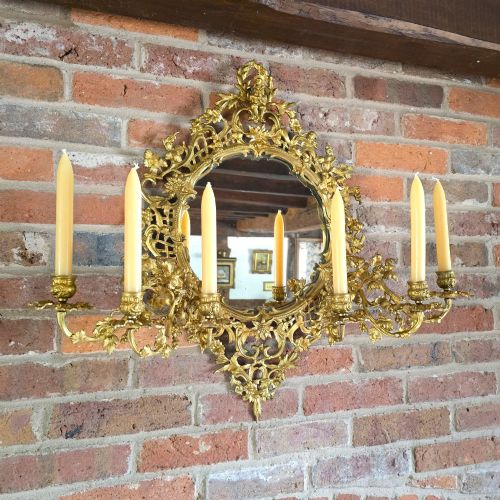
- A branched wall-mounted light fixture holding candles or lamps, frequently incorporating a mirror to multiply the illumination. These pieces often feature gilded wooden or bronze frames.
- Champlevé
- An enamelling technique where troughs are dug into a metal surface and filled with vitreous enamel before firing. This colourful decoration appears on select nineteenth-century candlesticks.
- Patinated Bronze
- Metal treated with chemicals to darken the surface tone, creating a contrast against gilt elements. Makers used this contrast to emphasise sculptural details.
- Fluorspar
- A halide mineral prized for its distinct colour banding and translucency, used as a decorative base or body material. It appears alongside patinated bronze figures in neoclassical designs.
Gilt Candelabra Lighting: Frequently Asked Questions
How do I clean antique gilt bronze?
Dust surfaces gently with a soft, dry brush to prevent accumulation in the detailed recesses of the chasing. Avoid harsh commercial cleaning agents that strip the historical surface or remove the remaining gold layer.
Moisture can damage older mounts, so water or liquid cleaners should remain entirely away from the metal. Professional conservation is advisable if deeper cleaning becomes necessary.
Can these candelabra be wired for electricity?
Many wall sconces and table pieces adapt well to internal wiring by professional electricians without altering the visible exterior structure. Careful placement of slim cables preserves the original aesthetic of the antique metalwork.
Free-standing table candelabra can accommodate sleeve fittings or small bulbs in the drip pans. Reversible conversion methods ensure the piece retains its original configuration for future generations.
What defines Louis XVI style?
This aesthetic draws on classical antiquity, featuring straight lines, symmetry, and architectural motifs such as fluting and bead reels. It marks a transition away from the asymmetric curves of the preceding Rococo period.
Ornaments on these pieces include laurel wreaths, ribbons, and classical urns rendered in gilt bronze. The proportions remain balanced and restrained rather than exuberant.