



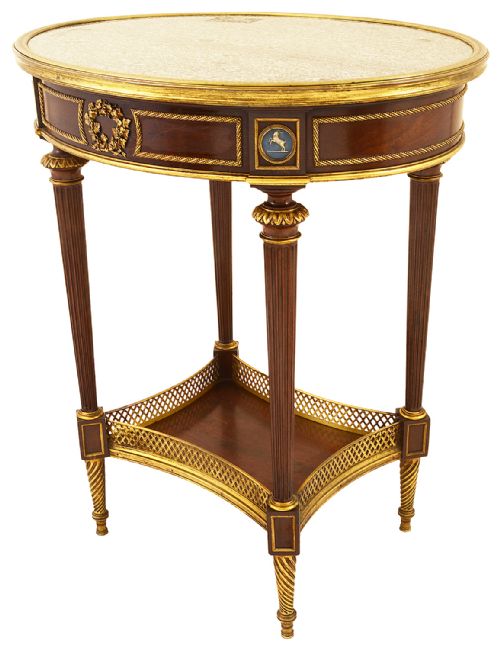

Gilt Bronze Tiered Table
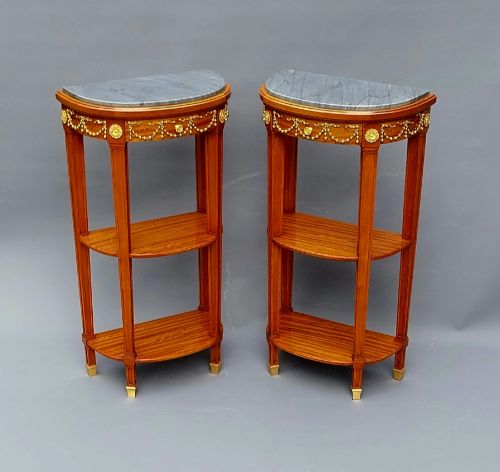
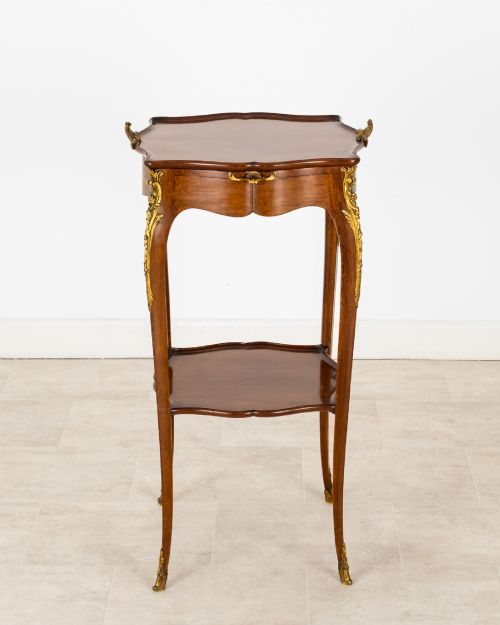
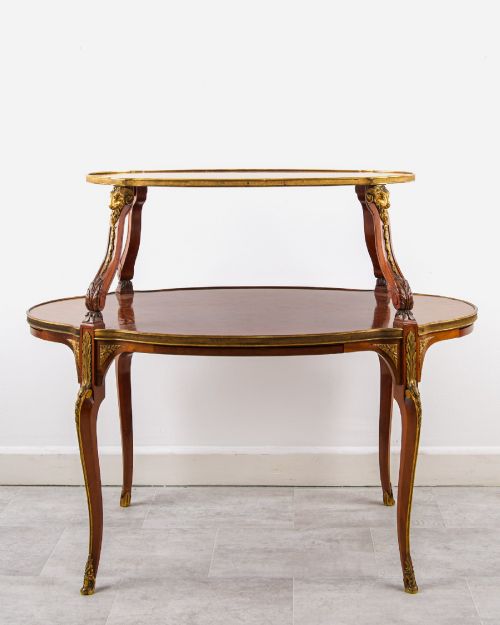
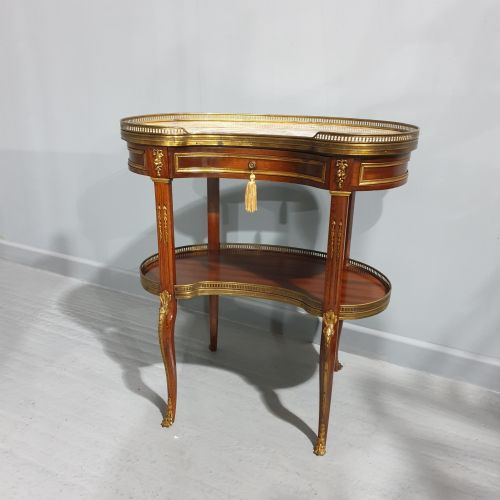
These gilt bronze tiered tables are French and English multi-level pieces combining rich hardwoods with gilt metal mounts for display and use.
Gilt Bronze Tiered Table
A gilt bronze tiered table is a multi-level surface designed for display, sitting primarily in the nineteenth-century French and Edwardian traditions. You will most frequently meet these as etagere or occasional tables featuring two or more tiers supported by slender uprights.
The form spans various configurations including kidney shapes, round gueridons, and rectangular side pieces. They frequently emerge in Louis XV and Louis XVI revival styles, incorporating decorative mounts and marquetry veneers.
How they were made
The construction relies on solid hardwood carcases veneered in timbers such as mahogany, walnut, kingwood, and satinwood, often decorated with elaborate marquetry. These wooden frames are then fitted with cast and chased ormolu, gilt bronze, or gilt brass mounts.
Surfaces frequently incorporate inset marble tops alongside glass or polished wood tiers, held together by engineered brass and bronze fittings. The metalwork is cast separately before being applied to the structural woodwork.
Listings feature woods including mahogany, walnut, kingwood, and satinwood.
What varies in quality
Quality reveals itself in the crispness of the gilt bronze chasing and the weight of the cast mounts rather than plain surface shine. Superior pieces exhibit deeply articulated cast ornament and precise hand-finishing on every metal element.
The choice of timbers and the precision of the marquetry inlay determine the baseline standard of the piece. Master makers employ dense hardwoods and complex veneer patterns that remain tight and stable across multiple tiers.
François Linke·Henry Dasson·Paul Sormani
The Gilt Bronze Tiered Table Glossary
- Ormolu
- Gilded bronze produced by applying a mercury amalgam to cast bronze, creating a durable golden surface. This technique appears extensively on nineteenth-century French furniture mounts.
- Etagere
- A set of open shelves or tiered stages used for displaying small objects or books. These pieces commonly feature two or three levels supported by slender columns.
- Gueridon
- A small French table supported by a central column or several uprights, often circular in plan. They frequently serve as occasional or lamp tables in period interiors.
- Marquetry
- The art of applying decorative pieces of veneer to a structure to form intricate designs or pictures. Makers utilise various exotic timbers to create tonal contrast on table tiers.
- Bonheur du Jour
- A light desk featuring a small cabinet or tiers with drawers and compartments on top. These sophisticated writing tables date largely to the nineteenth century.
Gilt Bronze Tiered Table: Frequently Asked Questions
What is a tiered table used for?
These tables provide multiple surfaces for displaying ornaments, lamps, and small decorative items within a drawing room or salon. The stepped levels allow for compact display without occupying excessive floor space.
They function equally well as occasional surfaces beside seating or as freestanding centre pieces. The upper tiers offer convenient platforms for items that benefit from elevation.
How do I identify a nineteenth-century piece?
Nineteenth-century examples frequently display revivalist French motifs such as Louis XV scrollwork and heavy ormolu mounts. Examination of the timber framing and the method of securing the tiers reveals the period manufacturing techniques.
Makers from this era often utilised specific hardwoods like plum pudding mahogany and kingwood alongside cast bronze hardware. These construction methods distinguish nineteenth-century production from later revivals.
Where were these tables made?
The majority of these pieces originate from workshops in France, particularly Paris, during the nineteenth and early twentieth centuries. Parisian makers supplied luxury furnishings across Europe using sophisticated bronze casting and cabinet-making techniques.
English makers also produced similar tiered designs during the Edwardian period, often drawing heavily on French stylistic precedents. These English interpretations adapt continental forms for local domestic interiors.
How do I care for marble and gilt bronze?
Marble tops require gentle cleaning with a damp cloth and mild soap, avoiding acidic substances that can etch the polished stone surface. Regular dusting preserves the integrity of the natural material.
Gilt bronze mounts need careful treatment with a dry microfiber cloth to remove dust without disturbing the metallic finish. Abrasive cleaners must be avoided entirely to protect the delicate gilding.