






Gilt Bronze Putto Candlestick
A gilt bronze putto candlestick brings sculptural drama to a mantelpiece, combining classical figures with functional illumination.
Gilt Bronze Putto Candlestick
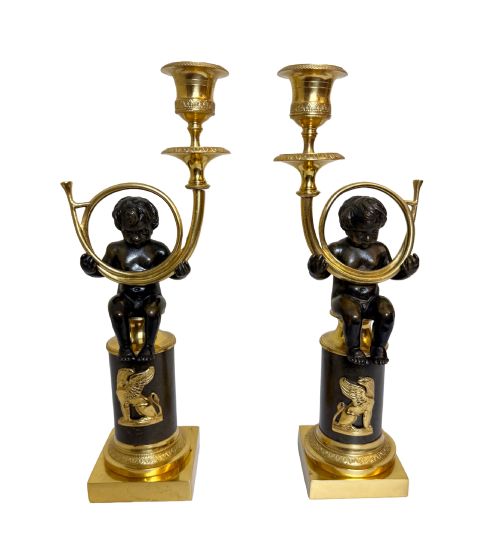
When you search for a gilt bronze putto candlestick, you encounter figural lighting pieces that predominantly date from the nineteenth century, including the Victorian, Regency, and Napoleon III periods. These items frequently appear as matched pairs configured for single candles or multi-armed candelabra.
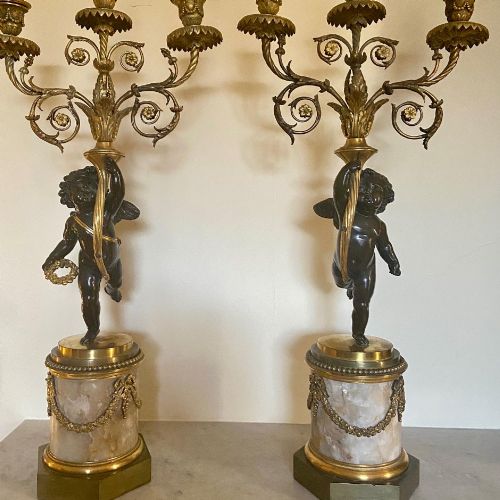
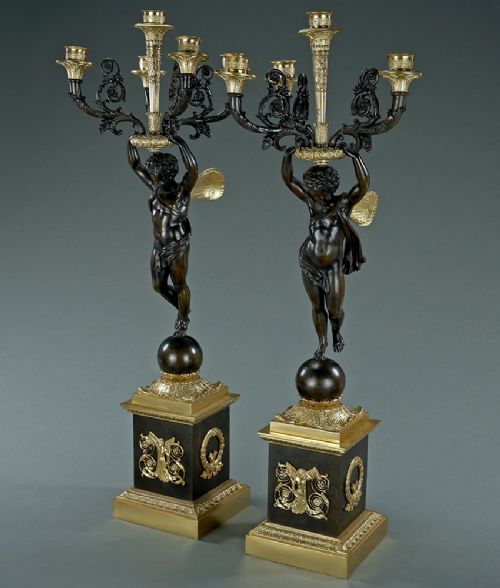
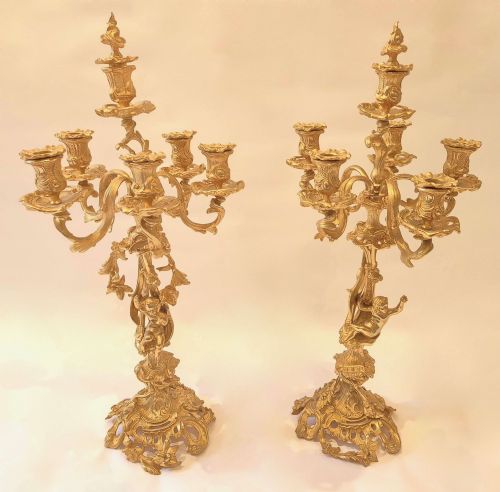
The physical forms incorporate winged putti, cherubs, and children supporting sconces, often mounted upon circular or rectangular marble bases. Pieces span French Empire, Louis XVI, and Rococo Revival styles, reflecting European decorative arts of the eighteenth and nineteenth centuries.
Materials and construction
Manufacturing relies heavily on cast bronze, finished with fire gilding or ormolu and paired with contrasting patinated bronze surfaces. Many examples integrate carved marble plinths and occasional mineral elements such as fluorspar to provide substantial weight and visual texture.
The figural components are cast in sections and chased by hand to sharpen details in the hair, drapery, and wings before assembly. Ormolu sections receive a mercury gilding treatment that produces a deep, lasting lustre distinct from modern electroplating.
Gilt Bronze Putto Candlestick Retail Price Guide 2026
Typical asking prices for gilt bronze putto candlestick among the pieces listed under this phrase on Sellingantiques today, from the lower quarter to the upper quarter. They describe what is for sale here now, not the wider market.
Materials recorded across the inventory include gilt bronze, patinated bronze, ormolu, marble, and fluorspar.
Judging quality and execution
Quality rests primarily in the crispness of the bronze chasing and the depth of the gilding. Superior examples retain fine facial expressions and distinct feather details on the putti, whereas lesser pieces show smoothed surfaces from worn moulds.
The integration of materials also dictates standing value, particularly the choice of dense marble bases and the structural rigidity of the candle arms. Heavier, multi-light candelabra with secure joints and original patination demonstrate higher workshop standards.
Claude Clodion·Francois Redmond
The Gilt Bronze Putto Candlestick Glossary
- Putto
- A figure of a small child, frequently winged, depicted in classical art. These figures form the central sculptural element of these candlesticks.
- Ormolu
- Finely ground high-carat gold applied to a bronze object using a mercury amalgamation technique. This historic process creates a durable golden finish.
- Patinated bronze
- Bronze that has been chemically treated to produce a darkened surface colour. This dark tone contrasts with bright gilt highlights on the figures.
- Candelabra
- A branched candlestick holding multiple lights. Many pieces listed under this search term feature two to five candle branches.
- Fluorspar
- A colourful halide mineral sometimes used for decorative bases. It brings distinct natural banding to the stone components.
Gilt Bronze Putto Candlestick: Frequently Asked Questions
What is a putto candlestick?
A putto candlestick is a lighting device featuring a sculpted child figure holding a socket or branch for a candle. These figural works combine metalcasting with classical design.
They serve both decorative and functional purposes, designed to sit on tables, desks, or mantelpieces within period interiors.
How do I date these pieces?
Dating relies on examining the casting techniques, the style of the base, and the characteristics of the bronze alloy. Nineteenth-century interpretations often revive earlier Louis XVI or Empire aesthetics.
Material combinations like ormolu and marble help place pieces within specific Victorian or Regency manufacturing windows.
Were these made as pairs?
Many examples survive as balanced pairs designed to sit symmetrically on either end of a mantelpiece or sideboard. Single candlesticks also occur, particularly desk-sized models.
Matched pairs generally command higher interest among collectors seeking uniform decorative schemes.
How do I clean gilt bronze?
Maintenance requires only gentle dusting with a soft, dry brush to prevent dirt accumulation within the recessed chasing. Liquid cleaners or abrasive cloths damage the historic ormolu surface.
Preserving the original gold layer maintains the visual integrity of the piece over time.