
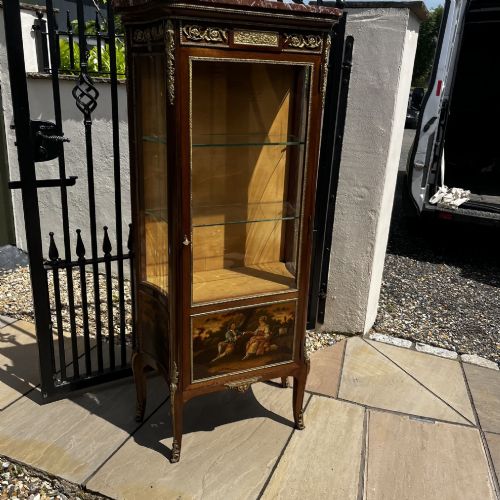
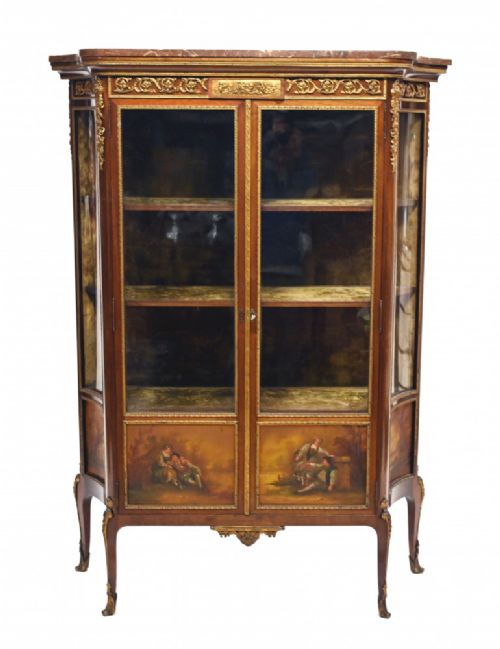


Gilt Bronze Painted Cabinet
A gilt bronze painted cabinet brings together French revival design, intricate painted panels and rich metal mounts.
Gilt Bronze Painted Cabinet
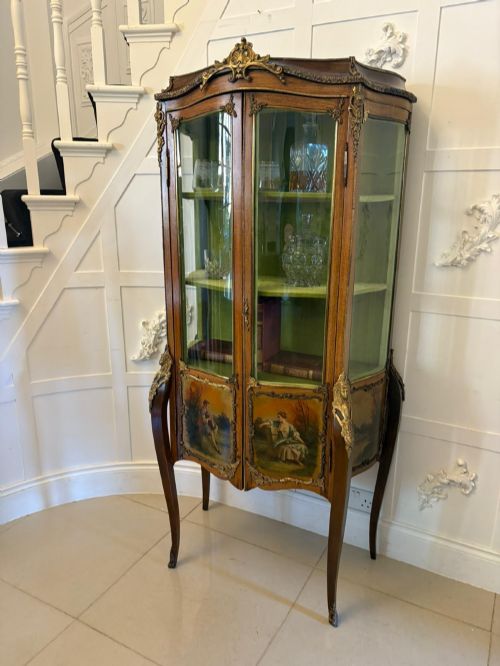
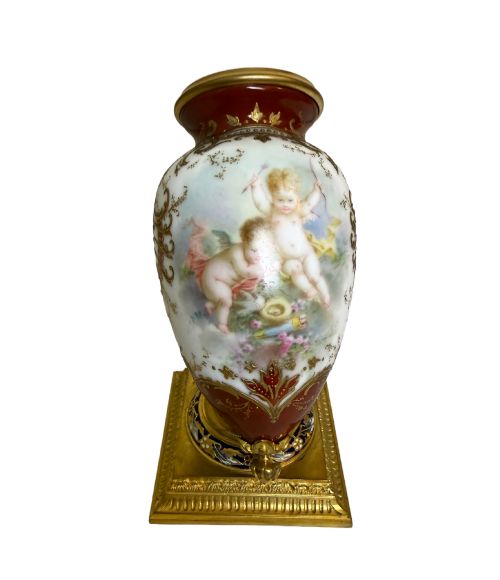
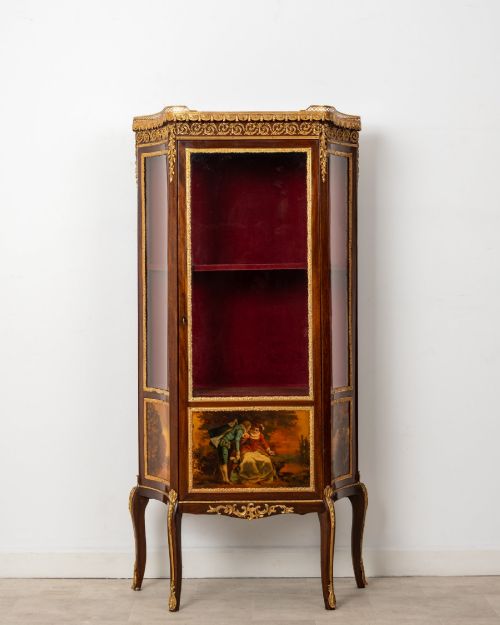
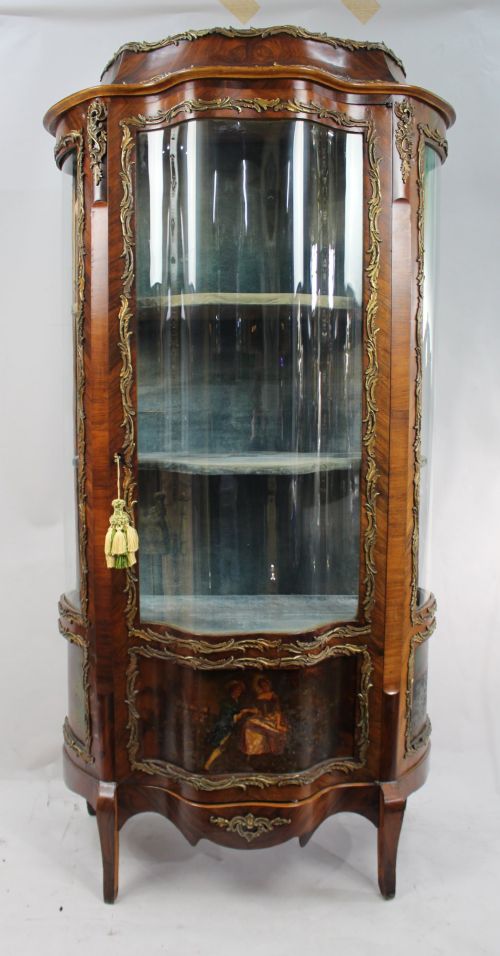
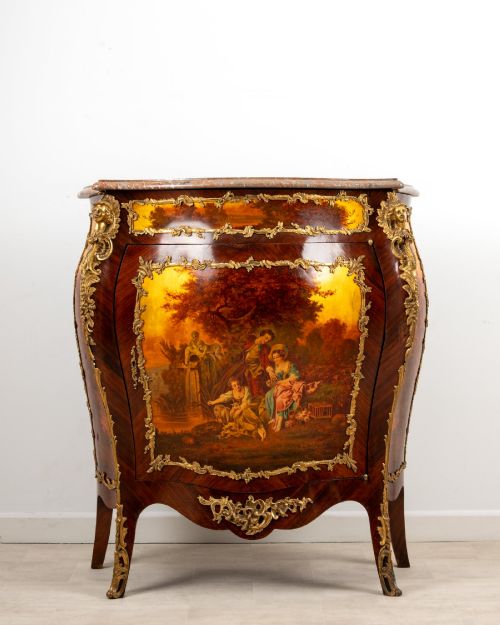
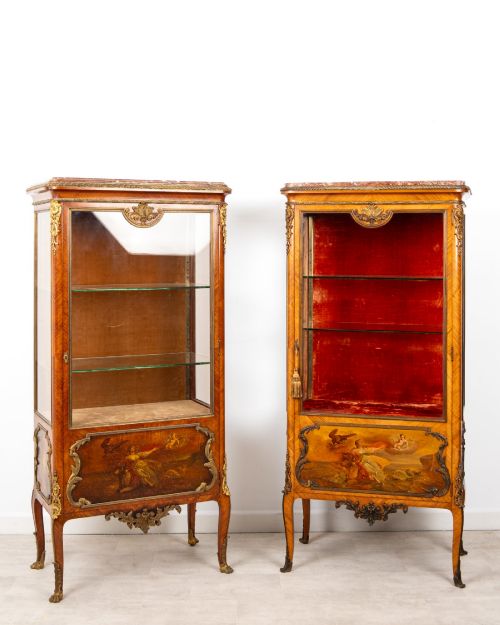
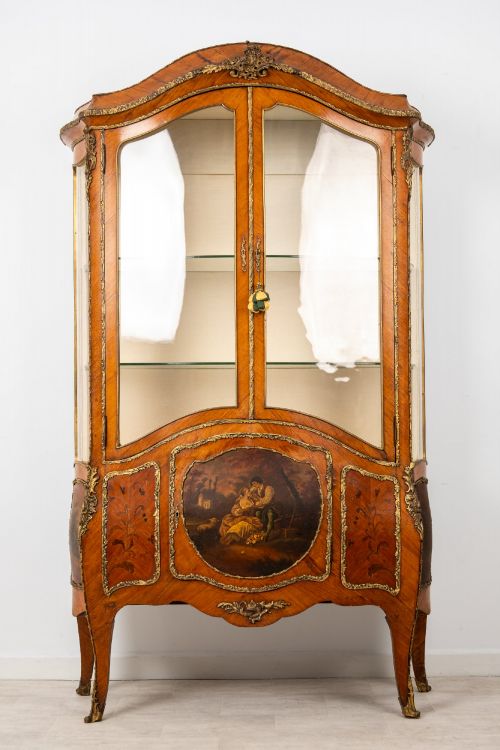
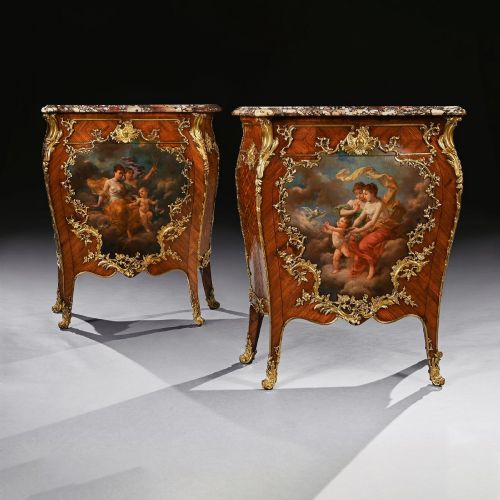
A gilt bronze painted cabinet represents a fusion of decorative painting and cast metalwork, primarily appearing in French revival forms. Buyers searching for a gilt bronze painted cabinet encounter display furniture such as vitrines, side cabinets, and bombé commodes originating largely from the nineteenth century and the Edwardian era.
These pieces frequently incorporate painted panels depicting pastoral scenes or floral motifs, framed by rich mahogany or kingwood veneers. The construction ranges from tall glass-fronted display vitrines to smaller bedside chests and writing desks designed to showcase luxury and artistry.
Materials and construction methods
Cabinetmakers utilised hardwoods such as mahogany and kingwood as the structural base, applying them as veneers over secondary timbers. Surface decoration relied heavily on Vernis Martin painted panels, a specialised European lacquer technique that imitated Asian finishes.
Casting and fire-gilding produced the ormolu and gilt bronze mounts that edge the panels and frame the corners. Marble tops, often shaped with serpentine or rounded profiles, complete the construction of the larger cabinets and commodes.
Listings feature items spanning the nineteenth century through the Edwardian era, incorporating materials such as kingwood, marble, glass, and gilt bronze.
Judging the quality of the pieces
Quality rests upon the crispness of the cast gilt bronze mounts and the finesse of the painted panels. Superior examples display finely detailed chasing on the metalwork and hand-painted brushwork with depth and narrative clarity.
The choice of timbers also dictates the grade of the piece, with richly figured kingwood and dense mahogany marking the higher tiers of production. Heavier, more substantial carcases with integrated marble slabs denote workshop standards intended for prominent reception rooms.
The Gilt Bronze Painted Cabinet Glossary
- Vernis Martin
- A simulated lacquer finish developed in eighteenth-century France and replicated in later revival pieces. It uses successive layers of varnish to protect delicate painted scenes.
- Ormolu
- Cast brass or bronze that has been gilded with a mercury amalgam or gold finish. It provides ornamental mounts and trim for furniture edges.
- Vitrine
- A glass-fronted display cabinet designed for porcelain and small valuables. The glazed doors and sides allow light to reach the interior shelves.
- Bombé
- A swelling, outward-curving furniture shape associated with continental cabinetmaking. It requires skilled veneer work to follow the complex rounded contours.
- Secretaire abattant
- A tall cabinet featuring a drop-down writing flap that conceals small drawers and pigeonholes. It combines storage with a compact desk surface.
Gilt Bronze Painted Cabinet: Frequently Asked Questions
How do I identify a Vernis Martin panel?
Vernis Martin panels show layered translucent varnish over hand-painted figurative or floral compositions. The finish exhibits a distinct depth and gloss that separates it from standard painted wood.
Under close inspection, the brushwork reveals fine details and tonal gradations beneath the protective varnish coat. These panels appear principally on nineteenth-century French display cabinets and writing desks.
What is the difference between ormolu and gilt bronze?
Ormolu and gilt bronze refer essentially to the same decorative material used for furniture mounts. The term ormolu derives from French terminology for ground gold applied to bronze.
Both terms describe cast metal hardware finished with a golden surface layer. On nineteenth-century cabinets, these mounts accent the corners, legs, and glass borders.
Where should I place a vitrine cabinet?
Vitrines suit drawing rooms, dining spaces, or hallways with controlled natural light. The glass panels and internal shelving require placement away from direct sunlight to protect interior contents.
Ensure the floor is level, as tall display cabinets carry significant weight from their glass and marble components. Freestanding placement allows the side glazing to illuminate the displayed items.
How do I date a nineteenth-century painted cabinet?
Dating relies on construction methods, timber choices, and stylistic revival markers. Nineteenth-century pieces often combine Louis XV or Louis XVI revival forms with specific nineteenth-century manufacturing techniques.
Examining the secondary timbers inside the carcase and the method of casting the bronze mounts helps narrow the decade of production. Surviving pieces span from the mid-nineteenth century through the Edwardian period.