


Curved Painted Commode
These curved painted commode pieces bring elegance and practical storage, offering the serpentine lines and decorative finishes that collectors prize.
Curved Painted Commode
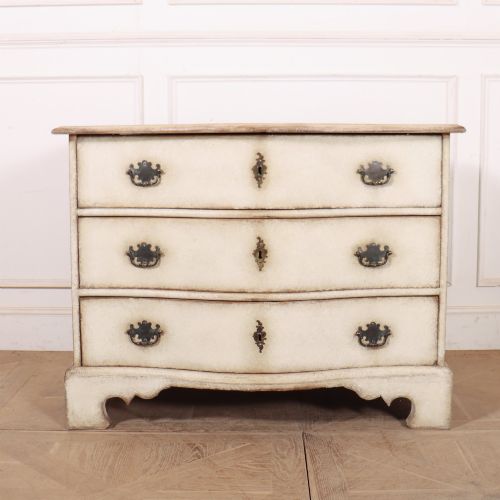
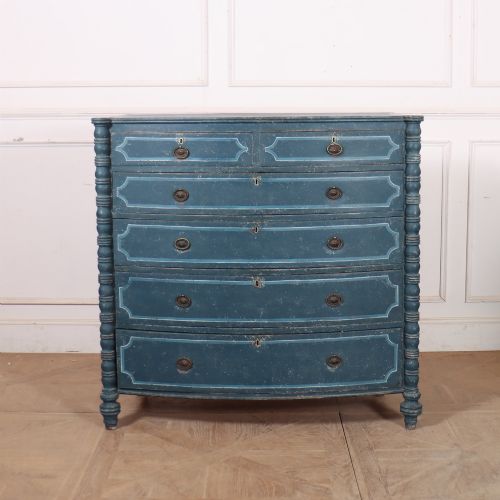
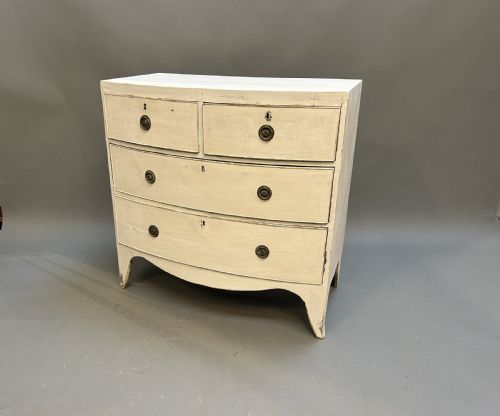
A curved painted commode brings together serpentine or bow fronts with decorative painted surfaces, forming a distinctive category of storage furniture. When you search for a curved painted commode, you encounter items spanning the eighteenth century through to the twentieth century, with French and English examples appearing regularly.
The forms vary from provincial French commodes to English bowfront and serpentine chests of drawers, alongside marble top cabinets and demi-lune side pieces. Eighteenth-century and nineteenth-century periods dominate the selection, accompanied by revival styles such as Louis XV and Regency.
Makers and workshops across England, France, and Germany produced these cabinets, utilising shapes that soften the corners of a room. Whether designated as a chest of drawers, a side cabinet, or a commode, each piece provides surface display and drawer storage within a curved silhouette.
How they were made
Makers constructed these cabinets using wood foundations, frequently incorporating walnut and burr walnut beneath layers of paint. Surfaces received decorative paint finishes, sometimes executed in the Vernis Martin tradition, which replicated oriental lacquer through translucent varnish layers.
Mounts and hardware typically consist of cast brass or ormolu, fastened to drawers and corners to accentuate the curved contours. Tops frequently feature shaped marble slabs fitted precisely to the serpentine or demi-lune wooden carcasses.
Listings feature periods spanning from the eighteenth century through to the 1930s, incorporating materials such as marble, ormolu, and painted wood.
What varies in quality
Quality rests in the harmony between the wooden carcass and the precision of the painted decoration. Pieces with hand-painted surfaces show an artistic depth that elevates them above simpler decorative treatments.
The integration of materials also defines the tier of a piece, particularly where heavy marble tops and chased ormolu mounts meet the curved woodwork. Finer examples maintain crisp lines in their serpentine or bowfront shapes, reflecting the skill of the cabinetmaker.
The Curved Painted Commode Glossary
- Commode
- A low cabinet or chest of drawers designed with decorative presence, frequently placed in formal reception rooms. The form evolved in France during the seventeenth century before being adopted across Europe.
- Serpentine
- A furniture shape featuring a front that curves outward at the sides and inward at the centre. This contour requires skilled woodworking to achieve fluid lines.
- Demi-lune
- A half-moon shape used for cabinets and commodes designed to sit flush against a wall. This profile suits smaller spaces while retaining surface area.
- Ormolu
- Gilded bronze used for decorative mounts and furniture hardware. The technique involves applying a gold amalgam to bronze before firing.
- Vernis Martin
- A European lacquer technique developed in the eighteenth century by the Martin brothers. It created translucent, luminous finishes on furniture surfaces.
Curved Painted Commode: Frequently Asked Questions
What is a curved painted commode?
A curved painted commode is a decorative storage cabinet featuring a serpentine, bow, or demi-lune front and a painted surface finish. These pieces function as chests of drawers or side cabinets originating from various European traditions.
They combine practical drawer space with ornamental presence, utilising materials like wood, paint, and marble tops to anchor a room's interior scheme.
How do I distinguish French and English commodes?
French commodes often display revival styles such as Louis XV, featuring elaborate painted motifs, ormolu mounts, and shaped marble tops. English pieces frequently take the form of bowfront or serpentine chests of drawers in walnut or painted wood.
Regional differences appear in the hardware choices, carcass construction, and the specific curvature of the drawer fronts.
Where should I place a demi-lune cabinet?
A demi-lune cabinet fits neatly against flat walls due to its half-circle shape, making it suitable for hallways, landings, or narrower reception rooms. Its flat back and curved front offer display space without protruding too far into the floor plan.
Pairs of these cabinets often flank a fireplace or mirror, creating symmetrical balance in a traditional interior.
What periods do these commodes come from?
The selection includes pieces from the eighteenth century, the nineteenth century, and the early twentieth century. Regency, Georgian, and later revival periods like Louis XV are well represented.
Dating relies on construction methods, wood types, and decorative styles characteristic of each era.