
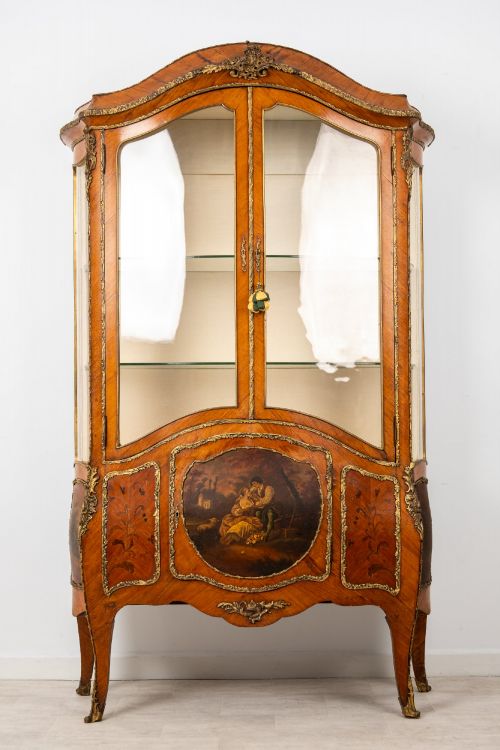
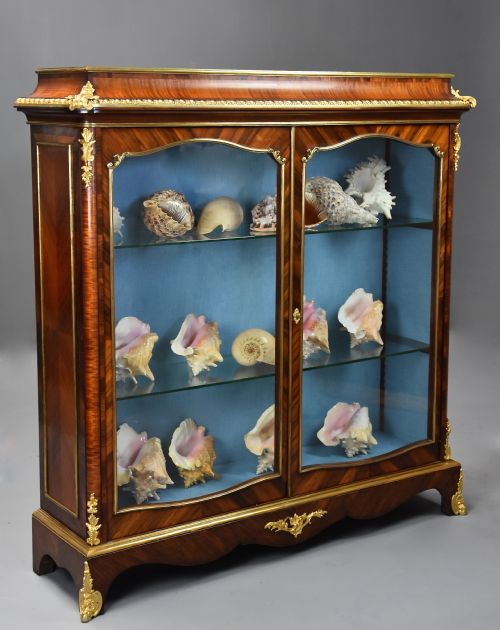
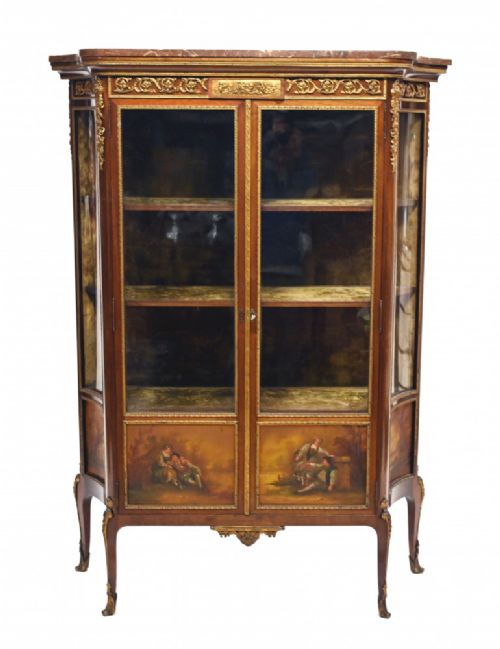


Gilt Bronze Mounted Vitrine
A gilt bronze mounted vitrine is a display piece combining glass and metalwork, chosen to showcase fine objects under refined French styling.
Gilt Bronze Mounted Vitrine
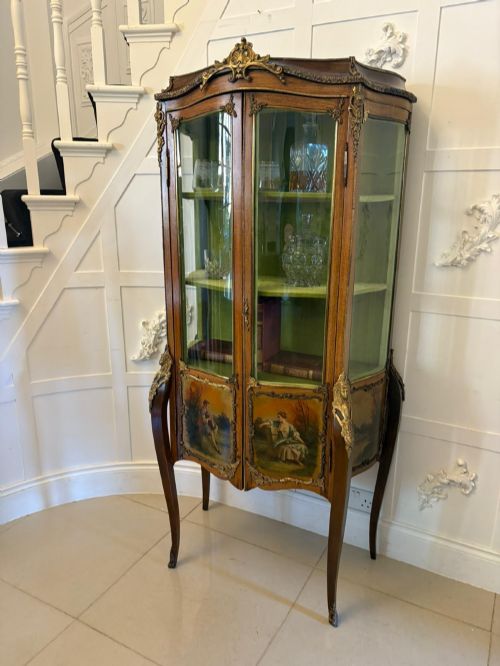
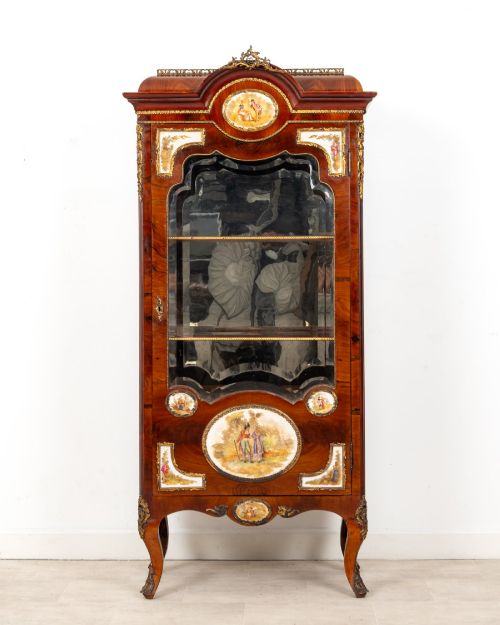
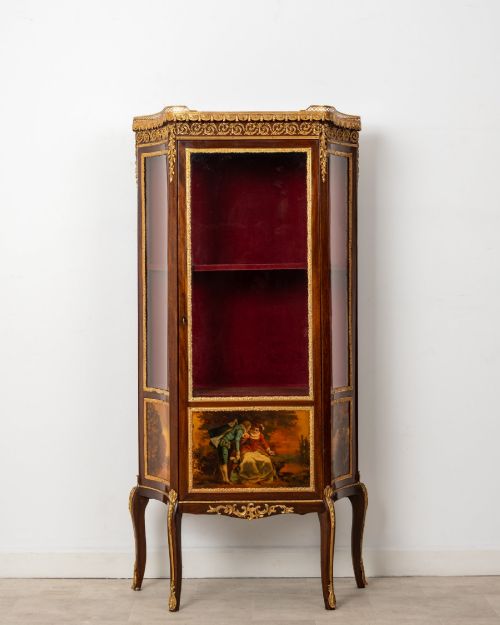
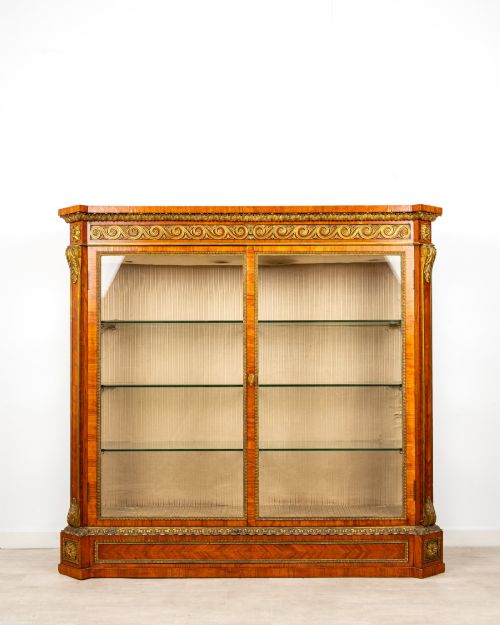
A gilt bronze mounted vitrine is a display cabinet or table designed with glass panels and metal mounts, emerging primarily from nineteenth-century French workshops. The versions most commonly found here belong to the Victorian and Edwardian periods, adhering to Louis XV and Louis XVI revival styles.
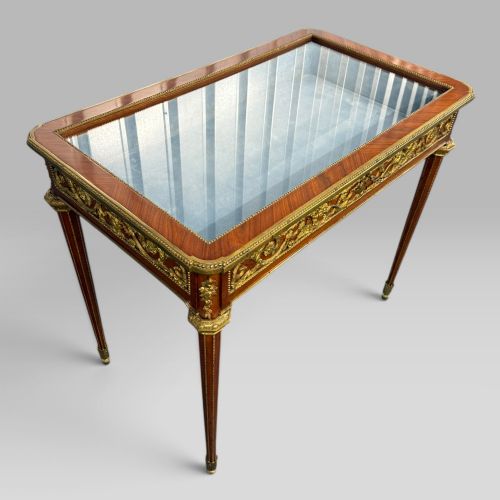
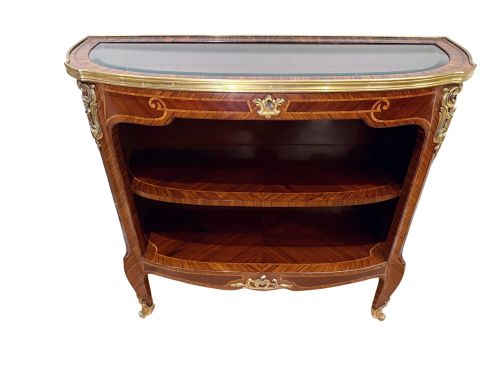
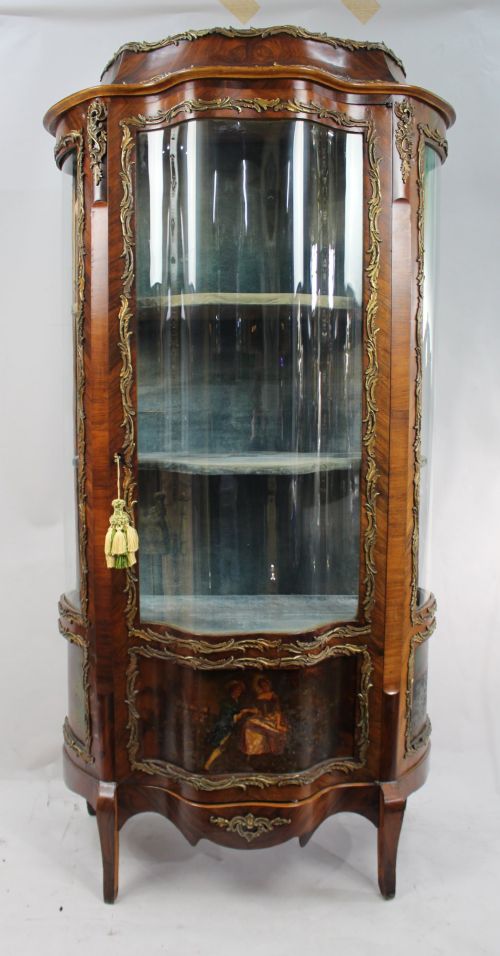
These pieces function as vitrines, display cabinets, and bijouterie tables, serving to protect and exhibit porcelain, small collectibles, and decorative items. Cabinets feature serpentine fronts, marble tops, and glazed doors, while tables offer horizontal glass surfaces for intimate viewing.
How they were made
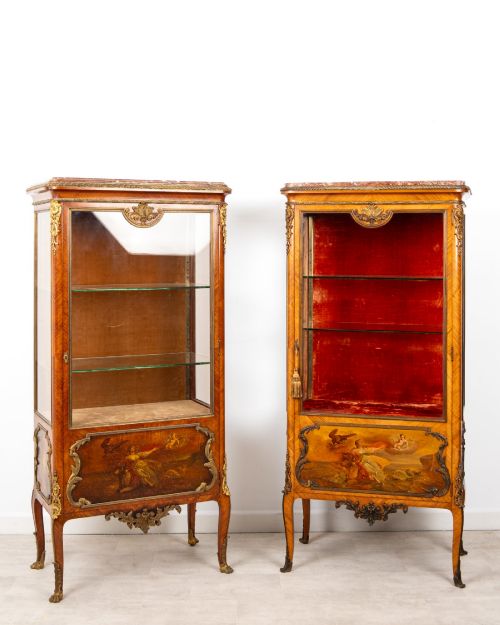
Maker workshops construct carcass frames using timbers such as kingwood, mahogany, walnut, and satinwood, often enhanced with marquetry inlay or painted Vernis Martin panels. Ormolu and gilt bronze mounts are cast, chased, and applied to frame the corners, feet, and glass borders.
Internal spaces are lined with velvet to cushion displayed objects, whilst marble slabs are fitted to the upper surfaces of cabinets. Glass is shaped to fit curved serpentine doors and sides, secured within timber rebates alongside metal mounts.
Listings feature nineteenth-century materials including kingwood, mahogany, marble, velvet, and ormolu across revival styles.
What varies in quality
Quality rests in the precision of the bronze casting and the crispness of its chasing, where sharply defined foliage and scrolls distinguish finer mounts from softer commercial castings. The choice of underlying cabinet timbers and the complexity of the marquetry or painted panels further divide standard production from pieces bearing attributed workshop provenance.
Construction details such as matched grain patterns, heavy marble thicknesses, and well-fitted glazed doors dictate the structural integrity of the furniture. Maker attributions to figures like François Linke or Paul Sormani elevate the standing of a piece through documented execution.
François Linke·H. J. Hatfield & Sons·Paul Sormani·G. Durand
The Gilt Bronze Mounted Vitrine Glossary
- Ormolu
- Gilt bronze applied as a decorative mount on furniture. The technique involves coating bronze in gold amalgam and firing it.
- Vitrine
- A glass-fronted cabinet designed for displaying porcelain, curiosities, and small objects. These pieces often feature glazed side panels to maximise light penetration.
- Vernis Martin
- A type of simulated Japanese lacquer developed in France during the eighteenth century and replicated in later revival pieces. It involves applying multiple layers of varnish and paint to produce lustrous decorative panels.
- Bijouterie table
- A low display table with a glazed top and velvet-lined interior. They were used in drawing rooms for exhibiting jewellery and small ornaments.
- Marquetry
- Inlaid wood veneers arranged in geometric or pictorial patterns across the carcass. Craftsmen cut contrasting timbers to fit precisely within recessed channels.
Gilt Bronze Mounted Vitrine: Frequently Asked Questions
What is a gilt bronze mounted vitrine used for?
These cabinets and tables were built for drawing rooms and salons to exhibit valuable porcelain, figures, and personal collections under glass.
The enclosed shelving and glazed panels kept dust away from delicate items while allowing guests to inspect the contents from multiple angles.
How do I identify Louis XV and Louis XVI styles?
Louis XV revival pieces feature asymmetric curves, flowing rococo scrolls, and serpentine fronts. Louis XVI style leans towards neoclassical restraint with straight lines, fluted columns, and symmetrical proportions.
Both styles make heavy use of gilt bronze mounts, but the structural geometry of the timber carcass dictates the specific revival period.
Are marble tops original to these cabinets?
Many nineteenth-century cabinets and tables feature fitted marble tops, frequently in white or coloured varieties with moulded edges. These slabs were selected to complement the gilt bronze mounts and provide a durable, heavy surface above the display area.
Inspecting the rebate where the marble meets the timber frame helps determine whether the top has remained with the piece since its manufacture.
What is Vernis Martin decoration?
Vernis Martin refers to a specialised varnishing and painting technique that mimics Asian lacquerware. Artisans applied successive coats of translucent varnish over painted scenes, often depicting pastoral figures or floral arrangements.
On cabinet doors and panels, this finish provides a glossy, aged surface that characterises specific nineteenth-century French pieces.