

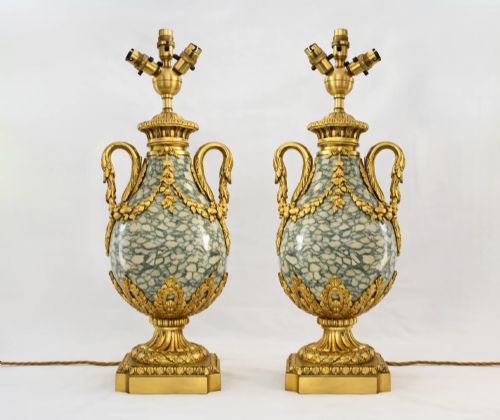


Gilt Bronze Marble Lamps
Gilt bronze marble lamps combine cast metalwork and stone bases, bringing nineteenth-century French design into domestic interiors.
Gilt Bronze Marble Lamps
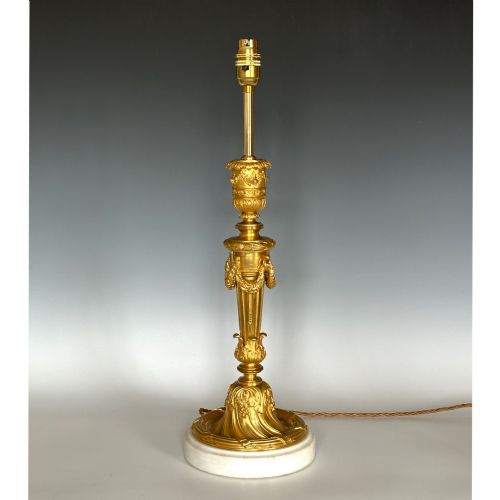
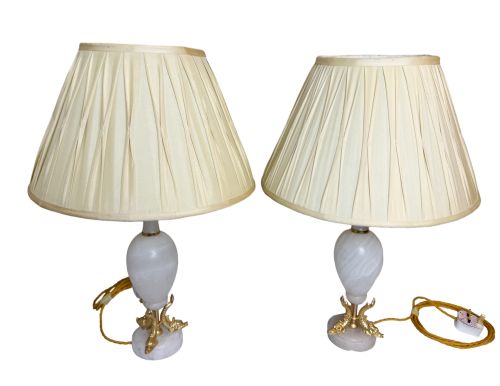
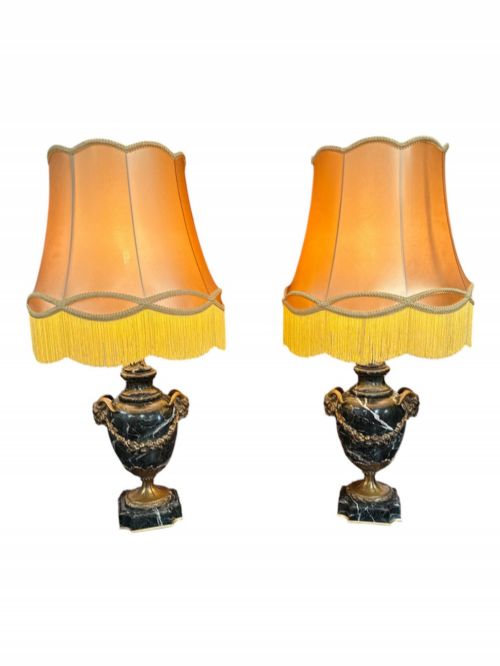
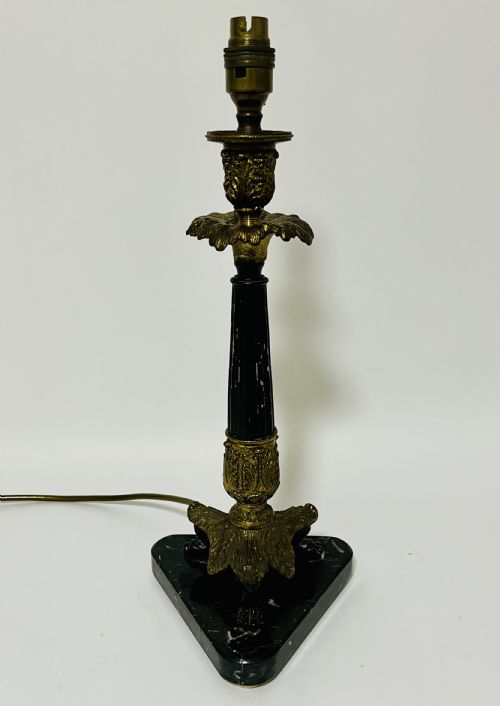
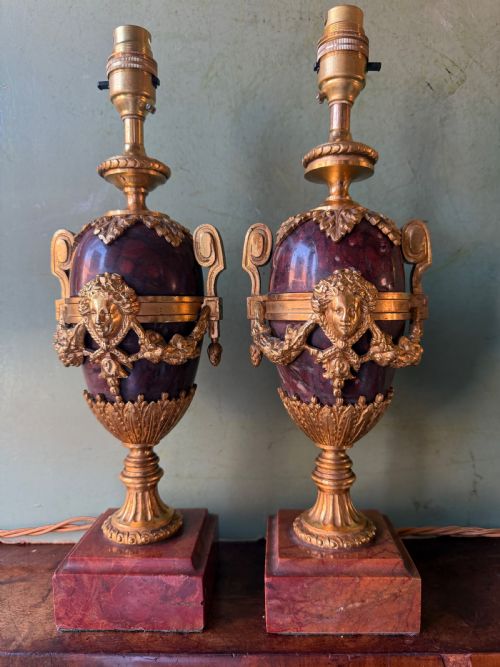
Gilt bronze marble lamps comprise lighting fixtures formed from stone bodies mounted with cast and gilded metallic elements. These objects emerge predominantly from nineteenth-century French workshops, reflecting periods such as the Louis XVI style, Empire, and Rococo Revival. Buyers find column forms, urns, and figural interpretations adapted for electricity from earlier lighting sources or decorative objects.
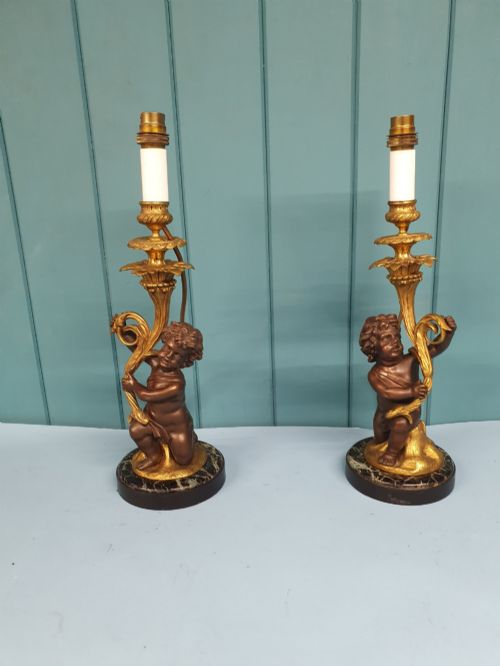
The selection includes matched pairs and individual table lamps alongside floor-standing variants. Many utilise architectural stone plinths or classical urn bodies fitted with bronze or ormolu mounts. The forms range from simple columnar designs with Corinthian capitals to elaborate sculptural compositions involving cherubs or classical figures.
How they were made
The construction relies on combining turned or carved stone, such as white, rouge, or siena marble, with cast bronze components. Makers employed mercury gilding or electroplating to apply gold finishes to the bronze and ormolu mounts, creating contrast against the polished stone surfaces. Individual elements were secured via internal threaded rods and nuts, assembling the heavy stone and metal components into stable bases.
Conversion from oil, gas, or candle use is common among these pieces, involving drilled channels for modern wiring and adapted brass fittings. The metal components demonstrate lost-wax or sand-casting techniques, followed by hand-chasing to sharpen the surface detail on foliage, scrolls, and figures.
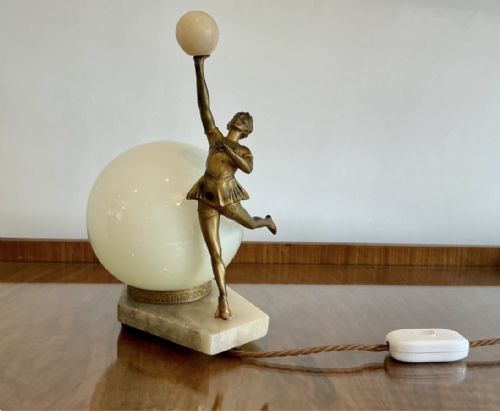
Several lamps double as figures of cherubs or young girls caught mid-action, including one blowing a kiss.
What varies in quality
Quality rests upon the crispness of the bronze chasing and the depth of the original gilding. Finer examples display sharp, hand-finished detail in the acanthus leaves, figures, and mounts, whereas simpler pieces show softer, cast-finish edges without subsequent tool work.
The grade of the marble and the weight of the metal components determine the solidity of the piece. Dense, richly coloured marbles paired with heavy cast bronze mounts distinguish the top end of the range from lighter constructions utilising gilt brass or thin metal veneers over composite bases.
Paul Sormani
The Gilt Bronze Marble Lamps Glossary
- Ormolu
- Gilded bronze, produced by applying a gold and mercury amalgam to a bronze base and heating it to drive off the mercury. This technique creates a durable, golden surface typical of fine French decorative arts.
- Cassolette
- A decorative vase or urn with a reversible lid that functions either as an incense burner or a solid vase. In lamp form, these vessels retain their characteristic pierced or solid covers beneath the bulb fitting.
- Gueridon
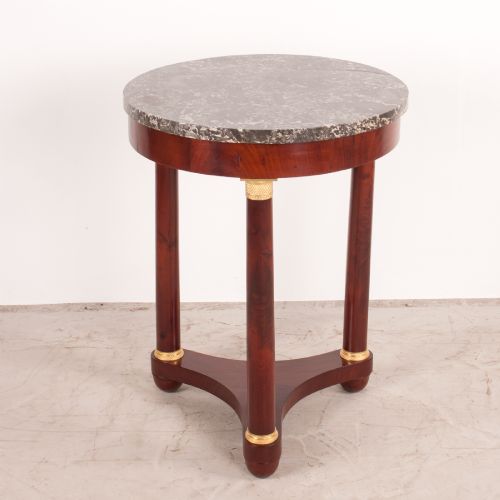
- A small round table, frequently utilised as a support for lamps or decorative ornaments in nineteenth-century interiors. These pieces often incorporate marble tops and gilt bronze mounts matching the companion lighting.
- Empire
- A stylistic period drawing on ancient Roman, Greek, and Egyptian motifs, characterised by military trophies, classical figures, and symmetrical mounts. Pieces from this design language emphasise formal dignity and heavy cast metalwork.
- Neoclassical
- A revival style focusing on straight lines, architectural proportions, and classical symmetry derived from excavations at Pompeii and Herculaneum. This aesthetic governs many of the column and urn lamp designs.
Gilt Bronze Marble Lamps: Frequently Asked Questions
Were these originally made as electric lamps?
Almost none of these pieces started life as electric lighting. Most functioned originally as oil lamps, candlesticks, candelabra, or decorative urns before later conversion.
Conversion typically involves running a cord through existing central channels or carefully drilling the base and mounts. This adaptation preserves the historic exterior while accommodating modern electrical standards.
How can I tell the period of a lamp?
Examine the casting quality, the style of the mounts, and the wiring hardware used in past conversions. Nineteenth-century pieces display hand-chased surface details on the bronze and heavier stone turning.
Later reproductions or twentieth-century adaptations often feature uniform machine-finished castings and modern internal threading. Comparing the style of the mounts to established periods like Louis XVI provides further chronological context.
Are matched pairs difficult to find?
Matched pairs appear frequently among nineteenth-century French lighting, though many began as garniture sets or candlesticks. Symmetrical placement on side tables or mantelpieces made pairs a standard production choice for makers.
Verify that both pieces share identical dimensions, marble coloration, and mount castings to confirm they were produced together as a set.