
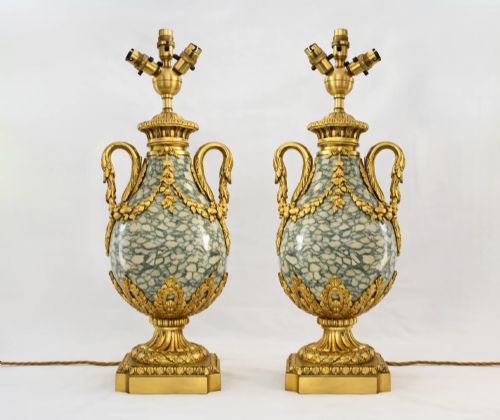


Classical Marble Desk Lights
Classical marble desk lights combine heavy stone plinths with metal mounts, offering steady illumination and formal gravity to a study.
Classical Marble Desk Lights
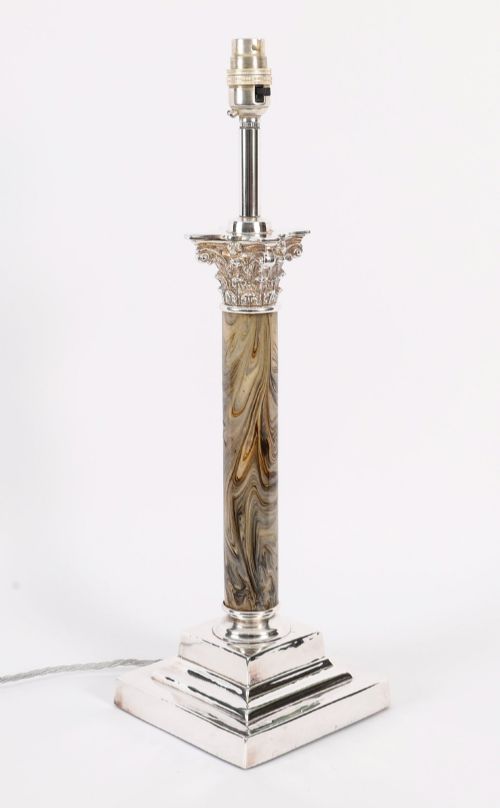
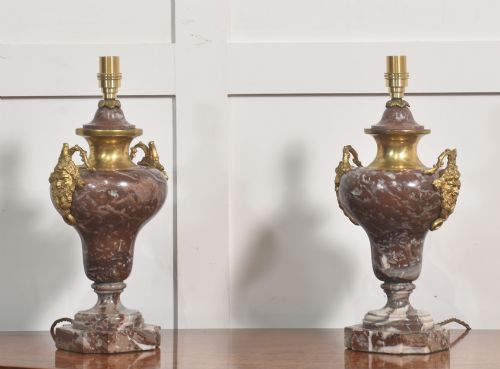
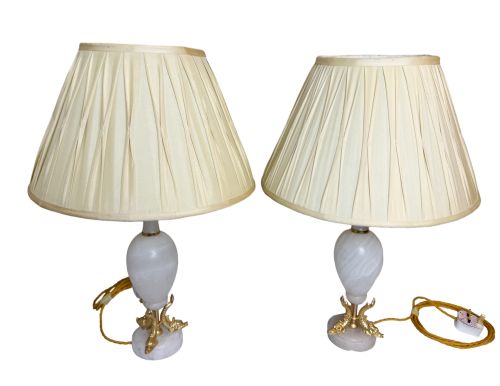
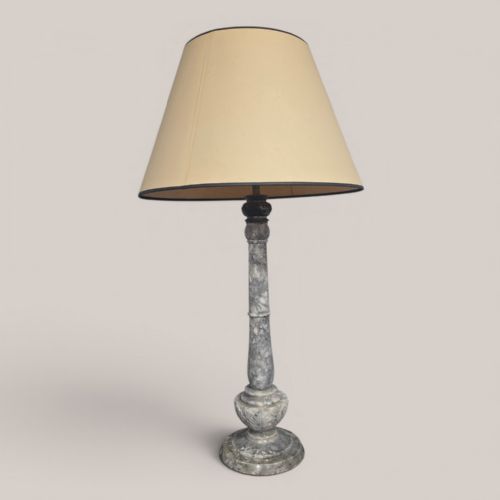
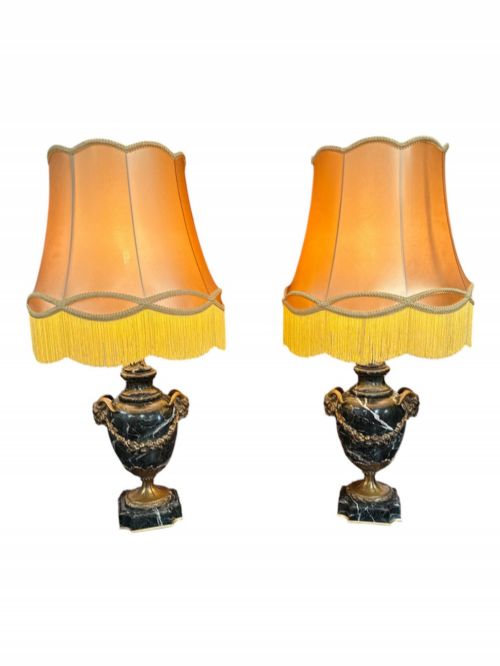
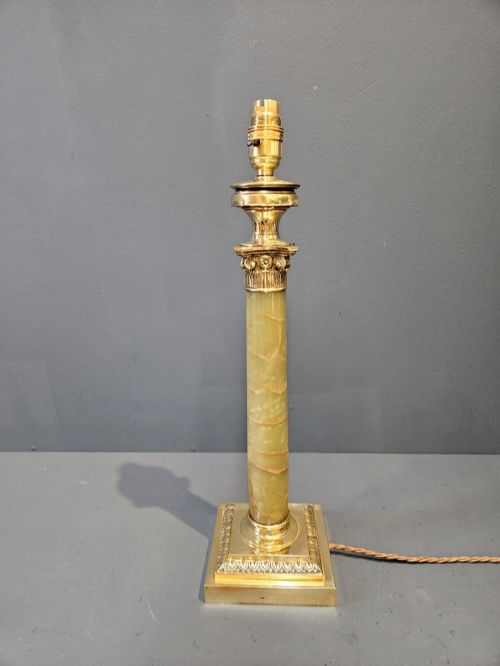
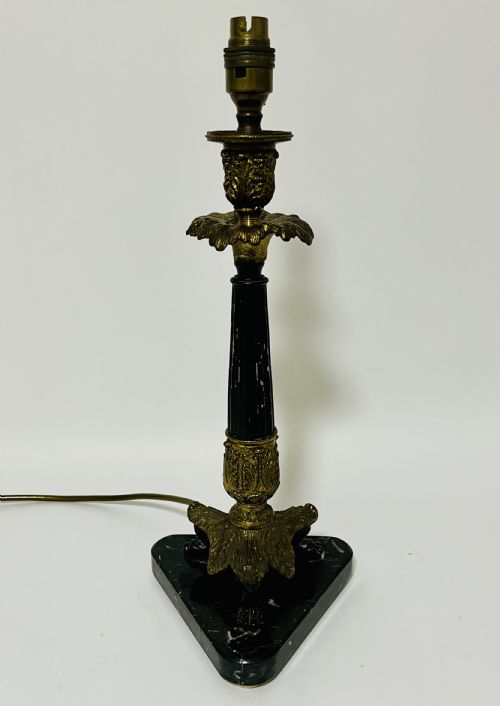
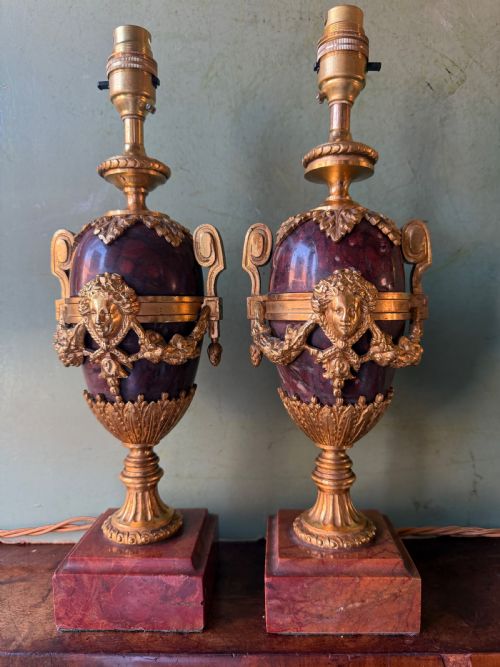
These pieces take the form of table lamps, urns, cassolettes, and candlesticks adapted for lighting, drawing upon nineteenth-century and early twentieth-century designs. When searching for classical marble desk lights, buyers encounter items rooted in the Victorian, Edwardian, and Art Deco periods, alongside French Neoclassical and Empire styles. The examples recorded here span from the nineteenth century through the 1930s, incorporating white, rouge, siena, and green marble or onyx.
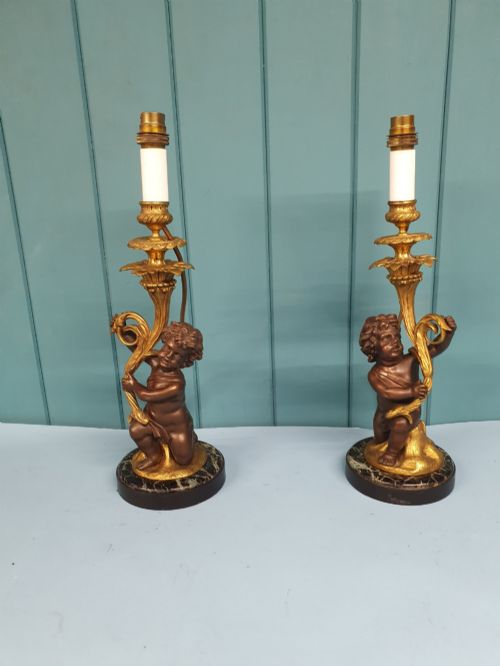
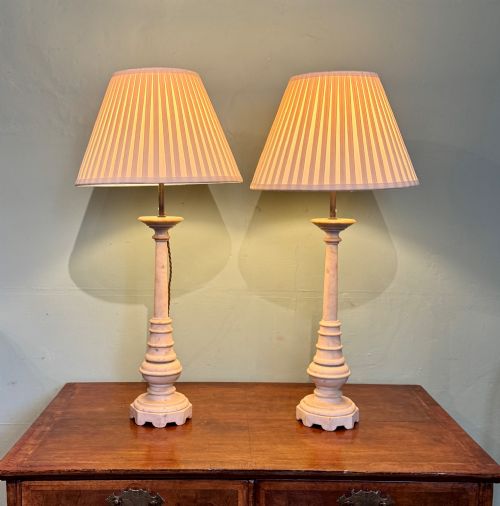
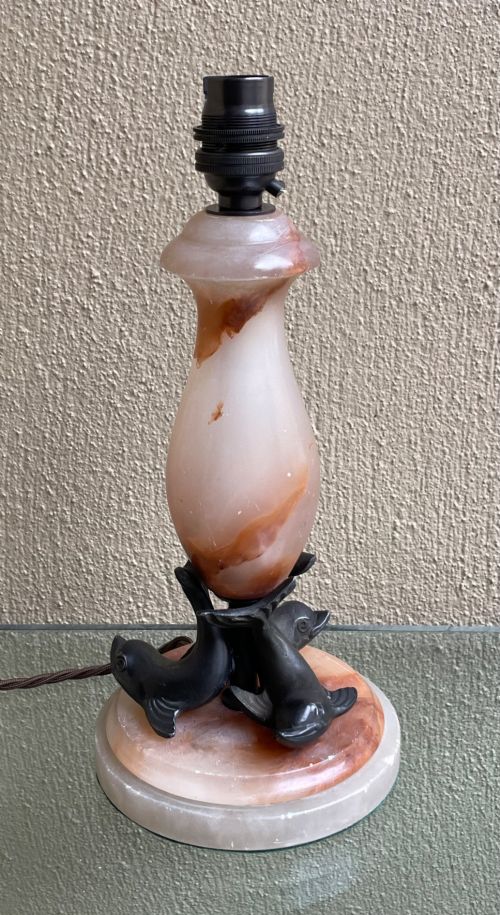
Table lamps and converted candlesticks dominate the selection, frequently paired with gilt bronze, ormolu, brass, or gilt metal mounts. Many originate from French workshops, showing distinct influences from Louis XVI aesthetics and classical figural subjects such as cherubs or dolphins. Alabaster variants also appear, offering softer translucency compared to dense polished stone.
Materials and Construction
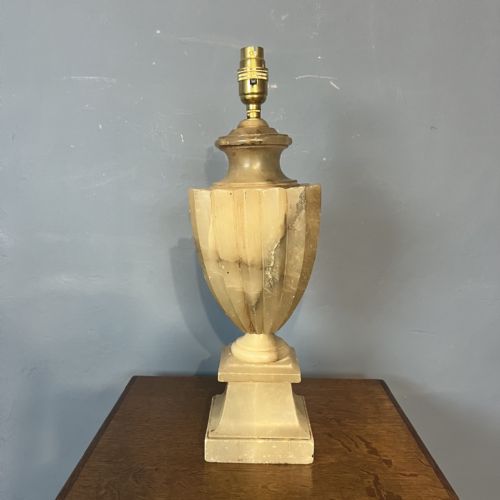
The primary bodies utilise solid carved marble, onyx, or alabaster, turned or sculpted into urn, column, and amphora shapes. These stone components provide a stable foundation for the lighting fixtures.
Metal elements consist of cast brass, gilt bronze, ormolu, and silver plating, secured to the stone with threaded rods or pins. Ormolu mounts and cast metal paw feet are applied to accentuate the classical silhouette.
Listings feature items spanning the Victorian era through the 1930s, highlighting Neoclassical and French Empire design influences.
Distinctions in Execution
Quality rests in the crispness of the metal chasing and the depth of the stone polish. Finer examples display intricately chiselled ormolu mounts with sharp definition, whilst simpler pieces rely on plain brass or gilt metal collars.
The choice of stone also dictates the grade of the object. Richly figured rouge or siena marble carries more visual complexity than standard white or green marble-effect compositions.
The Classical Marble Desk Lights Glossary
- Ormolu
- Gilt bronze produced by applying a mercury-gilding process to cast bronze objects. This technique creates a durable golden finish common on French classical lighting.
- Cassolette
- A decorative vase or urn with a reversible lid that functions as a burner or candleholder. Many nineteenth-century examples are converted to electrical table lamps.
- Amphora
- A two-handled ancient Greek storage vessel shape adapted during the Neoclassical and Empire revivals. These bodies form the central column of heavier desk lamps.
- Spelter
- A zinc alloy used as a cheaper alternative to bronze for cast decorative figures and mounts. It takes patination and gilding to resemble heavier metals.
Classical Marble Desk Lights: Frequently Asked Questions
How do I wire an old lamp safely?
Rewiring requires replacing aged internal flex and lamp holders with modern insulated components while retaining the original exterior brass or bronze parts. A qualified electrician carries out this adaptation to meet current safety standards.
Historic weighted bases often provide a stable housing for modern internal cord routing without altering the visible marble or metalwork.
What styles define these lamps?
Neoclassical, French Empire, and Louis XVI revival styles dominate the selection, referencing ancient Greek and Roman architectural motifs. Columns, urns, and acanthus leaf mounts reflect this formal design vocabulary.
Later pieces from the 1920s and 1930s incorporate Art Deco influences alongside traditional stone bodies.
How do I clean marble and ormolu?
Dust marble surfaces gently with a dry microfibre cloth and avoid acidic cleaning agents that etch polished stone. Ormolu mounts require minimal intervention beyond soft brushing to preserve the remaining fire gilding.
Water and harsh detergents damage both the porous stone structure and historical metal patination.
Are these pieces original conversions?
Many items began as oil lamps, candlesticks, or decorative urns before receiving electrical fittings during the twentieth century. This secondary adaptation is standard for nineteenth-century lighting pieces.
The presence of drilled channels for wiring often indicates when the conversion took place.