


Gilt Bronze Light
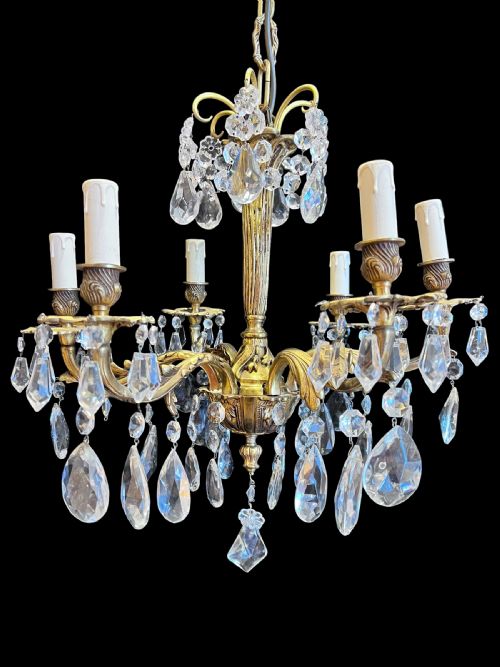
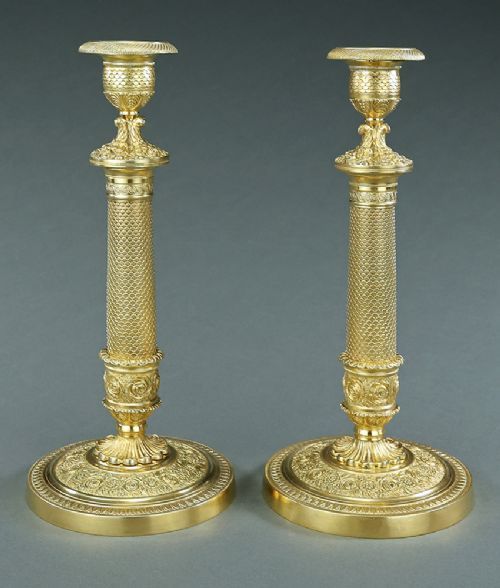
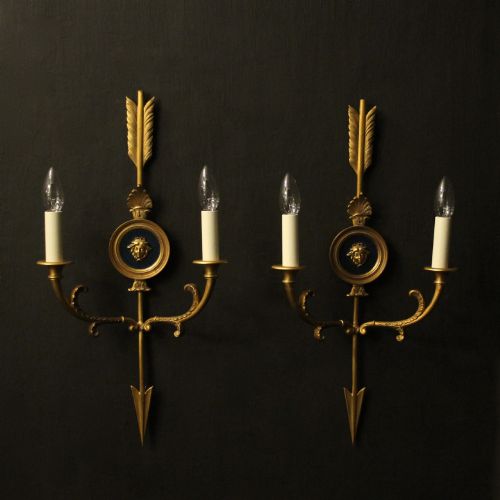
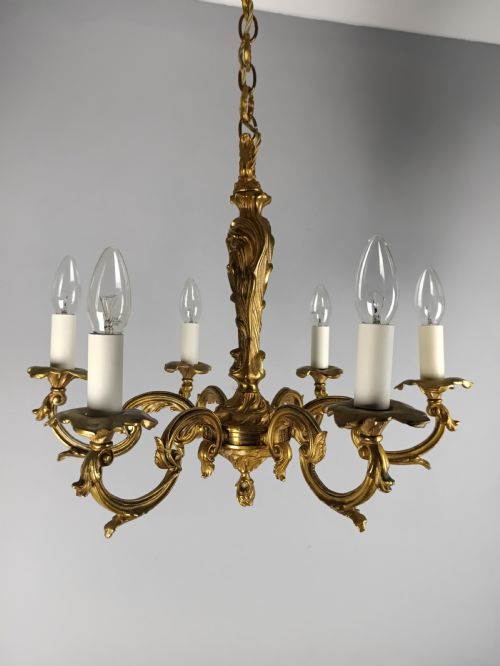
When you search for a gilt bronze light, you encounter French chandeliers, wall sconces and candelabra forged in brass, ormolu and crystal.
Gilt Bronze Light
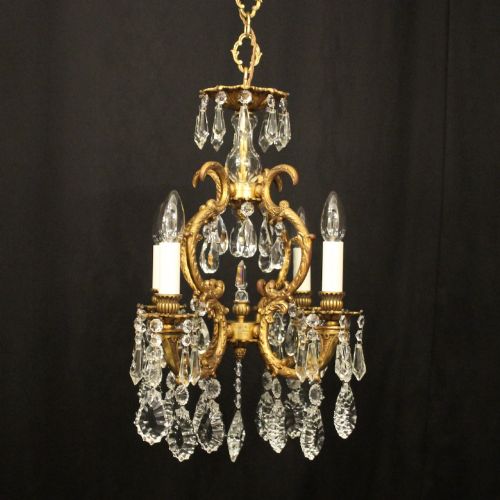
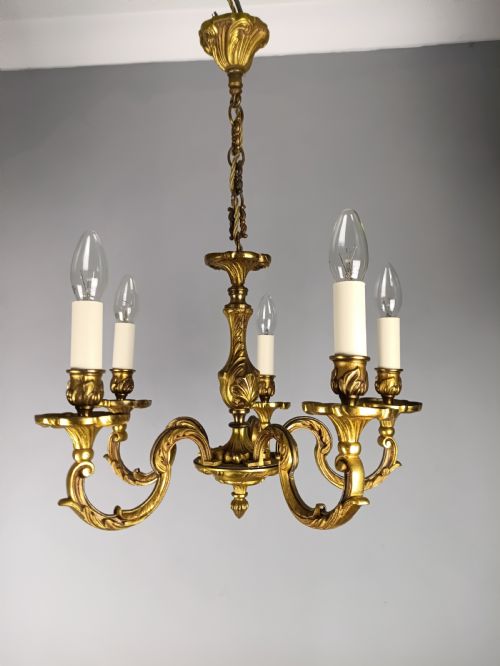
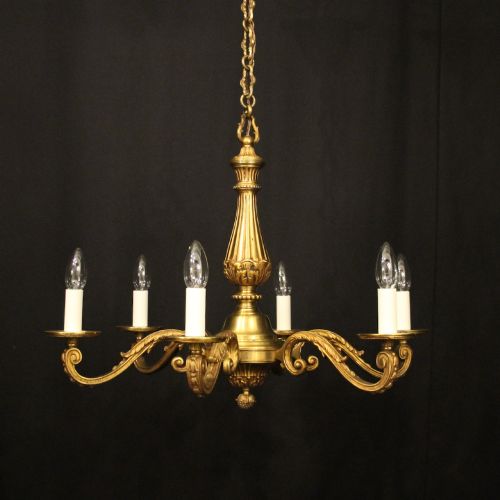
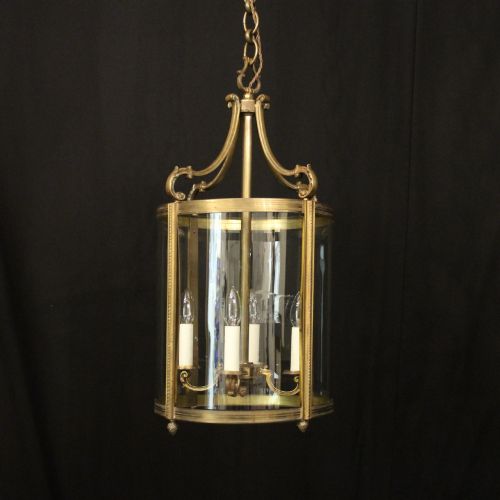
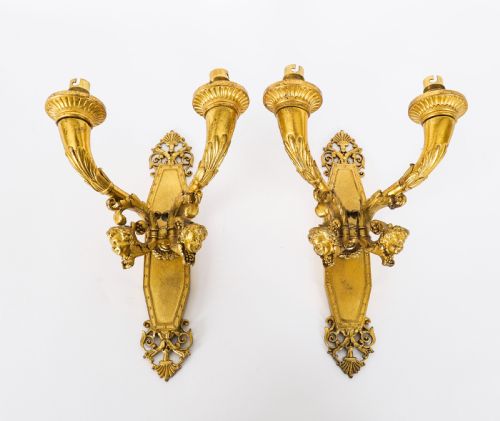
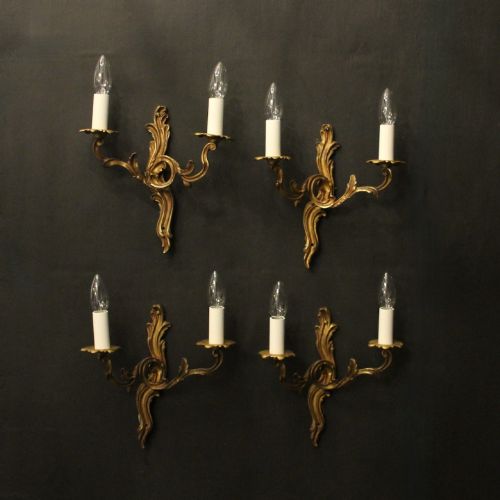
A gilt bronze light encompasses everything from multi-branched chandeliers and hall lanterns to pairs of wall lights and candelabra. Pieces originating from France dominate the selection, spanning styles such as Louis XVI, Rococo, Empire and Neoclassical.
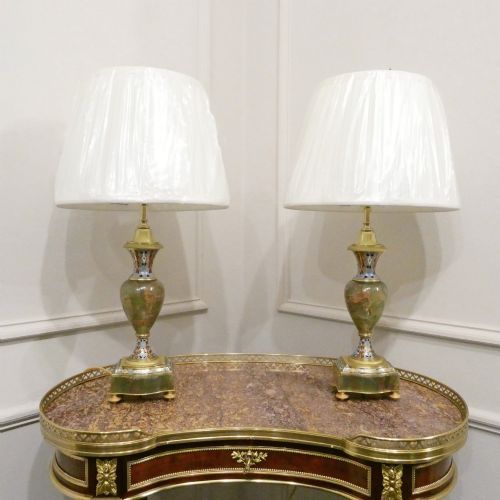
Buyers encounter smaller table lamps and floor-standing oil lamps alongside heavy ceiling fixtures dating from the eighteenth century through to the interwar period of the 1930s. Wall lights frequently appear in matching pairs or sets of four.
The objects combine cast bronze frames with applied fire gilding or ormolu, occasionally incorporating marble, onyx, porcelain or cut glass elements to refract illumination.
What Varies in Quality
The depth and uniformity of the ormolu finish dictate the visual weight of an object. Heavier casting gauges and integrated structural mounts provide stability, particularly in large multi-light chandeliers and hall lanterns.
Listings feature items spanning from the eighteenth century to 1930, utilising materials including marble, crystal, and bronze.
Barbedienne·Francois Redmond·Pierre Gouthiere·E Rousseau·Dugourc
The Gilt Bronze Light Glossary
- Ormolu
- Gilt bronze produced by applying a mixture of gold and mercury to a bronze object and heating it to drive off the mercury. This technique creates a rich, matte golden surface characteristic of fine nineteenth-century French lighting.
- Champleve
- An enamelling technique where troughs are carved into a metal surface and filled with vitreous enamel powder before firing. Pieces featuring this method often appear on nineteenth-century table lamps.
- Candelabra
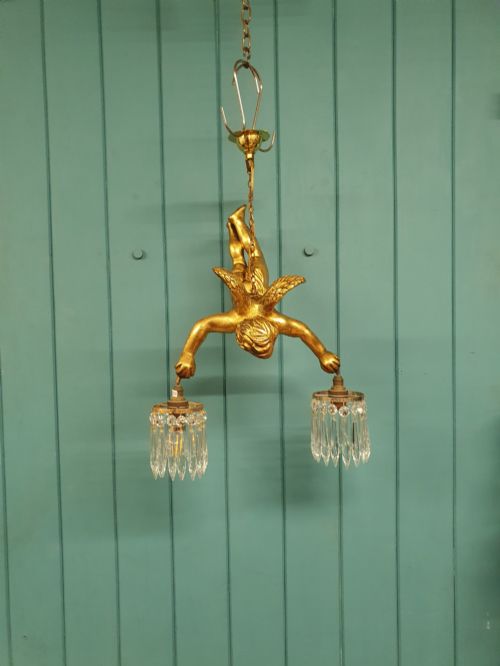
- A multi-branched candlestick designed to hold several candles simultaneously. Examples in the archive range from figural cherub designs to monumental Empire period pieces.
- Mazarin
- A specific configuration of multi-light chandelier or wall sconce originating in seventeenth and eighteenth-century France. The term denotes elaborate brass and bronze framework.
- Chasing
- The manual finishing of a metal casting using small punches and hammers to sharpen details and texture the background. Superior lighting exhibits deep, precise chasing executed by specialist metalworkers.
Gilt Bronze Light: Frequently Asked Questions
How do I hang a heavy chandelier?
Heavy bronze and crystal fixtures require direct attachment to ceiling joists using a rated steel hook rather than standard plaster fixings.
Professional installation ensures the weight of multi-branch metal fittings is supported safely over time.
Were these fixtures converted to electricity?
Many historical wall lights and chandeliers have been rewired for modern electrical standards while retaining their original sockets and candle tubes.
Buyers should inspect internal wiring to confirm compliance with current domestic safety regulations.
How do I clean gilt bronze?
Maintenance requires only gentle dusting with a soft, dry brush to prevent accumulation in recessed chased areas.
Harsh chemical polishes must be avoided because they strip away the thin layer of historical ormolu or fire gilding.
How do I identify Louis XVI style?
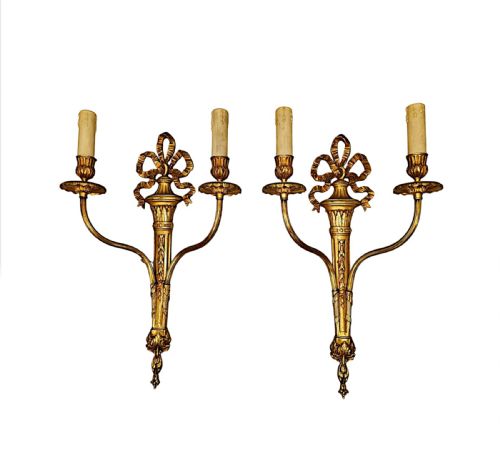
Louis XVI lighting is characterised by neoclassical symmetry, straight fluted columns, ribbon motifs and classical urn or leaf decorations.
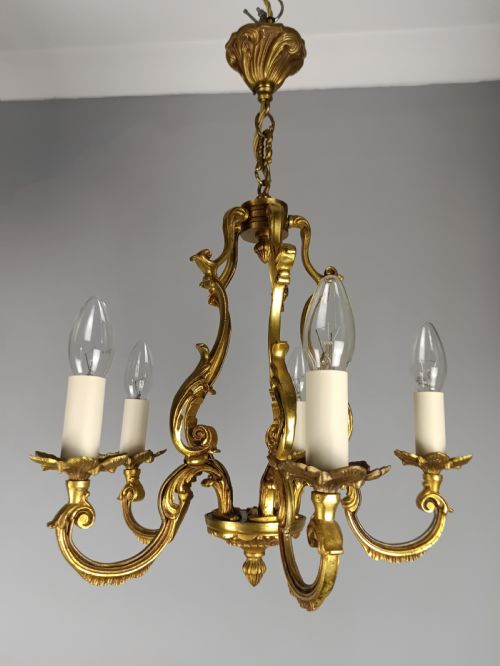
This aesthetic contrasts with the asymmetric curves and exuberant scrollwork of earlier Rococo designs.