


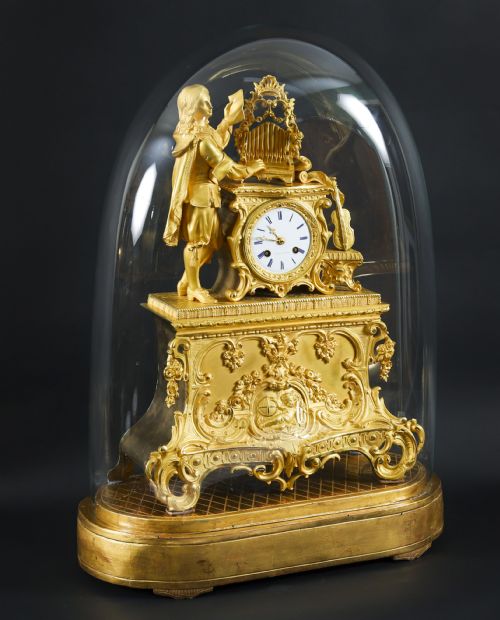


Gilt Bronze Figural Clock
These gilt bronze figural clocks combine sculptural presence with precise timekeeping, anchoring a room with nineteenth-century craftsmanship.
Gilt Bronze Figural Clock
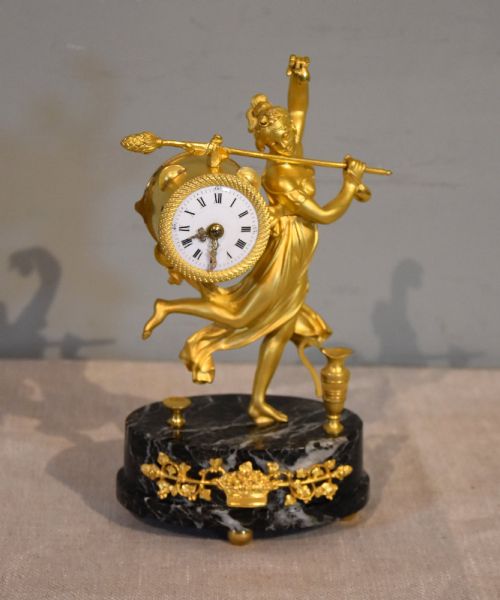
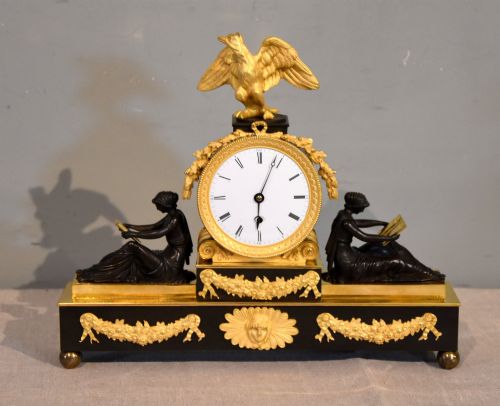
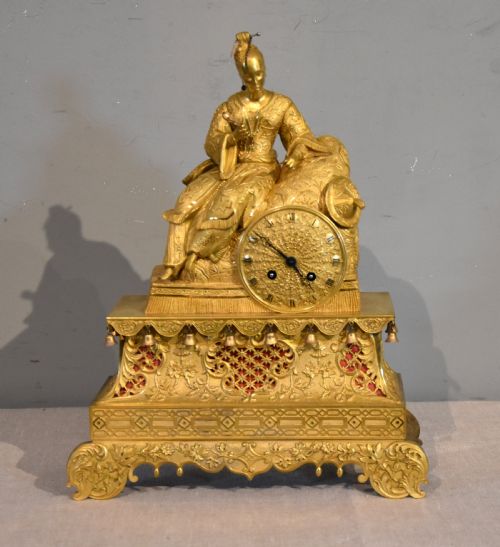
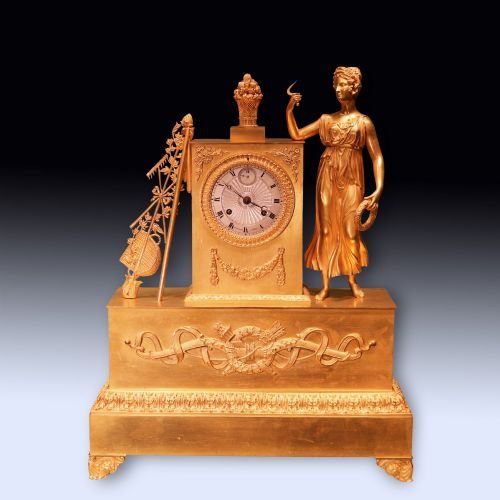
When you search for a gilt bronze figural clock, you encounter nineteenth-century decorative timepieces that pair cast metal figures with mechanical movements. These objects emerged principally from French workshops in Paris alongside English makers during the Regency and Victorian periods.
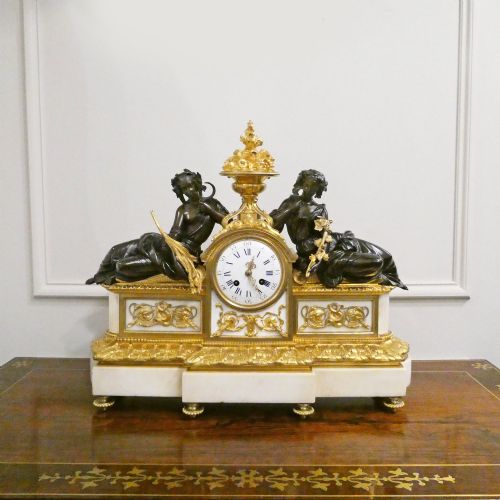
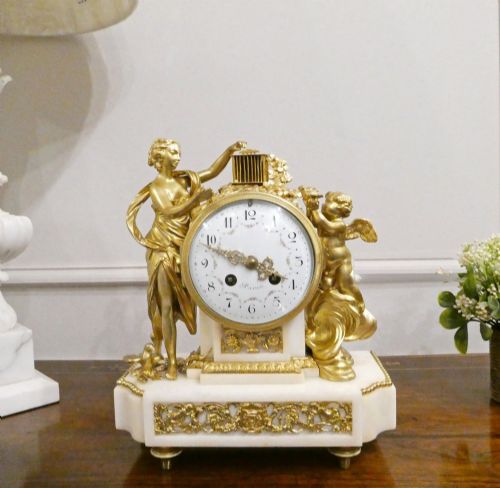
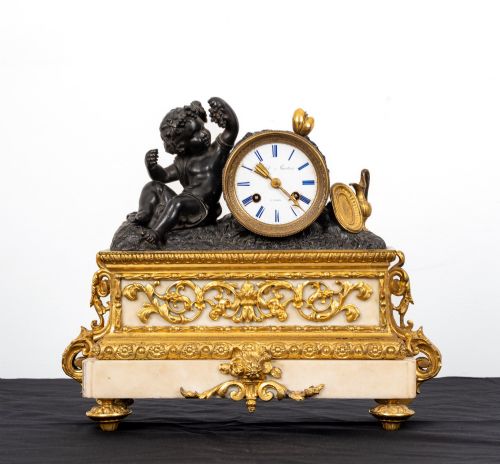
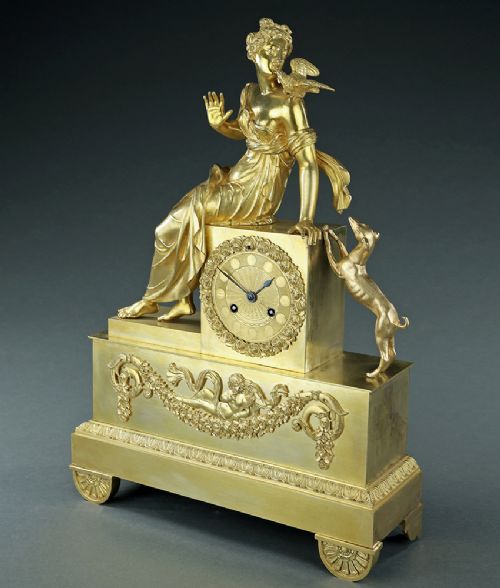
The versions most frequently met on this page take the form of mantel clocks and clock garnitures, often incorporating classical allegories, cherubs, lions, or historical figures. Enamel dials and hand-painted porcelain panels frequently accompany the main bronze and ormolu case work.
Examples range from compact table clocks resting on bronze plinths to large library pieces and multi-piece mantel clock sets complete with matching side ornaments. Architectural marble bases in green or white frequently support the sculptural metalwork.
Materials and Techniques
Makers utilised bronze, brass, and patinated bronze, applying mercury gilding to create the bright ormolu surfaces seen across these pieces. Cast components were chased by hand to sharpen details on drapery, hair, and floral motifs before final assembly.
Enamel and glass protected the hand-painted dials, while marble bases provided heavy, stable foundations for the substantial metal movements. Clockmakers housed mechanical systems including fusee movements inside the bronze cases to drive the striking trains.
Goats clamber around palm trees and cherubs inspect globes while medieval knights ride out to battle.
Assessing Quality
The standard of a gilt bronze figural clock depends heavily on the crispness of the bronze chasing and the depth of the ormolu gilding. Superior examples display sharply defined facial expressions and intricate drapery without the softness common in later mass-produced casts.
Movement complexity also sets pieces apart, with double fusee or eight-day striking mechanisms representing higher tiers of horological work than basic timepieces. The integration between the sculptural figures and the architectural marble or bronze plinths indicates the original maker's ambition.
Vincenti·Siffel and Cartier·Canaillor of Paris·Japy Freres·Leroy Paris·Deniere Et Fils·Victor Paillard·Deniere and Cailleaux·John Bennett Cheapside London·James Murray London·Robert A Paris·Cleret of Paris
The Gilt Bronze Figural Clock Glossary
- Ormolu
- Gilded bronze produced by applying a mercury and gold amalgam to the metal surface and heating it. This technique yielded a distinctive golden lustre characteristic of nineteenth-century French luxury goods.
- Garniture
- A set of decorative objects designed to be displayed together, typically comprising a central mantel clock flanked by matching candelabra or vases. These suites unified the mantelpiece design.
- Fusee
- A conical pulley used in clock movements to maintain an even pull on the mainspring as it unwound. This device improved timekeeping accuracy across the duration of the wind.
- Chasing
- The manual tooling of cast bronze with hammers and punches to refine surface details and textures. Skilled chasers added depth to hair, fabric folds, and botanical elements.
Gilt Bronze Figural Clock: Frequently Asked Questions
How do I wind a mantel clock?
Most nineteenth-century mechanical clocks require a key inserted into the dial holes to tension the springs every eight days or thirty hours depending on the movement. Care must be taken not to over-wind the mechanism.
Striking clocks should be allowed to finish their chime cycle if interrupted during setting. Ensuring the clock sits level on the mantelpiece keeps the pendulum swinging evenly.
What is a clock garniture?
A clock garniture is a matching set consisting of a central mantel clock accompanied by two side pieces such as urns, vases, or candelabra. These matched sets were designed to fill a Victorian or Regency mantelpiece.
The materials and decorative motifs on the side pieces mirror those on the main clock case, often featuring the same marble and gilt bronze elements.
How do I identify French Empire style?
French Empire style draws heavily on classical antiquity, featuring military trophies, laurel wreaths, sphinxes, and figures derived from Greek and Roman mythology. The bronze work often contrasts bright ormolu with dark patinated bronze.
These pieces typically date from the early nineteenth century and reflect the aesthetic of Napoleon's reign.
Where should I place my bronze clock?
Bronze and marble clocks require a stable surface like a mantelpiece or a sturdy side table to support their considerable weight. Direct sunlight and damp environments should be avoided to protect the enamel dials and mercury gilding.
Positioning the clock away from heavy vibrations ensures the pendulum maintains consistent timekeeping.