



Gilt Bronze Dog
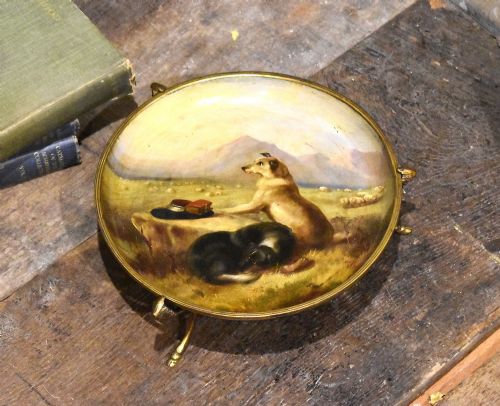
These gilt bronze dog sculptures and decorative objects combine metalwork artistry with canine subjects, offering a decorative metal centrepiece for a mantelpiece or hearth.
Gilt Bronze Dog
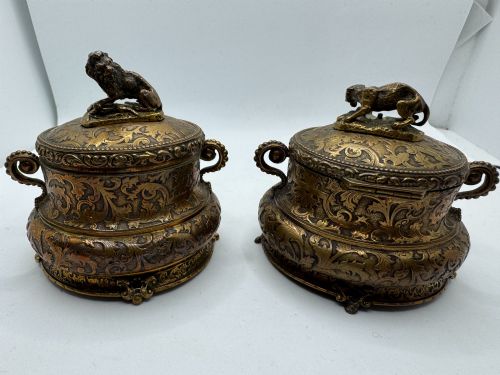
When you search for a gilt bronze dog, you encounter a variety of decorative objects ranging from fireplace chenets and mantel clocks to tabletop sculptures and jewellery caskets. These pieces frequently emerge from nineteenth-century French workshops, often adopting the exuberant curves of the Rococo Revival style or the sleek lines of Art Deco design.
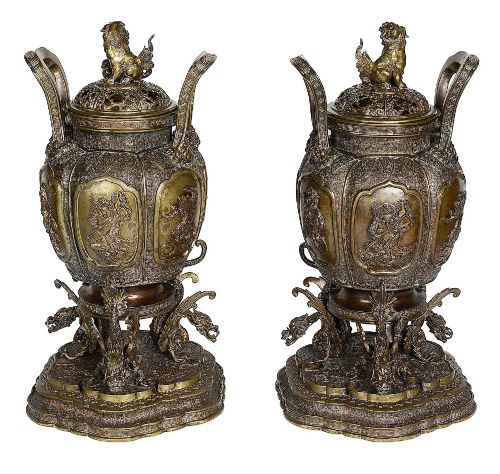
The canine subjects rendered in these metals span specific breeds like poodles, greyhounds, and German shepherds, alongside mythical temple lions. Many listings incorporate these animals as structural finials, clock mounts, or primary sculptural studies rather than standalone figurines.
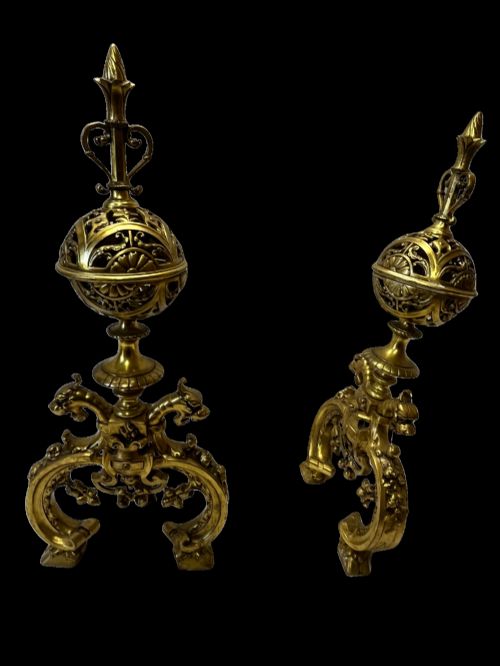
The most common formats on this page are matched pairs of fireplace andirons or chenets featuring dog motifs, alongside sculptural studies and clock sets. These objects reflect both domestic utility and nineteenth-century animalier artistic interests.
Materials and construction methods
The construction of these pieces relies on cast bronze or brass, which is subsequently gilded, often using mercury gilding techniques to produce the ormolu surfaces seen on many nineteenth-century items. Artisans frequently combine patinated dark bronze with bright gilt elements to create tonal contrast on animal subjects and architectural mounts.
Many objects integrate secondary materials such as white marble bases, cloisonné enamel, or papier mâché foundations. Chenets and fire dogs often utilise adjustable iron frames to accommodate different fireplace widths while retaining decorative gilt bronze terminals.
Gilt Bronze Dog Retail Price Guide 2026
Typical asking prices for gilt bronze dog among the pieces listed under this phrase on Sellingantiques today, from the lower quarter to the upper quarter. They describe what is for sale here now, not the wider market.
Poodles and hunting dogs dominated nineteenth-century metalwork, often standing guard over bronze pheasants or supporting French clock dials.
Distinctions in craftsmanship
The weight and gauge of the metal components indicate manufacturing standards, particularly in functional items like fireplace accessories and clock cases. Heavier bronze castings provide structural stability and allow for more pronounced relief work.
The preservation of the original gilding or ormolu finish significantly influences the visual integrity of a piece. High-quality surface treatments maintain consistent colour and lustre across complex assemblages of bronze, marble, and enamel.
Louis Riche·Eurotrope Bouret·Hessen Paris·P.H. Mourey
The Gilt Bronze Dog Glossary
- Gilt bronze
- Metal alloy treated with a gold coating to produce a lustrous surface finish. This material resists tarnishing while offering the warm appearance of solid gold.
- Ormolu
- Finely ground gold-mercury amalgam applied to a bronze base and heated to drive off the mercury. The technique creates a rich golden layer characteristic of French decorative arts.
- Chenet
- An ornamental metal support placed on the hearth, also known as a fire dog. These objects frequently incorporate animal figures or classical motifs on the visible front plate.
- Animalier
- A nineteenth-century artistic movement focused on the realistic depiction of animals. Sculptors working in this genre studied animal anatomy closely for bronze casting.
- Papier mache
- A composite material made from paper pulp or layers of paper reinforced with glue, then moulded and lacquered. It forms the foundation base for certain nineteenth-century comports.
Gilt Bronze Dog: Frequently Asked Questions
What is a gilt bronze dog?
A gilt bronze dog is a decorative object, sculpture, or component of a larger item like a clock or fireplace accessory, cast in bronze and coated with gold.
These pieces range from small tabletop studies of poodles to prominent architectural mounts on nineteenth-century French chenets.
How were fireplace chenets used?
Chenets, or fire dogs, were placed inside the hearth to support logs and improve airflow beneath the fire. The decorative front plates remained visible in the room even when no fire burned.
Many pairs included adjustable iron bars to fit varying fireplace openings while displaying the gilt bronze animal figures.
How do I identify nineteenth-century pieces?
Nineteenth-century items often exhibit specific stylistic revivals such as French Rococo curves or Art Deco geometries. Examination of the casting quality and the integration of ormolu with marble or patinated bronze helps determine the period.
Maker signatures or foundry marks stamped onto the bronze base provide definitive chronological and geographical markers.
Where should I display these objects?
Sculptural studies and clock sets suit mantelpieces, tabletops, or display cabinets where the detailed metalwork is easily visible. Heavier fireplace accessories function naturally within decorative hearth settings.
Placing items away from direct moisture preserves the integrity of the gilt bronze and associated materials like marble or enamel.